EU to hold urgent meeting after Spanish PM calls Ceuta crisis response ‘selfish’
The EU will hold an emergency meeting of interior ministers after a breakdown of political unity over the arrival of more than 50,000 irregular migrants in the Spanish enclave of Ceuta in north Africa. Spanish Prime Minister Pedro Sánchez accused some EU countries, partic…
Intelligence analysis by Llama
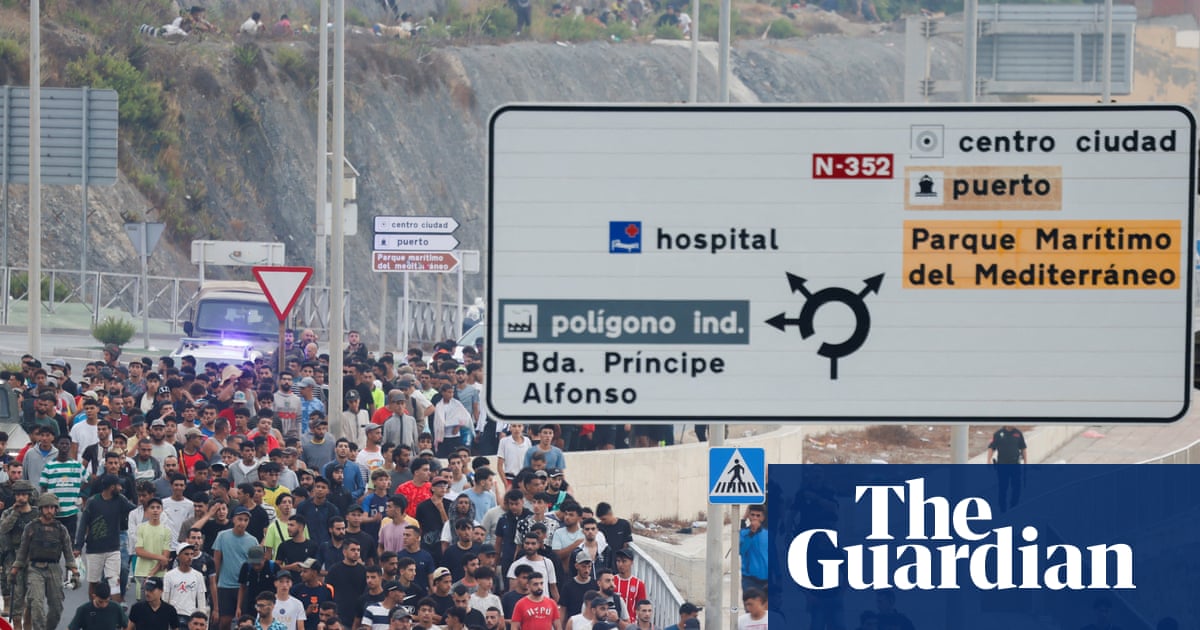
The EU will hold an emergency meeting of interior ministers after a breakdown of political unity over the arrival of more than 50,000 irregular migrants in the Spanish enclave of Ceuta in north Africa. Spanish Prime Minister Pedro Sánchez accused some EU countries, particularly Italy, of weaponising Friday's events instead of showing 'solidarity and empathy'.
Imagine you're trying to cross a border into a country, but the border is closed. You might try to find a way around it, but that's not safe. The EU is like a big group of countries that work together, and they need to agree on how to handle people trying to cross the border. Right now, they're not agreeing, and that's causing problems.
Analysis
A Crisis of Unity and Solidarity
The recent influx of over 50,000 irregular migrants into the Spanish enclave of Ceuta has exposed deep divisions within the European Union. Spanish Prime Minister Pedro Sánchez has accused some EU countries, particularly Italy, of weaponising the situation instead of showing solidarity and empathy. This breakdown of political unity has significant implications for the EU's ability to respond effectively to irregular migration and manage its external borders.
Sánchez's criticism of Italy's response to the crisis is not unfounded. Italy's foreign minister, Antonio Tajani, has blamed the situation in Ceuta on Spain's decision to offer a now-closed scheme to regularise the status of more than 1 million undocumented migrants and asylum seekers. This decision, while well-intentioned, has been widely criticised for incentivising human trafficking and creating a pull factor for irregular migration.
The EU's response to the crisis has been characterised by a lack of unity and solidarity. While some member states, such as France, have expressed support for Spain, others, like Italy, have chosen to attack the country. This polarising and unlawful reaction has only served to exacerbate the crisis and undermine the EU's ability to respond effectively.
In the face of this crisis, the EU must come together to find a unified response. This requires a commitment to solidarity and empathy, as well as a willingness to work together to address the complex challenges of irregular migration. The EU's ability to respond effectively to this crisis will have significant implications for its internal politics and external relations, and it is imperative that member states put aside their differences and work together to find a solution.
Key points
- Over 50,000 irregular migrants have crossed into the Spanish enclave of Ceuta in north Africa.
- Spanish Prime Minister Pedro Sánchez has accused some EU countries, particularly Italy, of weaponising the situation instead of showing solidarity and empathy.
- The EU's response to the crisis has been characterised by a lack of unity and solidarity.
- The EU must come together to find a unified response to the crisis in Ceuta.
- A more effective and coordinated approach to managing irregular migration could result in a reduction in the number of people attempting to cross the border.
If the EU can come together to find a unified response to the crisis in Ceuta, it could lead to a more effective and coordinated approach to managing irregular migration. This could result in a reduction in the number of people attempting to cross the border, and a decrease in the number of deaths and injuries associated with these attempts.
If the EU continues to be divided and unable to respond effectively to the crisis in Ceuta, it could lead to a further escalation of the situation. This could result in more people attempting to cross the border, and a increase in the number of deaths and injuries associated with these attempts. Additionally, the crisis could have significant implications for the EU's internal politics and external relations, potentially leading to a breakdown in trust and cooperation among member states.