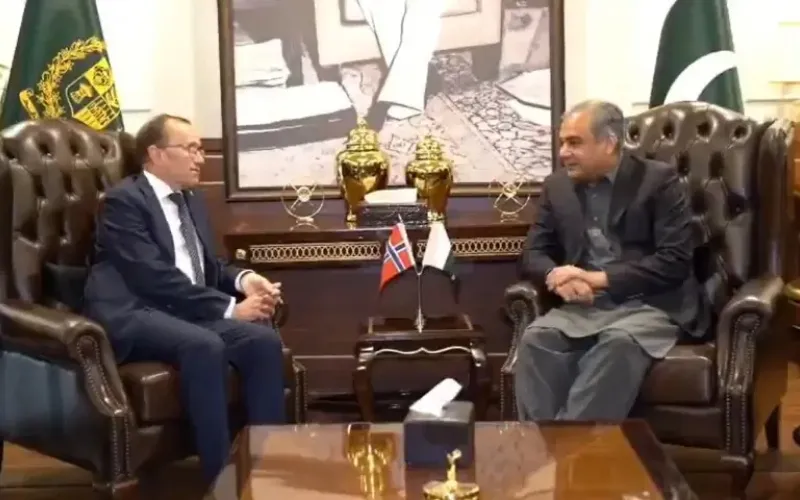
EU, UK Envoys Affirm Pakistan's Right to Self-Defense Against TTP
EU and UK envoys recognize Pakistan's right to self-defense against TTP. The envoys blasted the Taliban regime's failure to dismantle terrorist safe havens.
Intelligence analysis by Llama 3.3 70B

The EU and UK envoys have validated Pakistan's stance against cross-border terrorism, acknowledging the TTP as a terrorist organization receiving support from Afghanistan.
Imagine you're living in a neighborhood where some people are causing trouble and hurting others. The police have a right to stop them, but what if the troublemakers are getting help from outside the neighborhood? That's kind of what's happening with Pakistan and the TTP. The EU and UK are saying that Pakistan has the right to defend itself against the TTP, even if it means taking action outside its own borders.
Analysis
International Community's Frustration with Taliban Regime
The international community's frustration with the Taliban regime is growing, as the regime has failed to comply with global security mandates. The Taliban committed to denying sanctuary to terrorist groups and ensuring Afghan territory would not be used to launch attacks against other states under the Doha Agreement. However, nearly five years into their rule, the Taliban have violated virtually every major political, security, and governance commitment.
The UN Security Council Monitoring Team reports have identified more than 20 terrorist organizations operating freely under the Taliban's watch, with estimates ranging from 13,000 to 23,000 terrorist fighters. This includes the TTP, Al-Qaida, ISKP, ETIM, IMU, and Jamaat Ansarullah. The Taliban's counterterrorism narrative completely collapsed when Al-Qaida leader Ayman al-Zawahiri was discovered and killed in a Taliban-controlled safe house in the heart of Kabul.
Humanitarian Crisis in Afghanistan
The Taliban regime has instituted a brutal domestic system of state-sponsored discrimination and repression. The regime has issued more than 230 decrees systematically stripping women and girls of fundamental human rights, creating what international experts describe as 'gender apartheid.' More than 2.2 million Afghan girls remain barred from secondary and higher education, while women face total restrictions on employment, movement, and public life.
This internal mismanagement has plunged the country into a severe humanitarian crisis, leaving 21 million Afghans in desperate need of assistance and nearly 65 percent of the population living in multidimensional poverty due to the regime's exclusionary and ideological governance. The international community's recognition of Pakistan's right to self-defense against the TTP is a significant development, as it puts pressure on the Taliban regime to take action against terrorist organizations operating in Afghanistan.
Implications for Regional Peace and Stability
The TTP's ability to receive extensive cross-border support, financial assistance, weapons, and safe haven inside Afghanistan severely undermines regional peace and stability. The authorities currently exercising control in Kabul and Kandahar bear full responsibility for these activities and must take decisive action to prevent Afghan soil from being used against neighboring countries. The EU and UK envoys' validation of Pakistan's right to self-defense is a significant step towards promoting regional peace and stability.
Key points
- EU and UK envoys recognize Pakistan's right to self-defense against TTP
- TTP receives extensive cross-border support from Afghanistan
- Taliban regime has failed to comply with global security mandates
- Humanitarian crisis in Afghanistan worsens due to regime's policies
The recognition of Pakistan's right to self-defense could lead to increased cooperation between Pakistan and the international community to combat terrorism. This could result in a reduction in terrorist activities and an improvement in regional peace and stability. Additionally, the pressure on the Taliban regime to take action against terrorist organizations could lead to a decrease in the number of terrorist fighters operating in Afghanistan.
The situation could escalate into a larger conflict if Pakistan takes action against the TTP in Afghanistan. This could lead to a destabilization of the region and a increase in terrorist activities. Additionally, the Taliban regime's failure to comply with global security mandates could lead to further isolation and economic sanctions, exacerbating the humanitarian crisis in Afghanistan.