Exceptional Session Exams Begin in Suwayda After Clashes
Exceptional session exams for basic and secondary education have commenced in Syria's Suwayda province, following a delay caused by armed clashes between local groups and 'outlaw groups' that disrupted student access to examination centers.
Intelligence analysis by Gemini 2.5 Flash
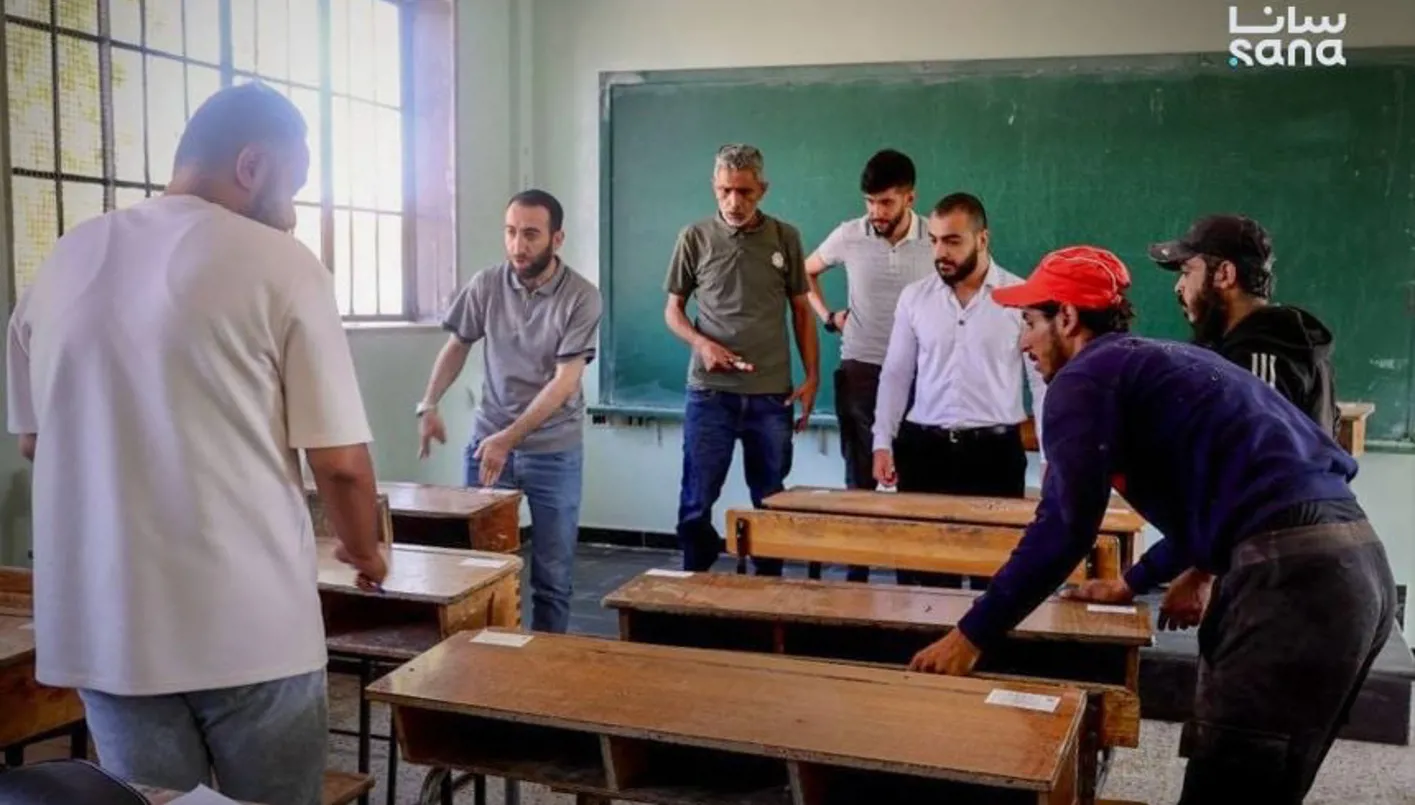
The Syrian province of Suwayda saw the start of its exceptional session exams for students, despite recent armed clashes and security chaos. Authorities had to postpone the exams by an hour to ensure student safety and access, as 'outlaw groups' reportedly prevented students from reaching centers, leading to confrontations and property damage.
Imagine you have a big test at school, but on the way, some groups of people are fighting and blocking the roads, even smashing cars! The grown-ups in charge had to make the test start later so everyone could get there safely. It shows that even simple things like school can be hard when there's trouble in the town, like a game of tag that got too rough and stopped everyone from playing.
Analysis
The resumption of exceptional session exams in Suwayda, Syria, underscores the complex interplay between ongoing security challenges and the efforts to maintain a semblance of normalcy, particularly in the education sector. The initial delay and subsequent efforts by the governorate to facilitate student access reveal the precarious environment in which daily life unfolds. This incident is not isolated but rather indicative of the broader security vacuum and economic hardship that has plagued the region, making it difficult for residents to pursue essential activities without fear of disruption or violence.
Suwayda Media Directorate
The Suwayda Media Directorate played a crucial role in managing the immediate crisis by announcing the postponement of the exams. This decision, made out of concern for student safety and to ensure their ability to reach examination centers, highlights the direct impact of local security incidents on public services. The directorate's communication was essential in informing students and parents about the revised schedule, demonstrating a reactive but necessary measure to mitigate the effects of the unrest. The fact that such an announcement was required for a routine educational event speaks volumes about the abnormal conditions prevailing in the province.
Mustafa Al-Bakour
Governor Mustafa Al-Bakour's statements provided critical insight into the challenges faced by the local administration. He explicitly identified "outlaw groups" as responsible for preventing students from reaching their exam centers, leading to physical altercations and property damage. Al-Bakour's efforts to facilitate the examination process, including the one-hour delay, illustrate the provincial government's struggle to assert control and ensure public order amidst the prevailing security chaos. His remarks to the Syrian Al-Ikhbariya channel underscore the official narrative regarding the perpetrators and the government's attempts to address the situation.
Salman Al-Hajri
The armed clashes that precipitated the exam delay involved a faction known as the "Security Office," reportedly affiliated with the "National Guard" and led by Salman Al-Hajri, son of religious leader Hikmat Al-Hajri. This detail points to the fragmented nature of authority and the proliferation of armed groups in the region, often with complex local allegiances. The involvement of such factions in disputes that escalate to armed confrontations, affecting civilian life and public services like education, highlights the deep-seated security issues that continue to destabilize Suwayda. The reference to Hikmat Al-Hajri suggests a potential intersection of religious and local power dynamics in the ongoing conflicts.
Key points
- Exceptional session exams for basic and secondary education began in Suwayda, Syria, after a delay.
- The exams were postponed by one hour due to armed clashes and 'outlaw groups' preventing students from reaching centers.
- Suwayda Governor Mustafa Al-Bakour stated that 'outlaw groups' destroyed citizens' cars during the confrontations.
- The clashes occurred between a faction known as the 'Security Office,' led by Salman Al-Hajri, and local factions.
- The province is experiencing unprecedented security chaos and deteriorating economic and social conditions.
Despite the security challenges, the successful commencement of exams, even with a delay, demonstrates a commitment by authorities and students to education. This resilience suggests that efforts to maintain essential services can prevail even in difficult circumstances, offering a glimmer of hope for stability.
The incident highlights the severe security chaos and the presence of 'outlaw groups' that can easily disrupt public life and essential services like education. This ongoing instability, coupled with deteriorating economic conditions and political deadlock, suggests a bleak outlook for the province's recovery and the safety of its residents.