Fauci invokes fifth amendment and declines to testify in Senate Covid hearing
Anthony Fauci invoked his Fifth Amendment right against self-incrimination at a Senate hearing on Covid-19 origins, accusing Republican Senator Rand Paul of an 'unhinged obsession' with him.
Intelligence analysis by Llama
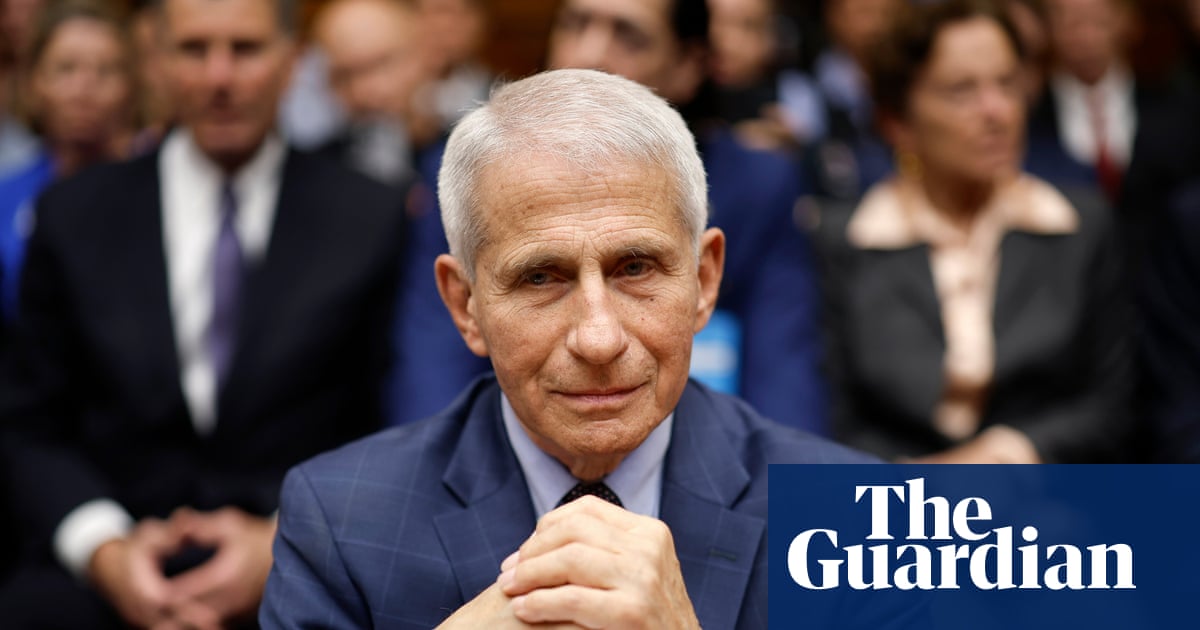
Former NIAID director Anthony Fauci refused to answer questions at a Senate hearing called by Rand Paul, invoking the Fifth Amendment and alleging a years-long campaign to 'embarrass and intimidate' him over Covid-19 origins research.
A really famous doctor named Anthony Fauci, who helped lead the country through Covid, went to a meeting in the Senate and refused to answer questions. He said a senator named Rand Paul has been trying to make him look bad for years, so he used a special rule that lets people stay quiet so their own words can't be used against them. It's like when a kid in trouble says 'I have nothing to say' to the principal.
Analysis
Paul vs. Fauci: A Years-Long Grudge Goes Public
The hearing marks the most public collision yet in a long-running feud between Senator Rand Paul and the former NIAID director. Paul, who chairs the Senate homeland security and governmental affairs committee, framed the session as an investigation into 'the origins of Covid-19 and risky taxpayer-funded life science research.' Fauci, in turn, accused Paul of leading a campaign to 'embarrass and intimidate' him. His decision to invoke the Fifth Amendment, a step rarely taken by senior public health officials, underscores how personal and politically charged the dispute has become. By characterizing Paul's work as an 'unhinged obsession,' Fauci signaled he views the inquiry less as legitimate oversight and more as political theater.
The Lab Leak Question, Again
Underlying the hearing is a question that has shadowed pandemic policy since 2020: did SARS-CoV-2 jump naturally from animals to humans, or escape from a laboratory? The article notes that virologists have largely favored the spillover hypothesis. A 2024 survey from the Global Catastrophic Risk Institute found most virologists believed a spillover event was the most likely origin, and a group of virologics argued in the Journal of Virology that the 'preponderance' of evidence points that way. Yet the lab leak theory has gained significant traction in Republican circles, with the White House publishing a treatise on the theory in April 2025 that helped justify NIH defunding. Fauci's refusal to testify ensures the dispute remains unresolved on Capitol Hill even as it continues to shape science funding and public trust.
A 1,100-Page 'Diary' and the Politics of Memory
The hearing came days after Paul released what he described as Fauci's 'diary,' a 1,100-page document the senator says reveals inner conflicts about the lab leak theory. Scientists quoted in the article say wrestling with competing hypotheses is a normal part of reaching scientific opinion, not evidence of misconduct. The diary also resurfaced Fauci's blunt private assessments of Donald Trump, whom he advised during the early pandemic, describing him with words including 'rambling,' 'crazy,' and 'a true embarrassment.' Those entries, now in the political record, illustrate how the hearing is as much about reconstructing the personalities and decisions of the early pandemic as it is about the virus itself. With Fauci now retired, the Fifth Amendment invocation shifts the legal terrain from public testimony to potential future proceedings.
Key points
- Fauci invoked the Fifth Amendment at a Senate homeland security committee hearing on Covid-19 origins called by Rand Paul
- He accused Paul of an 'unhinged obsession' and a campaign to 'embarrass and intimidate' him
- Republicans have framed the probe as investigating pandemic origins and taxpayer-funded life science research
- Virologists surveyed in 2024 largely favor a natural spillover origin over the lab leak theory
- Paul recently released a 1,100-page document he described as Fauci's 'diary' containing private critiques of Trump
If the hearing produces a transparent, well-documented record of the evidence on both sides of the origins debate, it could help move the discussion beyond partisan point-scoring. A clearly bounded inquiry might also reassure scientists that legitimate oversight can coexist with protection from harassment, preserving public trust in pandemic research.
The Fifth Amendment invocation is likely to harden partisan lines rather than resolve the origins question, leaving NIH funding decisions and the lab leak theory subject to political rather than scientific judgment. The spectacle could also discourage senior scientists from cooperating with future congressional inquiries, weakening legislative oversight of public health agencies.