First Thing: Trump urged to end Iran escalation as US deaths and injuries rise
Democrats are urging Trump to halt renewed strikes on Iran after three US troops were killed and nearly 100 were injured, as the regional fight intensifies.
Intelligence analysis by GPT-5.4 Mini
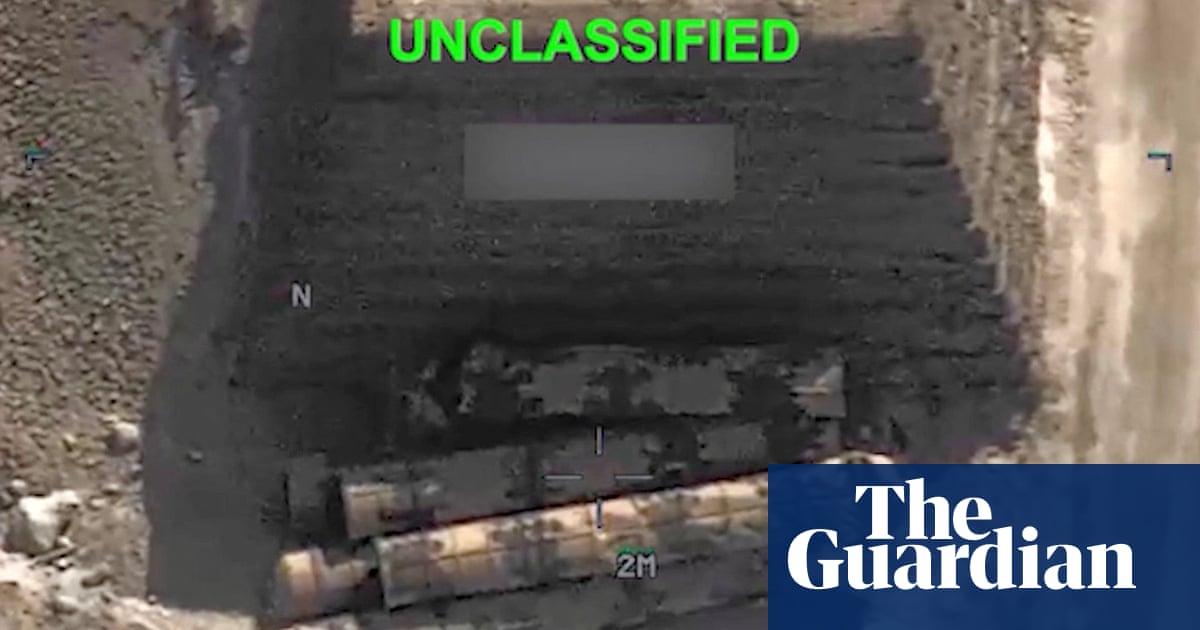
The Guardian's morning briefing centers on the political and military fallout from Trump's revived Iran campaign: more US casualties, Iranian retaliation, and growing pressure from Democrats to stop the escalation before it spreads further.
This is about two sides throwing harder and harder punches, and now more people are getting hurt. It is like a neighborhood fight that starts in one yard but begins making nearby houses lock their doors too.
Analysis
Casualties Have Changed the Politics
The article's sharpest point is that the war's human toll is now driving the debate in Washington. Three US troops have been killed and nearly 100 more injured over the last two weeks, which gives Democrats a concrete reason to demand a reversal rather than a rhetorical one.
That matters because casualty counts change how wars are perceived at home. Chris Murphy's accusation that Trump has "frighteningly lost control of this war" is not just a partisan line; it is an attempt to frame escalation as a failure of command, not a tough foreign-policy choice.
The Gulf Is Already Feeling the Shock
The piece suggests the conflict is spreading beyond a direct US-Iran exchange. Iran's Revolutionary Guards say they targeted US military sites in Bahrain and Kuwait, while Kuwait, Bahrain and Jordan activated defenses, showing how quickly nearby governments have to react when the fighting intensifies.
The report that a tanker in the Strait of Hormuz was struck by an unknown projectile is especially important. Even without confirming who fired it, the location alone raises the risk of shipping disruption in one of the world's most sensitive energy corridors.
A War Trump Can Start, But Not Easily Contain
The article repeatedly hints at a problem of control. US forces are launching a 10th consecutive wave of attacks, Trump has walked away from a June memorandum of understanding, and the conflict has resumed without a clear sign of restraint from either side.
That makes the administration vulnerable if the violence keeps climbing. Once the story becomes about dead and injured service members, the question shifts from whether the US can project power to whether it can stop the war from widening.
The wider lesson is that escalation can move faster than diplomacy. If the regional retaliation keeps building, Trump may face pressure not only from Democrats but also from allies worried about their own exposure and from markets sensitive to any threat around Hormuz.
Key points
- Democrats are pressing Trump to reverse the renewed war with Iran after three US troops were killed.
- The article says nearly 100 US service members have been injured in two weeks of escalating strikes.
- Iran says it targeted US military sites in Bahrain and Kuwait, and nearby states activated defenses.
- A tanker reported struck in the Strait of Hormuz raises the risk of spillover into shipping lanes.
- The report frames the conflict as both a battlefield and a political problem for Trump.
If pressure to stop the escalation works, it could reduce further US casualties and give diplomats room to slow the fighting. A pause would also ease the strain on Gulf states that have already put defenses on alert.
If the strikes continue, more US service members could be killed or injured and retaliation could spread to more sites in the region. Any further threat to the Strait of Hormuz would deepen the risk of a broader security and energy shock.
Market signals
- OIL The article's account of strikes near the Strait of Hormuz raises the risk of disruption to a key oil shipping lane.
AI-generated analysis of potential market relevance. Not financial advice.