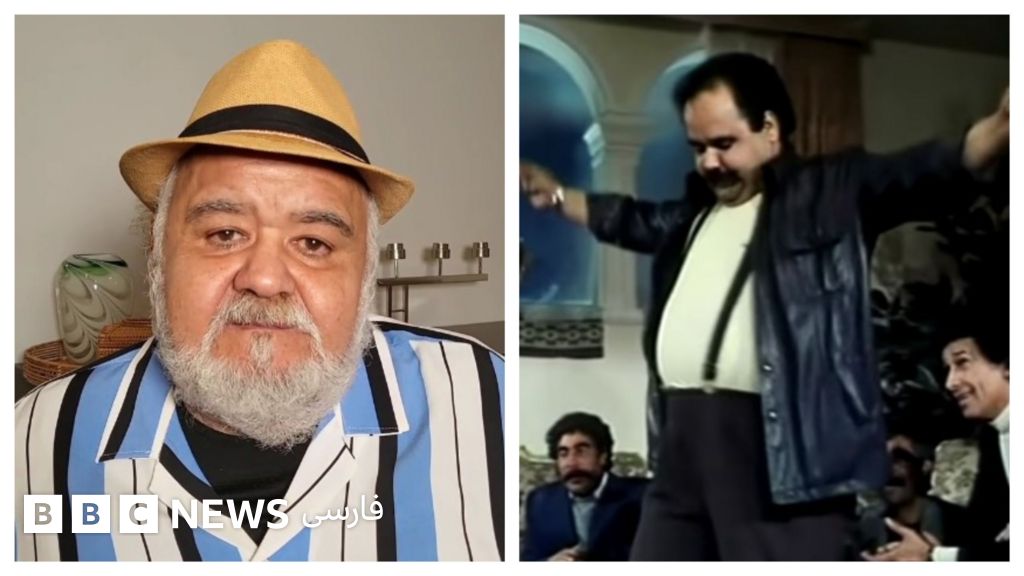
Five Decades of Akbar Abdi's Art: From 'The Tenants' to 'The Expelled'
Iranian actor Akbar Abdi has died at 66 in Tehran after a long illness, drawing tributes from colleagues, filmmakers, and senior officials including President Pezeshkian.
Intelligence analysis by Llama
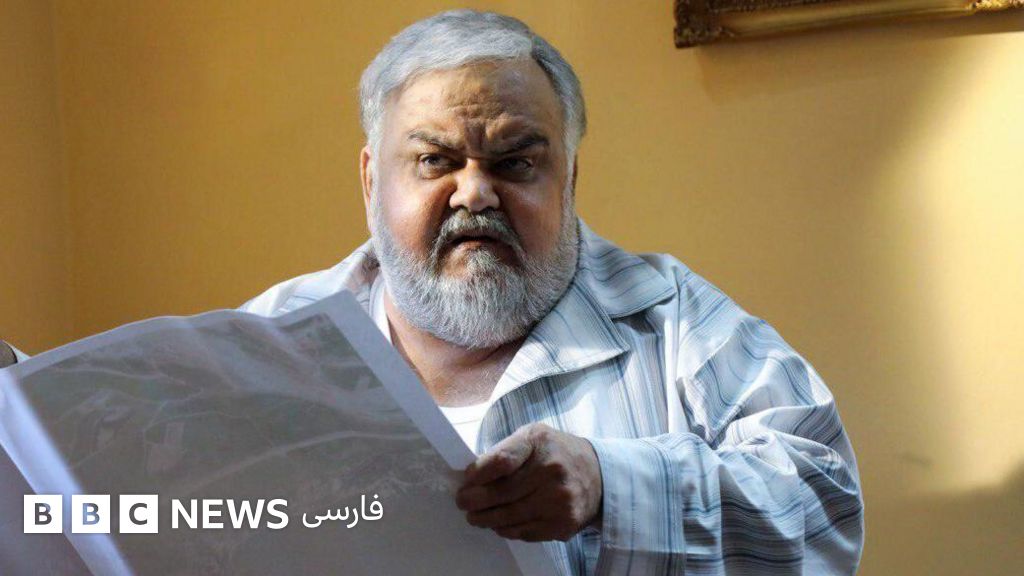
BBC Persian profiles the half-century career of Akbar Abdi, a defining comedic presence in post-revolution Iranian cinema whose roles in 'The Tenants,' 'Ey Iran,' and 'The Expelled' trilogy shaped a generation's shared cultural memory. The piece traces his rise from children's television in 1980 through his peak in the 1980s and 1990s, his acclaimed cross-gender performances, and his …
Akbar Abdi was one of Iran's most beloved actors, a comedian whose funny faces and voices made millions of Iranian families laugh on TV and in movie theaters for almost fifty years. Imagine the funny uncle who shows up at every family gathering, except everyone in the country got to know him. He could also play serious parts, even dressed as a woman sometimes, which showed how talented he really was.
Analysis
From Children's TV to the Crown of Post-Revolution Comedy
Akbar Abdi, born in the working-class Nazibad neighborhood of Tehran in 1960 to an Ardabil father and a Tehrani mother, began his artistic career in 1980 with a televised play, the same year Iran's new state broadcaster was consolidating its grip on the national airwaves. He quickly became a fixture of children's programming, with the long-running series 'Bazam Madresam Dair Shode' (I'm Late for School Again) and 'Mahalle-ye Boro Bia' establishing him as a household presence alongside contemporaries like Hamid Jebelli and Attila Pessiani. The article notes that his first film role, the relatively obscure 'Jenjal-e Bozorg,' was followed by the breakthrough 'Mard-i ke Mush Shod' and then 'Ejareh-Neshinha' (The Tenants), the 1986 Dariush Mehrjui film that cemented his national fame. The trajectory is significant because it shows how Iranian state television, often dismissed as ideologically rigid, also functioned as a launching pad for talent that would later flourish in the more auteur-driven post-revolution cinema of the 1980s and 1990s.
Range Beyond the Comedic Register
What separated Abdi from his comedic peers, the piece suggests, was a willingness and capacity to inhabit roles far outside his comic default. He appeared in Naser Taghvai's 'Ey Iran,' played opposite Behrouz Vossoughi in the politically sensitive 'Adam Barfi' (The Snowman) by Davud Mirbagheri, which was briefly banned before being released to strong reception, and collaborated with Mohsen Makhmalbaf on 'Honarpishe' and 'Naseroddin Shah Actor-e Cinema.' He also worked with Ali Hatami on 'Madar' and 'Delneshast-ha.' The article highlights his performance as a woman in 'Adam Barfi' and later, in the 2011 film 'Khabam Miayad' directed by Reza Attaran, as an elderly woman, a feat that earned him the Best Supporting Actor award at the Fajr Film Festival. The cross-gender roles were not novelty; they demonstrated a technical range that the obituary explicitly frames as a counterweight to the easy assumption that Abdi was 'only' a comedian.
The Dehnamaki Pivot and the Politics of the Box Office
The second half of the piece charts Abdi's shift in the 2000s toward the 'Akharaji-ha' (The Expelled) trilogy directed by Masoud Dehnamaki, the former editor of hard-line publications 'Shalamcheh' and 'Jebheh' and a one-time representative of the Ansar-e Hezbollah pressure group. The article notes that all three 'Akharaji-ha' films were produced with the backing of Iranian state officials and became the highest-grossing films of their respective years, and frames them as the inflection point at which comedy became commercially dominant in Iranian cinema. Abdi's continued collaboration with Dehnamaki drew criticism, and the piece quotes a combative 2011 statement in which Abdi lashed out at critics who called 'Rasvaei' a 'Farsi film' (a pejorative), telling them they were insulting legends like Fardin and Iraj Ghaderi and should 'stuff themselves with cotton.' In his later decade, the article notes, Abdi appeared more frequently in cinema but in roles that lodged less firmly in public memory, a quiet coda that the BBC frames without sentimentality as a measure of how far the industry had moved past its golden age.
Key points
- Iranian actor Akbar Abdi died in Tehran at 66 after a prolonged illness, according to BBC Persian.
- Tributes came from fellow actors, directors, and senior officials including President Masoud Pezeshkian and Foreign Minister Abbas Araghchi.
- His career began in 1980 with state television and peaked with roles in 'Ejareh-Neshinha' (The Tenants), 'Ey Iran,' and 'Adam Barfi' (The Snowman).
- He won the Fajr Film Festival Best Supporting Actor award in 2011 for 'Khabam Miayad.'
- His later career was dominated by the commercially successful 'Akharaji-ha' trilogy with hard-line director Masoud Dehnamaki, a partnership the BBC frames as a turning point toward comedy-led box office in Iranian cinema.