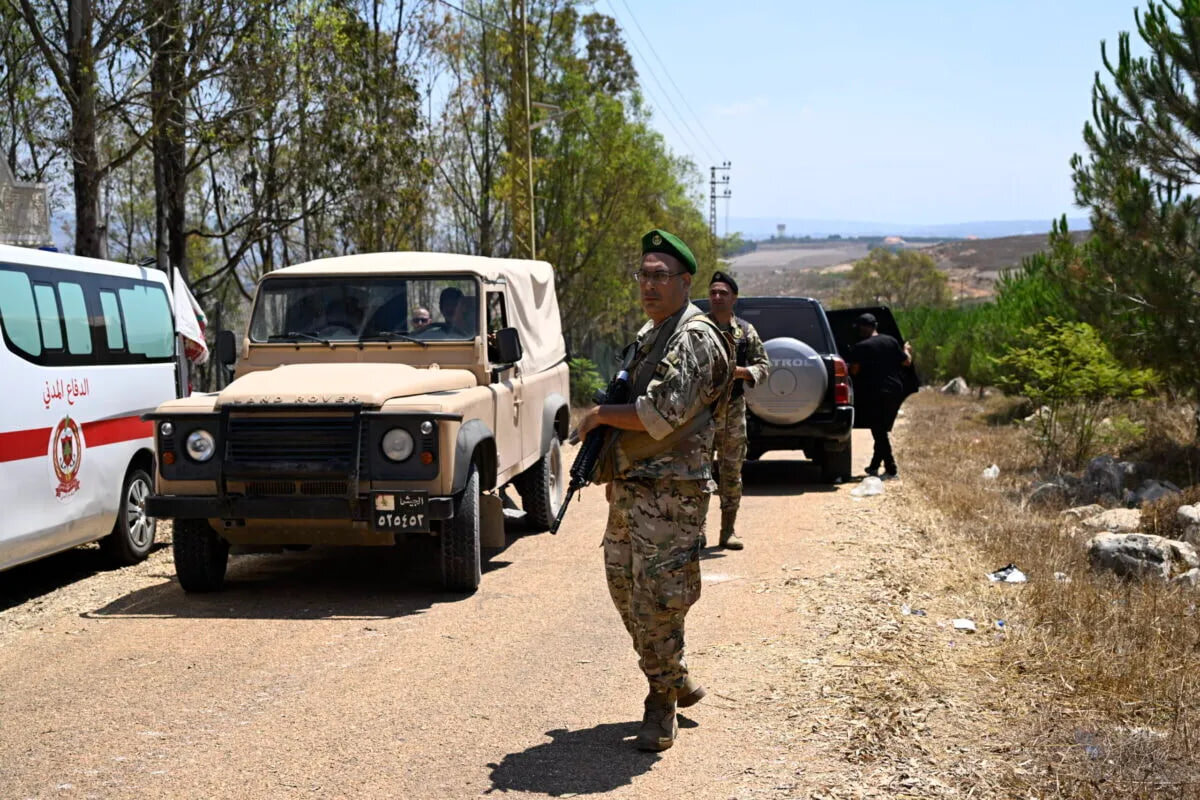
Five Lebanese soldiers wounded in southern town blast amid ongoing Israeli aggression
Five Lebanese soldiers were injured by an explosive device in Kafra, southern Lebanon, amidst escalating Israeli military actions including shelling, drone overflights, and destruction of infrastructure.
Intelligence analysis by Gemini 2.5 Flash
The incident involving wounded Lebanese soldiers highlights a severe breakdown of the ceasefire in southern Lebanon, with the Lebanese army attributing the blast to a "suspicious object" and accusing Israeli forces of systematically expanding their presence, destroying heritage sites, and targeting civilian areas, intensifying a humanitarian crisis.
Imagine two neighbors, Lebanon and Israel, are supposed to be quiet, but one (Israel) keeps doing noisy and damaging things in the other's yard (southern Lebanon). Recently, some of Lebanon's security guards got hurt by a hidden bomb, and Lebanon says Israel is breaking all the rules, even blowing up old castles and flying noisy drones, making it hard for people to live safely.
Analysis
Escalating Tensions in Southern Lebanon
The recent injury of five Lebanese army soldiers in Kafra, southern Lebanon, due to a "suspicious explosive device," marks a significant escalation in the already volatile border region. This incident, as reported by the Lebanese army, occurred while the soldiers were escorting local residents, highlighting the direct threat posed to both military personnel and civilians. The blast is framed within a broader context of what the article describes as "unrelenting Israeli military aggression," suggesting a deliberate pattern of hostile actions rather than isolated incidents.
According to the Tehran Times, Israeli occupation forces are accused of weaponizing a nominal ceasefire to systematically expand their territorial footprint. This includes the flattening of border villages, conducting extensive machine-gun operations, and accelerating engineering destruction across multiple southern districts. Such actions not only violate existing agreements but also directly impact the lives and livelihoods of Lebanese citizens, preventing displaced families from returning to their homes and eroding the fabric of local communities.
Humanitarian and Diplomatic Fallout
The scale of the alleged Israeli aggression extends beyond direct military engagements, encompassing acts of cultural and infrastructural destruction. A particularly egregious example cited is the detonation of an estimated 700 tons of explosives beneath the historic Shaqif Fortress in Arnoun, a UNESCO-listed landmark. This act, which rattled communities far beyond the immediate vicinity, is presented as part of a strategy to erase regional heritage and disable local infrastructure, further deepening the humanitarian crisis.
Diplomatic and security frameworks designed to maintain stability in the region are reportedly buckling under what the article terms Tel Aviv’s "blatant defiance." With crucial international negotiations on the horizon in Rome, Israel is portrayed as committed to imposing new territorial facts through force rather than engaging in diplomatic solutions. The United Nations has voiced alarm over the devastation, warning that the systematic targeting of civilian and cultural assets exacerbates an already severe humanitarian situation, underscoring the urgent need for international intervention and adherence to humanitarian law.
Lebanese Resistance and Sovereignty
Lebanese officials, including military commanders, have vehemently criticized the persistence of these hostile incursions, reiterating their unwavering commitment to national sovereignty as an absolute priority. This stance reflects a deep-seated national resolve to protect Lebanon's borders and its people from external aggression. The article emphasizes that the Lebanese resistance has not remained passive, actively confronting invading units on the ground.
These confrontations have reportedly inflicted significant casualties on elite Israeli special units, such as the Egoz commandos, demonstrating the unyielding resolve and operational capability of local defenders. The narrative suggests that the resistance is ensuring that "enemy forces pay a heavy price for any territorial encroachment," indicating a strategy of deterrence and direct engagement, perpetuating a cycle of violence and instability in a region already fraught with geopolitical tensions.
Key points
- Five Lebanese soldiers were injured by an explosive device in Kafra, southern Lebanon.
- The Lebanese army attributes the blast to a "suspicious object" and is investigating.
- The incident is part of ongoing Israeli military aggression, including shelling, drone overflights, and destruction of border villages.
- A significant act of aggression involved the detonation of 700 tons of explosives beneath the UNESCO-listed Shaqif Fortress.
- Lebanese officials condemn these actions as violations of sovereignty, while the UN expresses alarm over the humanitarian impact.
- The Lebanese resistance is actively confronting Israeli forces, inflicting casualties.
The ongoing Israeli aggression and the systematic targeting of infrastructure and heritage sites could lead to a full-scale conflict, further destabilizing the region and exacerbating the humanitarian crisis, potentially drawing in more regional actors.
Market signals
- OIL Escalating conflict in the Middle East raises concerns about regional stability and potential disruptions to oil supply routes.
- XAU Increased geopolitical tensions and conflict typically drive demand for safe-haven assets like gold.
AI-generated analysis of potential market relevance. Not financial advice.