Flight 163: The ill-fated plane from Karachi to Jeddah that crashed despite landing safely
A Saudi Arabian Airlines flight from Karachi to Jeddah crashed on August 19, 1980, killing all 301 people on board. The investigation revealed that a faulty fuel tank and a design flaw in the aircraft's fire suppression system contributed to the disaster.
Intelligence analysis by Llama
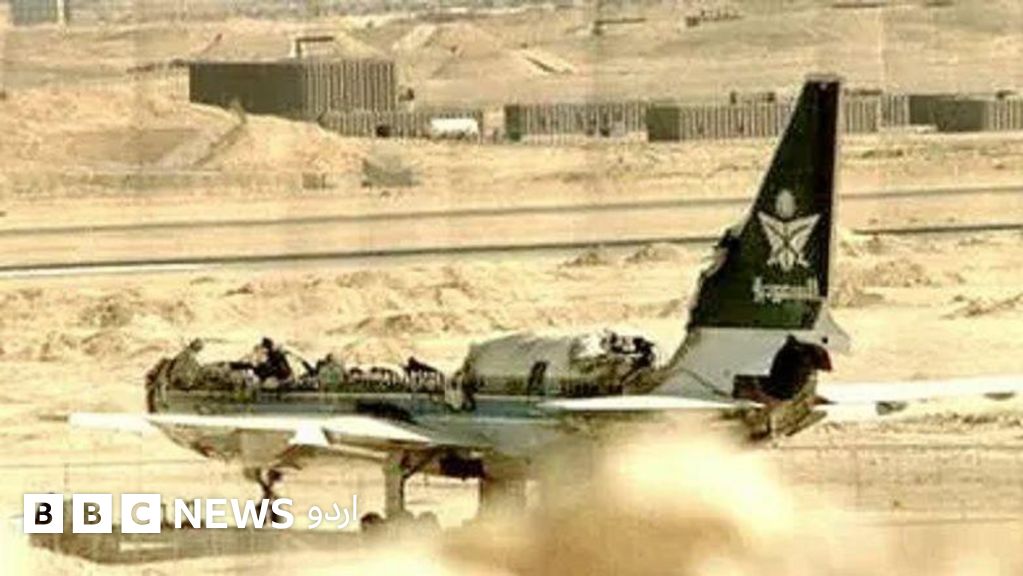
A Saudi Arabian Airlines flight from Karachi to Jeddah crashed on August 19, 1980, killing all 301 people on board. The investigation revealed that a faulty fuel tank and a design flaw in the aircraft's fire suppression system contributed to the disaster.
Imagine you're on a plane, and suddenly there's a big fire. The fire is so strong that it spreads quickly and makes it hard for the people on the plane to breathe. The plane's fire suppression system is supposed to help put out the fire, but it's not working properly. This makes the fire even worse, and it's too late to save the people on the plane. This is what happened on Flight 163, a plane that crashed on August 19, 1980, killing all 301 people on board.
Analysis
Investigation and Causes of the Crash
The investigation into the crash of Flight 163 was led by the Saudi Arabian Civil Aviation Authority, with assistance from the US Federal Aviation Administration (FAA). The investigation revealed that a combination of factors contributed to the disaster, including a faulty fuel tank and a design flaw in the aircraft's fire suppression system.
The fuel tank in question was a Class D tank, which was designed to be self-extinguishing in the event of a fire. However, the tank's design had a critical flaw: it was too large, and it contained too much oxygen. This made it prone to catastrophic failure in the event of a fire.
The fire suppression system on the aircraft was also faulty. The system was designed to release a fire-suppressing agent in the event of a fire, but it was not designed to handle a fire of the magnitude that occurred on Flight 163. As a result, the system was unable to extinguish the fire, and it spread rapidly throughout the aircraft.
The investigation also revealed that the crew of Flight 163 had not followed standard procedures for dealing with a fire on board. The captain, Muhammad Ali Khoytur, had not alerted the passengers to the danger, and he had not taken steps to evacuate the aircraft.
Impact of the Crash
The crash of Flight 163 had a significant impact on the aviation industry. It led to a major overhaul of safety procedures and regulations, and it resulted in significant changes to the way airlines and regulatory bodies approach safety.
The crash also led to a major increase in the use of fire-resistant materials in aircraft design. The use of these materials has since become a standard practice in the industry, and it has helped to reduce the risk of fires on board aircraft.
Lessons Learned
The crash of Flight 163 was a tragic reminder of the importance of safety in aviation. It highlighted the need for airlines and regulatory bodies to prioritize safety above all else, and it led to significant changes in the way the industry approaches safety.
The crash also highlighted the importance of proper training and procedures for dealing with emergencies on board. The crew of Flight 163 had not followed standard procedures for dealing with a fire on board, and this contributed to the disaster.
Conclusion
The crash of Flight 163 was a devastating tragedy that resulted in the loss of 301 lives. It was a wake-up call for the aviation industry, and it led to significant changes in the way airlines and regulatory bodies approach safety. The investigation into the crash revealed a combination of factors that contributed to the disaster, including a faulty fuel tank and a design flaw in the aircraft's fire suppression system. The crash also highlighted the importance of proper training and procedures for dealing with emergencies on board.
Key points
- The crash of Flight 163 was one of the deadliest aviation disasters in history.
- The investigation revealed that a combination of factors contributed to the disaster, including a faulty fuel tank and a design flaw in the aircraft's fire suppression system.
- The crash led to significant changes in the way airlines and regulatory bodies approach safety.
- The use of fire-resistant materials in aircraft design has become a standard practice in the industry.
- The crash highlighted the importance of proper training and procedures for dealing with emergencies on board.
The crash of Flight 163 led to significant changes in the way airlines and regulatory bodies approach safety, and it resulted in the development of new safety procedures and technologies. These changes have helped to reduce the risk of fires on board aircraft and have saved countless lives.
The crash of Flight 163 was a devastating tragedy that resulted in the loss of 301 lives. It highlighted the importance of proper training and procedures for dealing with emergencies on board, and it led to significant changes in the way airlines and regulatory bodies approach safety. However, the crash also highlighted the importance of vigilance and attention to detail in preventing such disasters.