FM Sitharaman tables Taxation and Other Laws (Amendment) Bill with digital payments proposal
India's Finance Minister Nirmala Sitharaman has introduced a bill proposing significant tax law amendments, including a ban on charges for notified digital payment modes and tax exemptions for foreign investors in government securities.
Intelligence analysis by Gemini 2.5 Flash Lite
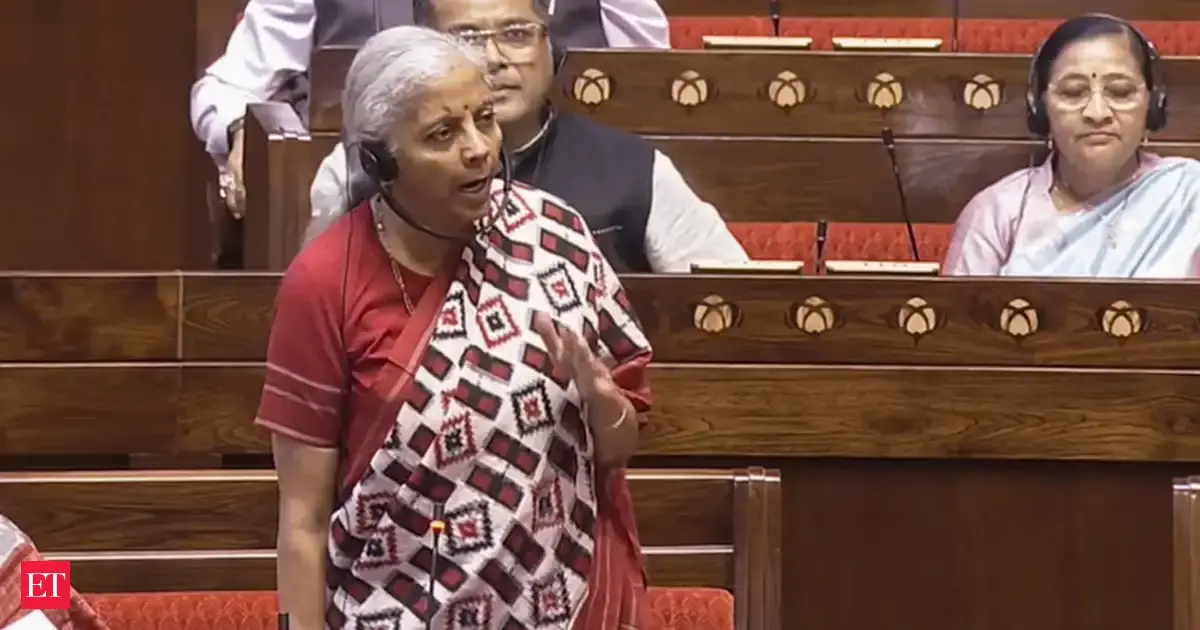
The Taxation and Other Laws (Amendment) Bill, 2026, tabled by FM Sitharaman, aims to boost digital payments by prohibiting charges on notified electronic modes. It also offers tax incentives for foreign investors in government securities, extends electronics manufacturing tax exemptions, and provides relief to the diamond industry and data centers.
Imagine the government wants everyone to use digital money, like phone payments, instead of cash. So, they're making a new rule that banks and payment apps can't charge extra fees for these digital payments. They're also giving special tax breaks to foreigners who invest in government bonds and to companies making electronics in India, like phones and computers, to encourage more business.
Analysis
Promoting Digital Transactions
The tabling of the Taxation and Other Laws (Amendment) Bill, 2026, marks a significant step by the Indian government to accelerate the adoption of digital payments. The core proposal to prohibit banks and payment system providers from levying charges on 'notified electronic modes' is designed to make digital transactions more accessible and cost-effective for both consumers and businesses. This move aligns with the broader national agenda of formalizing the economy and reducing reliance on cash, potentially leading to increased transparency and efficiency in financial flows across the country.
Attracting Foreign Investment and Boosting Manufacturing
Beyond digital payments, the bill introduces several measures aimed at enhancing India's attractiveness as an investment destination and a manufacturing hub. The proposed tax exemption for Foreign Institutional Investors (FIIs) and the Bank for International Settlements (BIS) on interest income and capital gains from government securities is a direct attempt to draw more foreign capital into India's debt markets. Furthermore, the extension of tax exemptions for contract manufacturing of specified electronic goods until FY2040-41, coupled with tax relief for foreign companies storing electronic components in customs bonded warehouses, underscores a strong commitment to bolstering the domestic electronics manufacturing ecosystem.
Sector-Specific Incentives and Simplification
The bill also addresses specific industry needs, offering targeted tax relief and simplification. The extension of tax exemption on rough diamond sales for foreign mining companies and intermediaries until March 31, 2041, aims to support the burgeoning diamond trade. For the digital infrastructure sector, relaxing tax rules for leased data centers is expected to encourage investment in cloud and data storage capabilities. Additionally, simplifying the tax framework for Eligible Investment Funds and Fund Managers is intended to boost India's fund management industry, providing greater tax certainty and encouraging more asset management activities within the country.
Key points
- The Taxation and Other Laws (Amendment) Bill, 2026, has been tabled in Lok Sabha.
- A key proposal prohibits charges on notified digital payment modes to promote their use.
- Tax exemptions are proposed for foreign investors in government securities and for electronics manufacturing.
- The bill aims to simplify tax for fund managers and provide incentives for the diamond industry and data centers.
The proposed bill could significantly accelerate India's digital transformation by making electronic payments more attractive and accessible. Enhanced tax incentives for foreign investors in government securities and electronics manufacturing may lead to increased capital inflows and a stronger domestic production base, fostering economic growth.
The success of these proposals hinges on effective implementation and market reception. If the 'notified electronic modes' are too restrictive or if foreign investors remain cautious due to global economic uncertainties, the intended boost to digital payments and investment may not fully materialize.