Israel’s October election complicates Gaza roadmap
A ceasefire in Gaza, brokered by a Trump peace plan, is strained by ongoing low-intensity conflict and Israeli restrictions. Hamas has agreed to disarm, but Israeli coalition partners oppose withdrawal, and elections loom.
Intelligence analysis by Gemini 2.5 Flash Lite
Despite a ceasefire and Hamas's agreement to disarm under a Trump-brokered roadmap, the Gaza situation remains precarious. Israeli restrictions on aid and infrastructure, coupled with territorial expansion, persist. Upcoming Israeli elections and internal political pressures on Prime Minister Netanyahu cast doubt on the implementation of the roadmap, particularly regarding IDF withdra…
Imagine two groups in a neighborhood who have been fighting. A big plan was made for one group to give up their heavy toys (weapons) and the other to move their big trucks (soldiers) out of some areas. But the leader of the second group has an election coming up and is worried about looking weak to voters, so he might not agree to move the trucks, making the whole plan difficult.
Analysis
A Fragile Ceasefire and Stalled Reconstruction
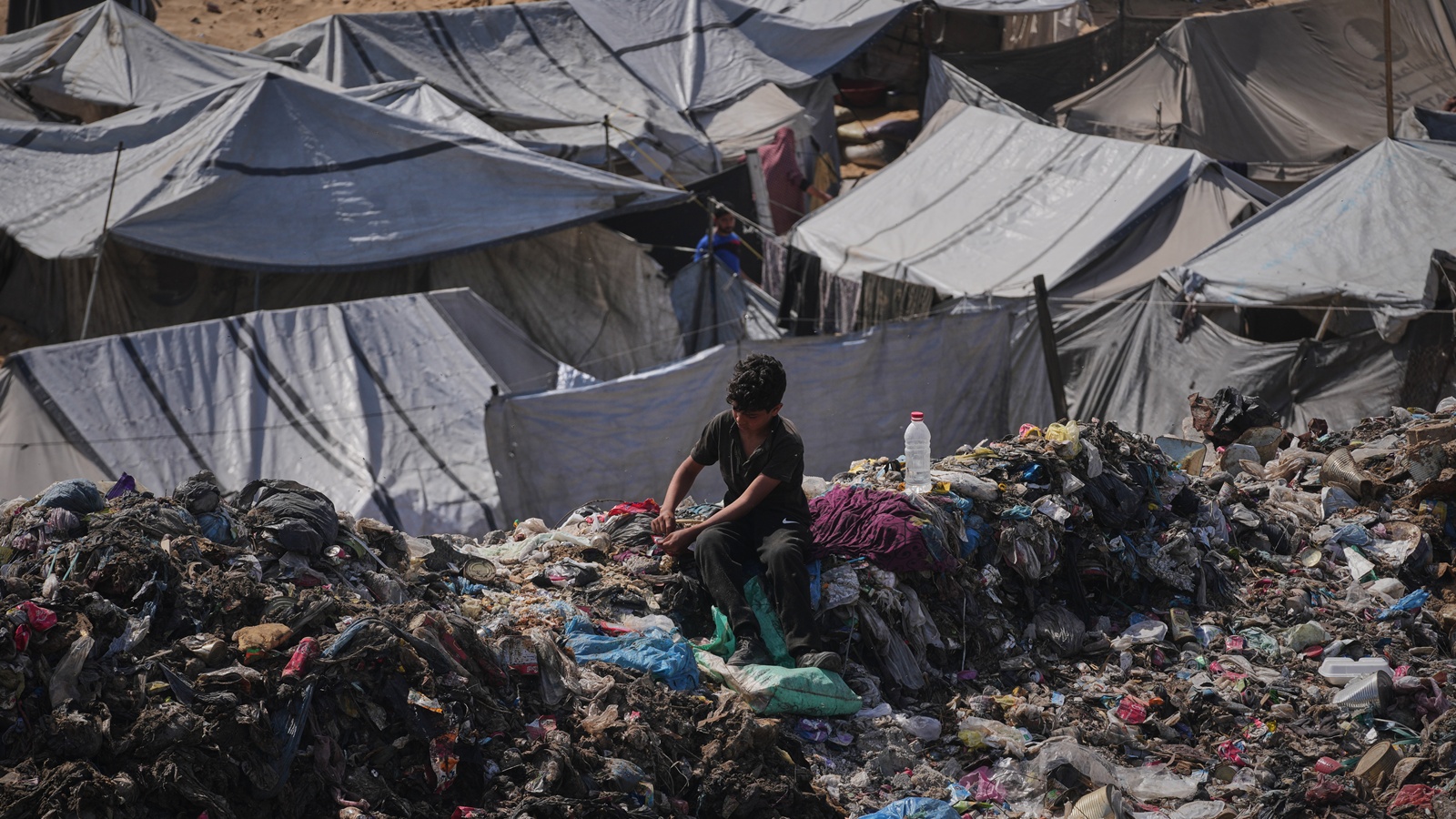
The war in Iran, beginning in February, has unfortunately overshadowed the dire situation in Gaza. While a ceasefire has been in place since October 10 of last year, following the 20-point Trump peace plan, a low-intensity conflict has unfortunately continued. Although the supply of food and medical aid to Gaza has seen a significant increase, there has been virtually no progress on reconstructing housing or rehabilitating essential infrastructure like water, sewage, and electricity. This lack of progress is largely attributed to Israeli restrictions on the entry of necessary industrial equipment.
Furthermore, the movement of Gazans through the Rafah border crossing into Egypt, their sole outlet to the outside world, remains severely restricted. Adding to the challenges, Israel has expanded its physical occupation of Gaza’s territory beyond the 53 percent agreed upon under the ceasefire framework, now exceeding 60 percent of the area.
Hamas's Concessions Amidst Financial Strain
Hamas, while retaining control over the densely populated 40 percent of Gaza, faces severe financial difficulties. The collapse of the local economy and the cessation of smuggling through Egyptian tunnels have dried up its internal revenue streams. Concurrently, external funding has halted; its primary patron, Iran, is preoccupied with its war against the US, Hezbollah's operational capabilities in Lebanon have diminished, and traditional donors like Qatar are exerting significant diplomatic pressure. Unable to pay its cadres and with depleted heavy weapons stockpiles due to sustained Israeli attacks, Hamas has been compelled to make concessions.
Early last month, Hamas handed over local governance to the National Committee for the Administration of Gaza (NCAG), a body of 15 apolitical Palestinian technocrats approved by the Board of Peace (BoP), as envisioned in the Trump peace plan. However, Israel has continued to obstruct the entry of the NCAG into Gaza.
Electoral Politics and the Uncertain Roadmap
To overcome this deadlock, Hamas agreed last week to surrender its heavy weaponry under the 15-point ‘Roadmap for Completing President Trump’s Comprehensive Gaza Peace Plan,’ negotiated by Egypt, Qatar, and Turkiye. This roadmap, detailed by the US Administration and BoP officials, links Hamas's disarmament to a phased IDF withdrawal, ensuring no Palestinian weapons are transferred to Israel or non-Palestinian entities. It also includes concessions for Hamas, allowing them to retain registered, licensed privately owned firearms and some vetted police officers.
President Trump announced Hamas's agreement to disarm as a major victory, shortly after meeting with Prime Minister Netanyahu. While Netanyahu has not openly criticized the Roadmap, his far-right coalition partners have vehemently dismissed the IDF withdrawal, reiterating their policy of Israeli settlements in Gaza. The upcoming Israeli elections on October 27 pose a significant hurdle. Netanyahu, trailing in opinion polls and facing internal pressure from his far-right allies, is unlikely to agree to territorial withdrawals that could be perceived as weakness by the electorate. This political calculus severely complicates the immediate implementation of the roadmap.
Key points
- A Trump-brokered peace plan and ceasefire in Gaza are strained by ongoing low-intensity conflict and Israeli restrictions.
- Hamas has agreed to disarm its heavy weaponry and hand over governance to a technocratic body (NCAG) under a new roadmap.
- Israel has expanded its occupation of Gaza and continues to restrict the entry of essential equipment and the NCAG.
- Upcoming Israeli elections in October create political pressure on Prime Minister Netanyahu, complicating agreement on IDF withdrawal.
- Far-right coalition partners in Israel oppose IDF withdrawal and advocate for settlements, further challenging the roadmap's implementation.
If the roadmap is successfully implemented, it could lead to a significant de-escalation of conflict in Gaza, paving the way for reconstruction and improved living conditions for its residents. The establishment of a technocratic governance body could foster stability and a more sustainable peace process.
The looming Israeli elections and the strong opposition from far-right coalition partners create a high risk of the roadmap's collapse. Continued Israeli restrictions and territorial expansion, coupled with Hamas's potential inability to fully disarm or govern effectively, could prolong the conflict and humanitarian crisis.