Football in the Shadow of Politics and Huge Costs: The First World Cup Where the Host Is at War with a Team
BBC says the 2026 World Cup will be the biggest ever, but also one of the most political, expensive and contested, with Iran at the center of tensions.
Intelligence analysis by GPT-5.4 Mini
BBC frames the 2026 World Cup as a tournament shaped by politics as much as football. Iran has become a flashpoint because of U.S. visa limits, security concerns, and the fact that one host is at war with one of the participating teams.
This World Cup is like a huge school sports day where one of the team captains is also arguing with the teacher running the event. That means tickets, travel, and even where teams stay can turn into big problems, not just the games themselves.
Analysis
A World Cup under pressure
BBC says the 2026 World Cup, co-hosted by the United States, Mexico and Canada, will be the largest in history, with 48 teams and 104 matches. Yet the article argues that it is also shaping up as one of the most political tournaments ever, with concerns over cost, security, migration rules, climate, and fan access.
Iran becomes a flashpoint
The piece focuses heavily on Iran because the team will compete in a World Cup hosted partly by the United States at a time of open conflict between the two countries. BBC says the team’s base was moved from Arizona to Tijuana after tensions rose. It also reports criticism over U.S. visa restrictions for players and staff, the cancellation of Iran’s group-stage fan ticket allocation, and reports that the pre-revolution Iranian flag may be barred from stadiums.
The article adds that Iran’s first two matches will be in Los Angeles, home to a large Iranian diaspora, which makes the political atmosphere even more sensitive.
Broader restrictions and criticism
BBC says travel or visa problems are affecting fans from more than a quarter of participating teams, and that countries including Iran, Haiti, Senegal and Ivory Coast face restrictions of some kind. It also mentions criticism over visa hurdles for journalists and says a Somali referee was removed from the tournament because he could not get entry approval to the United States.
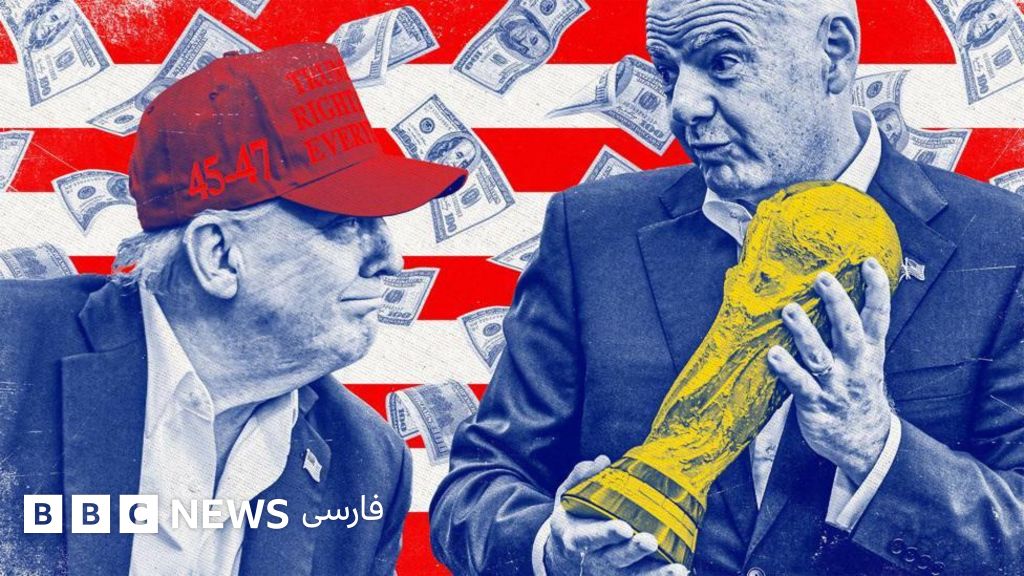
The article quotes critics who say the tournament is blurring the line between sport and politics. It also notes that FIFA president Gianni Infantino has previously warned that travel restrictions conflict with FIFA principles, even as his ties with Donald Trump have drawn attention. The piece suggests that the 2026 tournament may become one of the most politically charged sporting events of the modern era.
Key points
- BBC says the 2026 World Cup is the biggest in history, but also unusually political and expensive.
- Iran is a central example because the United States is one of the hosts while tensions with Iran remain high.
- The article says Iran’s team base was moved from Arizona to Tijuana and that fan ticket allocations for the group stage were canceled.
- BBC reports visa and travel restrictions affecting fans, journalists, and even a Somali referee.
- Critics say the tournament is blurring the line between sport and politics more than past World Cups.
If the event runs smoothly, it could still bring together fans from many countries and showcase football on an unprecedented scale. For Iran, strong performances on the pitch could keep attention on the team’s sport rather than the politics around it.
If visa limits, ticket changes, or security worries worsen, the tournament could be remembered more for exclusion than celebration. For Iran, the risk is that players, staff, and supporters face barriers that limit the team’s participation and the visibility of its fans.