Foreign Ministry summons UK envoy over IRGC blacklisting
Iran's Ministry of Foreign Affairs summoned the British ambassador to Tehran to protest the UK's decision to blacklist the Islamic Revolutionary Guard Corps (IRGC). The move was described as a hostile act and a breach of international obligations.
Intelligence analysis by Llama
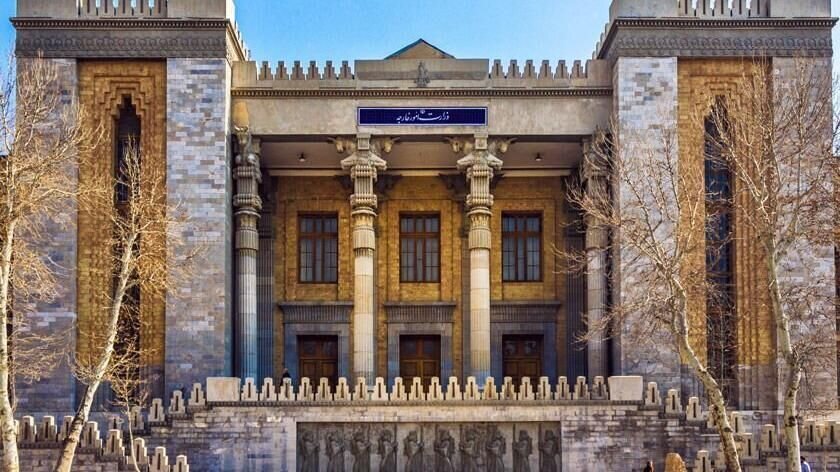
Iran's Foreign Ministry summoned the British ambassador to protest the UK's decision to blacklist the IRGC. The move was seen as a hostile act and a breach of international obligations.
Iran's government is upset with the UK because they blacklisted a group called the IRGC. The IRGC is like a special team that helps keep Iran safe. The UK's decision is like a big no-no, and Iran is saying they will respond in a strong way.
Analysis
A Hostile Act: The UK's Blacklisting of the IRGC
The decision by the UK to blacklist the Islamic Revolutionary Guard Corps (IRGC) has been met with strong protest from the Iranian government. The move is seen as a hostile act and a breach of international obligations. The IRGC is an integral part of Iran's official Armed Forces, serving alongside the Army to defend the country's independence, territorial integrity, and national security.
The UK's decision to blacklist the IRGC is a clear indication of its hostile intentions towards Iran. The move is seen as a breach of international law and a violation of the principles of sovereignty and non-interference in the internal affairs of other countries. The Iranian government has emphasized that it will take a firm and reciprocal response to this move.
A Firm Response: Iran's Reaction to the UK's Decision
The Iranian government has strongly condemned the UK's decision to blacklist the IRGC. The Foreign Ministry has emphasized that the move is a clear indication of the UK's hostile intentions towards Iran and a breach of international obligations. The Iranian government has also highlighted the IRGC's role in combating the Daesh (ISIL) terrorist group and warned that Tehran reserves the right to take reciprocal measures in response to London's decision.
Implications for Iran's National Security
The blacklisting of the IRGC by the UK has significant implications for Iran's national security. The move is seen as a breach of international obligations and a hostile act by the Iranian government. The IRGC is an integral part of Iran's official Armed Forces, serving alongside the Army to defend the country's independence, territorial integrity, and national security. The blacklisting of the IRGC is a clear indication of the UK's hostile intentions towards Iran and a breach of international law.
A Firm Response: Iran's Reaction to the UK's Decision
The Iranian government has emphasized that it will take a firm and reciprocal response to the UK's decision to blacklist the IRGC. The move is seen as a breach of international obligations and a hostile act by the Iranian government. The Iranian government has also highlighted the IRGC's role in combating the Daesh (ISIL) terrorist group and warned that Tehran reserves the right to take reciprocal measures in response to London's decision.
Key points
- Iran's Ministry of Foreign Affairs summoned the British ambassador to protest the UK's decision to blacklist the IRGC.
- The move was seen as a hostile act and a breach of international obligations.
- The IRGC is an integral part of Iran's official Armed Forces, serving alongside the Army to defend the country's independence, territorial integrity, and national security.
- The Iranian government has emphasized that it will take a firm and reciprocal response to the UK's decision.
- The blacklisting of the IRGC has significant implications for Iran's national security.
If the situation is resolved peacefully, it could lead to improved relations between Iran and the UK. This could also lead to a decrease in tensions in the region.
The situation could escalate into a full-blown conflict between Iran and the UK. This could lead to a significant increase in tensions in the region and potentially even a war.