Forest Fires: 'Somehow Save the Homeland' - Fight Against the Wall of Fire
A massive forest fire in Germany's Hürtgenwald, complicated by unexploded WWII ordnance and strong winds, forced the evacuation of 2,300 residents from the village of Gey. Firefighters, supported by local volunteers and even military tanks, are battling the blaze amidst c…
Intelligence analysis by Gemini 2.5 Flash
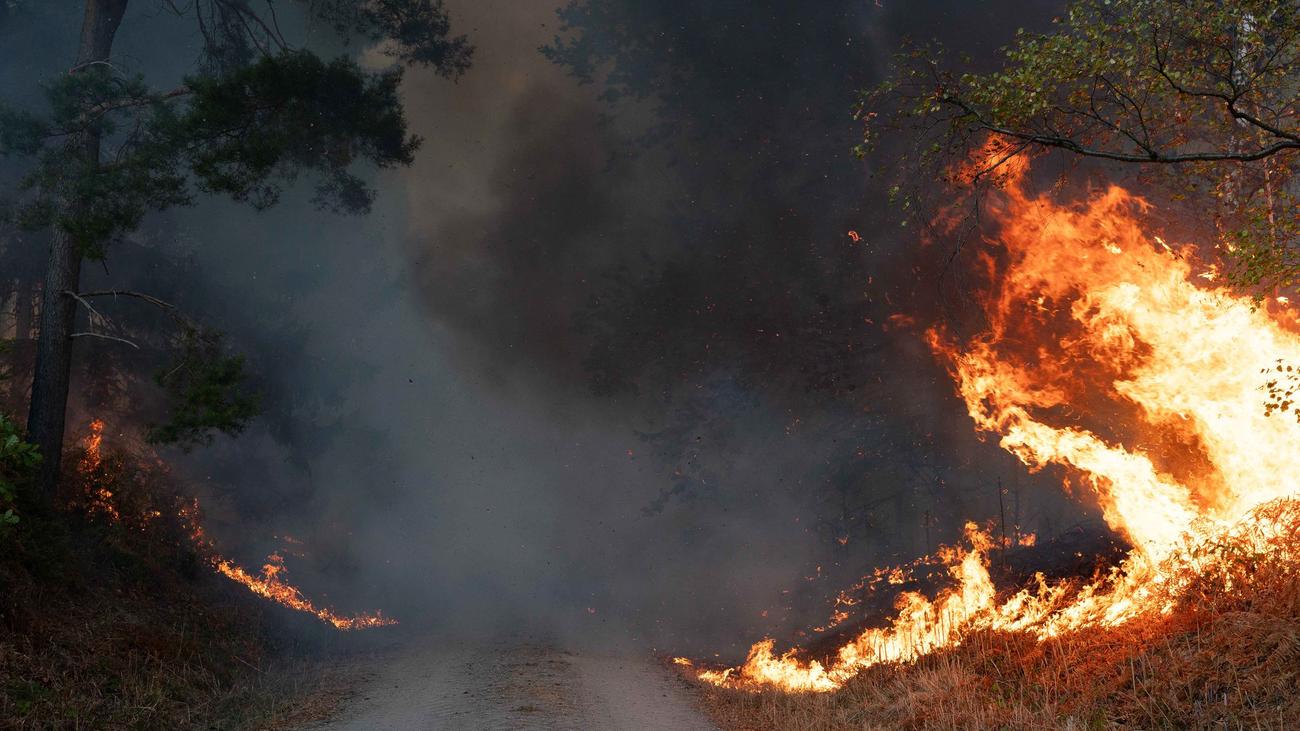
The article details the harrowing experience of residents and emergency services fighting a large forest fire in Hürtgenwald, Germany. The situation is exacerbated by the presence of unexploded WWII ammunition, which caused explosions, and adverse weather conditions, leading to evacuations and a desperate effort to protect nearby villages.
Imagine a huge forest fire, like a giant fiery monster, is burning near a village in Germany. It's extra scary because this forest used to be a battlefield a long, long time ago, and there are old bombs hidden underground that are now exploding because of the heat! Firefighters are working super hard, even using big army tanks to cut paths, and people had to leave their homes quickly. The wind is making it even harder, like trying to blow out a candle in a hurricane.
Analysis
Hürtgenwald
The Hürtgenwald region, a large and ancient forest in Germany, has become the epicenter of a dramatic wildfire. This area holds significant historical weight, having been the site of one of the most devastating battles for American forces during World War II in autumn 1944. This historical context presents a unique and dangerous challenge for firefighters: the forest floor is riddled with unexploded ordnance, including grenades and ammunition, which have been detonating due to the intense heat of the blaze.
These explosions not only add to the danger for emergency personnel but also complicate containment strategies, as direct access to certain areas may be too risky. The combination of a dense, old forest and a hidden legacy of war creates an unprecedented scenario for disaster management in the region.
Ralf Nolten
Düren District Administrator Ralf Nolten (CDU) has been a central figure in coordinating the response to the Hürtgenwald fire. He explained the critical need for military tanks to create firebreaks, a testament to the extreme measures required to contain the inferno. Nolten also recounted the terrifying progression of the "wall of fire" as it shifted directions, eventually threatening the village of Gey and necessitating the evacuation of its 2,300 residents.
His accounts underscore the unpredictable and rapidly escalating nature of the disaster, emphasizing how quickly the situation can change with strong, shifting winds. Nolten's leadership highlights the multi-faceted approach required, involving not just firefighting but also strategic planning for civilian safety and resource deployment under extreme pressure.
Gey
The village of Gey, with its 2,300 inhabitants, faced an immediate and severe threat from the advancing flames. Residents were abruptly woken by police in the middle of the night and evacuated, demonstrating a remarkable level of cooperation, unlike the resistance sometimes encountered during other emergency evacuations. The proximity of the fire, at one point only 250 meters from the village, highlighted the urgency of the situation and the critical importance of protecting human settlements over the forest itself, as emphasized by Mayor Stephan Cranen.
The swift and orderly evacuation of Gey underscores the effectiveness of local emergency protocols when faced with an imminent threat. The community's understanding and compliance were crucial in ensuring the safety of its residents, even as the fire continued to rage nearby.
Key points
- A large forest fire is raging in Germany's Hürtgenwald, requiring extensive firefighting efforts.
- The fire is complicated by unexploded WWII ammunition, which has been detonating.
- Military tanks are being used to create firebreaks in the forest.
- The village of Gey, with 2,300 residents, was evacuated due to the fire's proximity.
- Challenging weather conditions, including high temperatures and strong winds, are hindering containment efforts.
The coordinated efforts of firefighters, local volunteers, and military support, including the use of tanks for firebreaks and successful evacuations, demonstrate a robust emergency response system. The hope is that these combined forces, along with the eventual change in weather conditions, will bring the fire under control and prevent further damage to residential areas.
The "Red Flag Day" conditions, characterized by temperatures over 30 degrees Celsius and strong, shifting winds, pose a significant challenge, making the fire highly unpredictable and difficult to contain. The continued presence of unexploded WWII ordnance adds a dangerous and uncontrollable element, risking the safety of emergency personnel and potentially prolonging the crisis.