Forget air-con, Singapore looks underground for a cooler future
Singapore is expanding district cooling underground to cut electricity use as the city-state faces hotter temperatures and energy security pressures.
Intelligence analysis by GPT-5.4 Mini
Singapore is betting on underground district cooling, piping chilled water through neighborhoods instead of relying only on room-by-room air conditioners. The pitch is lower electricity use, better resilience, and a scalable way to cool a rapidly warming city.
Singapore is putting giant cold-water pipes under the ground so buildings can share cooling, instead of everyone using their own air conditioner. It is like one big shared freezer for a whole neighborhood.
Analysis
What Singapore is building
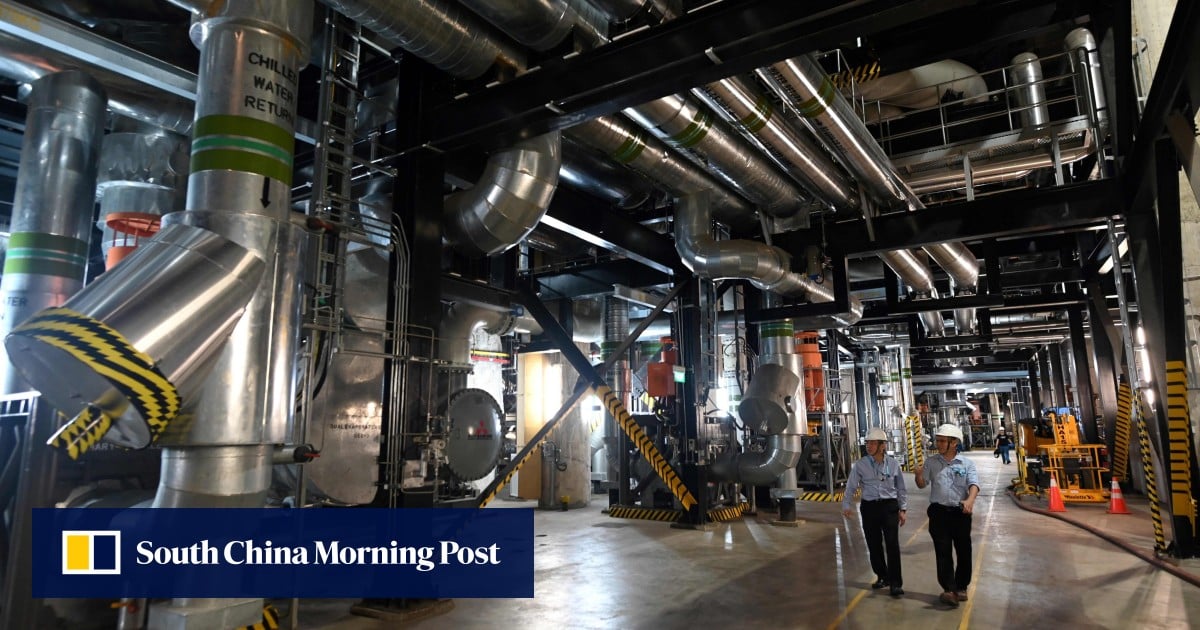
Deep under Punggol, Singapore runs a 5km network of metal pipes that sends chilled water to cool buildings above ground. The article describes this as district cooling, a 140-year-old idea that uses less electricity than centralized air conditioners.
Why the model is getting attention
Singapore is highly dependent on imported energy and is warming faster than the global average, so reducing cooling demand matters for both cost and security. The city-state has already laid pipes under at least eight neighborhoods, and its Marina Bay system, which began operating in 2006, is described as the world’s largest underground network.
Scale and economics
The article says more buildings will be linked to Marina Bay, while other facilities are being rolled out by firms such as Keppel EaaS. Engie, a major operator, says the local market could double over the next decade from about 323,000 refrigeration tons today.
Bigger regional signal
The piece frames district cooling as a technology gaining traction around the world, especially in the Middle East, and cites one estimate that puts the market at US$60 billion by 2034. A National University of Singapore professor says cooling demand is rising with urbanization, income growth, heat stress, and more commercial floor area, and that Singapore could show the system works well in hot, humid conditions.
Key points
- Singapore is expanding district cooling underground to reduce reliance on conventional air conditioners.
- The technology uses less electricity, which matters for a country that imports nearly all of its energy.
- The Marina Bay network is described as the world’s largest underground district cooling system.
- Engie says the local market could double over the next decade from about 323,000 refrigeration tons.
- Experts say the model could help hot, humid cities balance comfort, reliability, and emissions.
If district cooling keeps expanding, Singapore could lower electricity use for cooling while keeping offices, schools, and homes comfortable. The system could also become a proof point for other hot cities trying to cut power demand and improve energy security.
The rollout may stay limited if the underground networks are expensive to build or difficult to expand across older parts of the city. If cooling demand keeps rising faster than infrastructure can be added, Singapore may still face high electricity use and pressure on energy imports.