Germany raises alarm over growing ‘hybrid warfare’ threat
Germany's Interior Minister Alexander Dobrindt has raised alarm over the growing threat of hybrid warfare, citing daily attacks from abroad. The government plans to boost its anti-drone capacity to meet the threat.
Intelligence analysis by Llama
Germany is facing a growing threat of hybrid warfare, with daily attacks from abroad. The government plans to boost its anti-drone capacity to meet the threat.
Germany is facing a growing threat of hybrid warfare, which means that foreign powers are trying to attack the country using different tactics, like espionage, sabotage, and cyberattacks. The government is planning to boost its anti-drone capacity to meet this threat. Imagine someone is trying to break into your house by using different methods, like picking the lock, breaking the window, or hacking into your security system. That's what's happening to Germany, and the government is trying to strengthen its defenses to prevent these attacks.
Analysis
Hybrid Warfare Threats to Germany's National Security
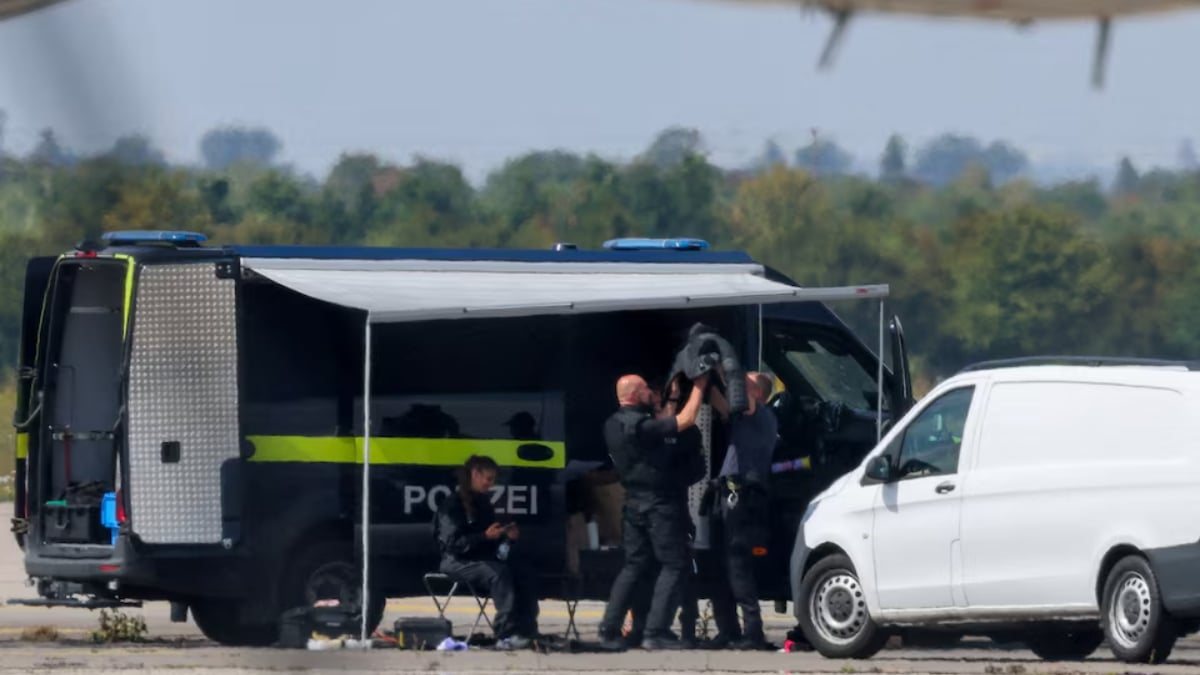
Germany is facing a growing threat of hybrid warfare, with daily attacks from abroad. The government plans to boost its anti-drone capacity to meet the threat. Hybrid warfare involves a range of tactics, including espionage, sabotage, cyberattacks, and covert operations, aimed at destabilizing a country or inflicting direct harm. The threat is not limited to Germany, as other European countries are also facing similar challenges. The Russian embassy in Berlin has dismissed the recent drone incident at Leipzig/Halle Airport as a 'fabricated provocation', but the German government remains concerned about the threat. The government plans to double its federal team of anti-drone experts to 300 from 150 and its network of related bases to eight from four. This move is aimed at enhancing the country's ability to counter the hybrid warfare threat. The threat of hybrid warfare is not new, but it has become more pronounced in recent years. The conflict between Russia and Ukraine has raised concerns about the potential for hybrid warfare in Europe. The Serbian President Aleksandar Vucic has warned that Russia's 'hybrid war' against European powers is 'essentially the same as what Europe has done to Russia'. He argued that Europe had armed Ukraine and imposed sanctions on Russia, as well as given Kyiv financial support. The conflict has also raised concerns about the potential for a major war in Europe. The Ukrainian President Volodymyr Zelenskiy has called for international support to help his country defend against Russian aggression. The international community has been watching the situation closely, and there are concerns about the potential for a major conflict in Europe. The threat of hybrid warfare is a concern for Germany and its allies, as it can have significant implications for national security and stability. The government's plan to boost its anti-drone capacity is aimed at enhancing the country's ability to counter the threat. The move is also aimed at improving the country's ability to respond to the threat. The government's plan to boost its anti-drone capacity is a positive step towards enhancing the country's ability to counter the hybrid warfare threat. The move is also aimed at improving the country's ability to respond to the threat. The government's plan to boost its anti-drone capacity is a positive step towards enhancing the country's ability to counter the hybrid warfare threat.
Key points
- Germany is facing a growing threat of hybrid warfare, with daily attacks from abroad.
- The government plans to boost its anti-drone capacity to meet the threat.
- The threat of hybrid warfare is a concern for Germany and its allies, as it can have significant implications for national security and stability.
- The government's plan to boost its anti-drone capacity is aimed at enhancing the country's ability to counter the hybrid warfare threat.
- The conflict between Russia and Ukraine has raised concerns about the potential for hybrid warfare in Europe.
If the German government's plan to boost its anti-drone capacity is successful, it could help to reduce the threat of hybrid warfare and improve the country's national security. Additionally, the international community's support for Ukraine could help to de-escalate the conflict and reduce the risk of a major war in Europe.
The threat of hybrid warfare is a significant concern for Germany and its allies, and the conflict between Russia and Ukraine could escalate into a major war in Europe. This could have significant implications for national security and stability, and could lead to a major humanitarian crisis.