Ghana to apply to join BRICS, foreign minister says
Ghana's cabinet has approved a formal application to join the BRICS bloc, aiming to diversify economic and diplomatic partnerships. The country has sought India's support for its bid.
Intelligence analysis by Gemini 2.5 Flash Lite
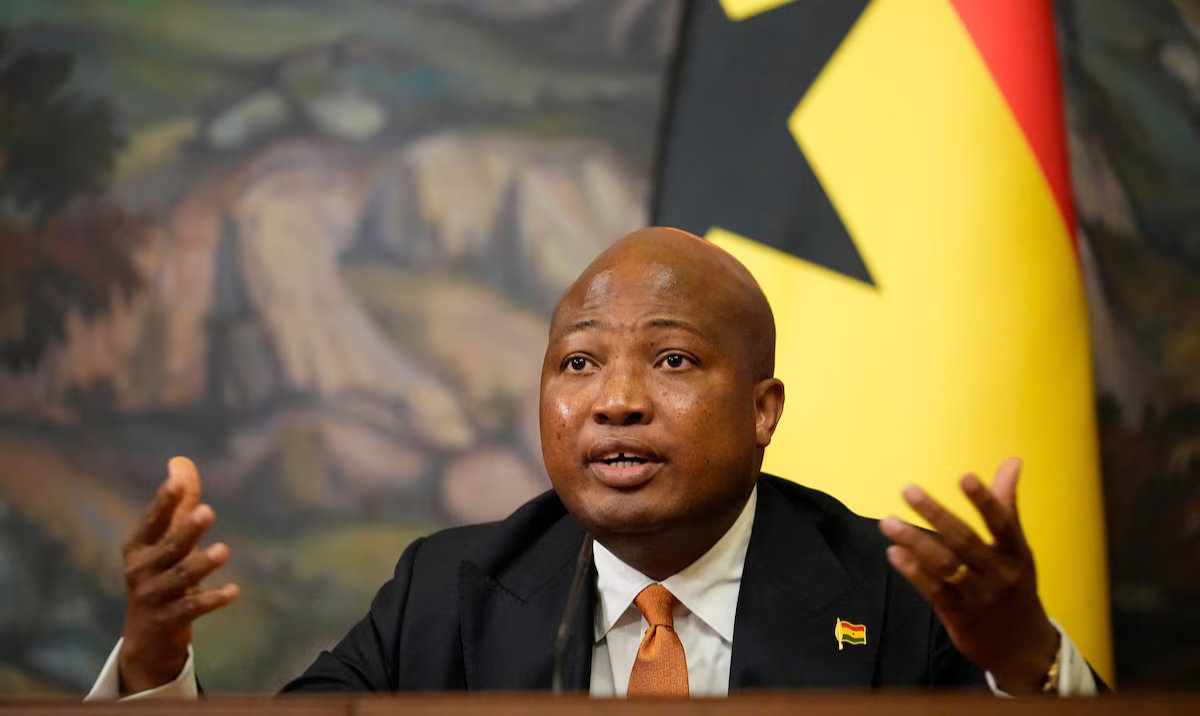
Ghana is formally seeking to join the BRICS group of emerging economies, with its foreign minister stating the move aims to diversify partnerships and enhance cooperation within the Global South. India, a key BRICS member, has expressed support but noted that final membership requires consensus from the wider bloc.
Imagine a club for countries that want to work together to become stronger, like Brazil, Russia, India, China, and South Africa. Ghana wants to join this club to make new friends and find more ways to trade and grow its economy, getting help from countries like India.
Analysis
Ghana's Strategic Pivot
The decision by Ghana's cabinet to formally apply for BRICS membership represents a significant strategic maneuver by the West African nation. Foreign Minister Samuel Okudzeto Ablakwa articulated that the primary objective is to "diversify the country’s economic and diplomatic partnerships." This move aligns with a growing inclination among Global South nations to seek alternative avenues for economic development and political influence, moving beyond established Western-dominated institutions. By joining BRICS, Ghana aims to tap into a bloc that champions multipolarity and offers a platform for increased cooperation among developing economies, potentially leading to new trade agreements, investment opportunities, and a stronger collective voice on the international stage.
India's Role and BRICS Expansion
Ghana has specifically sought India's support for its application, highlighting the crucial role individual member states play in the bloc's expansion. India's external affairs minister, Subrahmanyam Jaishankar, indicated support for Ghana's aspirations, while also emphasizing that any new membership requires the consensus of all existing BRICS nations. This underscores the internal dynamics and decision-making processes within BRICS, which has seen steady expansion since its inception. The inclusion of countries like South Africa, Ethiopia, Iran, and Indonesia in recent years demonstrates the bloc's evolving nature and its increasing appeal to nations looking to counterbalance global economic and political power structures. Ghana's application fits this pattern, seeking to leverage the collective strength of BRICS for its own development goals.
Economic and Diplomatic Implications
The potential implications of Ghana's membership extend to both its economic landscape and its diplomatic standing. "Joining India in BRICS will give us economic options, will diversify our base and our partnerships, and will also allow us to have more cooperation within the global south framework," Ablakwa stated. This suggests an expectation of tangible economic benefits, such as increased trade volumes, access to new markets, and potentially more favorable investment terms. Diplomatically, it signals Ghana's proactive engagement in shaping a more inclusive global order. As BRICS continues to grow and solidify its influence, Ghana's participation could enhance its leverage in international negotiations and its ability to address pressing development challenges through collaborative South-South initiatives.
Key points
- Ghana's cabinet has approved a formal application to join the BRICS economic and geopolitical bloc.
- The move aims to diversify Ghana's economic and diplomatic engagements.
- Ghana has sought support from India, a key member of BRICS, for its application.
- BRICS has been expanding, with recent additions including Ethiopia, Iran, and Indonesia.
- Membership requires consideration and consensus from the wider BRICS grouping.
Ghana's potential entry into BRICS could unlock new avenues for economic growth through diversified trade and investment partnerships. Increased cooperation within the Global South framework might provide Ghana with greater leverage in international forums and access to development resources.
Ghana's application might face hurdles due to the consensus-based membership process within BRICS. Furthermore, the economic benefits are not guaranteed and depend on the bloc's ability to effectively integrate new members and deliver on its economic promises.