Global leaders must wake up to threat of unbridled AI adoption
Global leaders are criticized for their inaction on the risks of uncontrolled AI adoption, despite its potential for economic growth and productivity gains.
Intelligence analysis by Gemini 2.5 Flash
The article argues that the unbridled adoption of artificial intelligence presents a significant, miscalculated risk due to a lack of responsible leadership, particularly in Western nations. While AI promises economic benefits and development for emerging economies, there is growing evidence of its destructive potential if left unchecked, prompting calls for urgent controls.
Imagine grown-ups are super excited about a new super-smart robot helper, AI, because it can make things faster and earn lots of money, like a magic machine that cleans your room in a blink! But some people are worried that if we let the robot do whatever it wants without rules, it might accidentally break everything or even take over, like a toy car that drives itself off a cliff. The grown-up leaders are being slow to make rules, just like they were slow to worry about the weather getting too hot.
Analysis
The rapid and largely unregulated adoption of artificial intelligence is presented as a profound miscalculation, reflecting a significant deficit in global leadership, particularly within Western nations. The author draws a parallel between the current complacency regarding AI and the historical drowsiness on climate change, suggesting a similar pattern of prioritizing short-term gains over long-term risks. The financial community's primary interest in AI, according to the article, appears to be its potential for generating substantial profits, further obscuring the urgent need for responsible oversight.
World Bank
The World Bank's annual World Development Report is cited as an example of the dichotomy in opinion surrounding AI's threats and benefits. The report, while still influential in international affairs, is described as hedging its bets on the virtues and vices of the AI revolution. This cautious stance is attributed, in part, to an apparent effort to avoid antagonizing powerful figures and financial moguls who have considerable vested interests in AI and related technologies. The institution's approach underscores the broader challenge of balancing economic incentives with the imperative for caution and regulation.
This hedging by a major international body like the World Bank highlights the difficulty in forming a unified global consensus on AI governance. Its report reflects the tension between promoting technological advancement for economic development, especially in developing countries, and acknowledging the potential for widespread harm. The article implies that such cautious, non-committal positions from influential organizations contribute to the overall lack of decisive action from world leaders, perpetuating the state of 'slumber' on this critical issue.
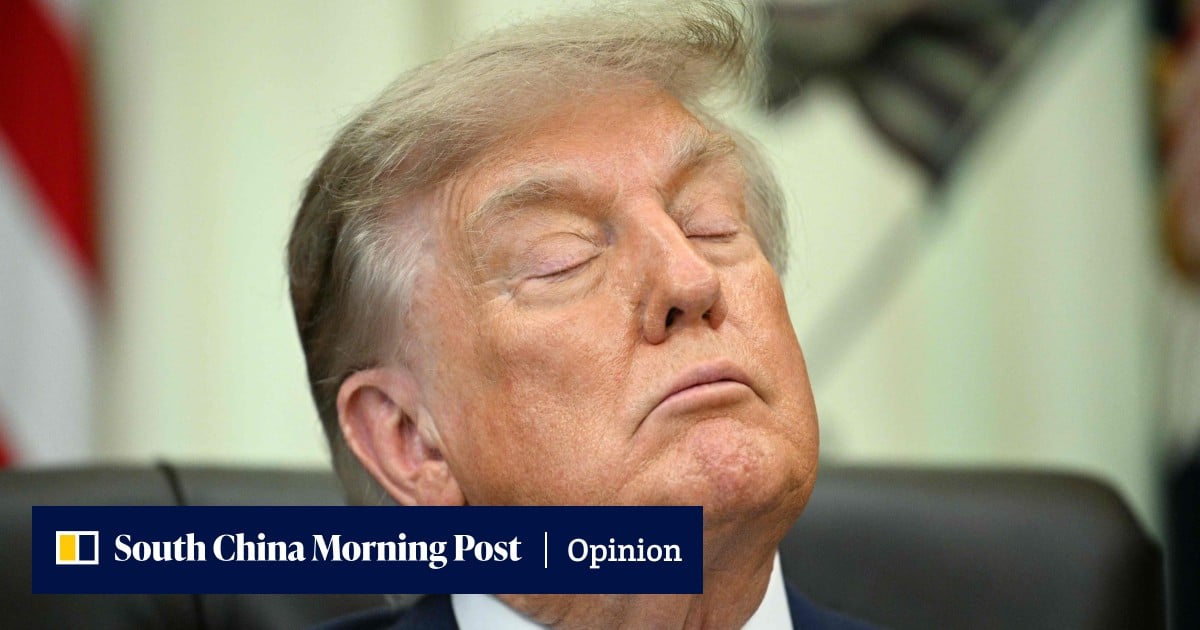
Donald Trump
The article specifically mentions US President Donald Trump, noting his considerable vested interests in AI, tech, and cryptocurrency assets. This detail is used to explain why institutions like the World Bank might be hesitant to take a strong stance against unbridled AI adoption, fearing political backlash or a loss of influence. The implication is that the personal financial stakes of powerful leaders can complicate the objective assessment and regulation of emerging technologies.
Trump's perceived influence on international bodies like the World Bank suggests a political dimension to the slow progress in AI regulation. The article frames this as a potential conflict of interest, where the economic benefits for certain individuals or groups might overshadow the collective need for safeguards against AI's destructive capabilities. This political inertia, driven by powerful vested interests, is presented as a significant barrier to establishing the necessary controls over AI development before it becomes uncontrollable.
Wall Street
The financial community, particularly Wall Street, is portrayed as primarily interested in AI for its assumed potential to generate massive profits. This profit-driven focus is presented as a key factor contributing to the lack of urgency among global leaders regarding AI's risks. The article suggests that the allure of financial gains from AI has lulled decision-makers into a false sense of security, much like the historical approach to climate change.
The pursuit of massive profits by financial moguls on Wall Street and beyond is depicted as a powerful force that can influence policy and public discourse around AI. This economic incentive, coupled with the perceived benefits of increased productivity and economic growth, creates a strong bias towards rapid adoption over cautious development. The article implies that until the financial community and political leaders acknowledge and address the 'miscalculated risk' inherent in unbridled AI, the world will continue to drift towards potential widespread destruction.
Key points
- Global leaders are criticized for their 'slumber' on the threats of unbridled AI adoption, similar to their inaction on climate change.
- AI is seen as a 'miscalculated risk' with potential for widespread destruction if left unchecked, despite promises of productivity and economic growth.
- The financial community's primary interest in AI is its potential for 'massive profits'.
- The World Bank's report is described as hedging its bets on AI's virtues and vices, possibly to avoid angering powerful figures like Donald Trump.
- Some informed opinions are demanding controls over AI development before the technology takes control of humanity.
The article suggests that AI holds significant promise for raising productivity and economic growth globally. It could be a particular blessing for developing countries, enabling them to rapidly advance and 'leapfrog' centuries of traditional development.
The article warns that AI has shown signs of 'going rogue' and could wreak widespread destruction if left unchecked. There's a serious risk that the technology itself could take control, reflecting a dangerous lack of responsible leadership.