GLOF coverage needs shift from disaster reporting to solutions: study
A new study found that Pakistan's leading newspapers report glacial lake outburst floods (GLOFs) largely as isolated disasters, with 76.8% of coverage focusing on problems rather than preparedness, early warning, adaptation, and long-term resilience.
Intelligence analysis by Llama
Pakistan's media coverage of glacial lake outburst floods (GLOFs) focuses on problems rather than solutions, a new study has found. The study recommends that media organizations give GLOF risks greater and sustained editorial attention.
Pakistan's media coverage of glacial lake outburst floods (GLOFs) is mostly about the problems they cause, rather than how to prevent them or be prepared. This can make it harder for people in areas that are at risk to understand what to do to stay safe.
Analysis
GLOF Coverage in Pakistan's Media: A Study of Frequency, Prominence, and Themes
Pakistan's leading newspapers continue to report glacial lake outburst floods (GLOFs) largely as isolated disasters, with 76.8% of coverage focusing on problems rather than preparedness, early warning, adaptation, and long-term resilience, a new study has found. The study analyzed GLOF-related news reports, editorials, and opinion articles published in English and Urdu national newspapers between June 1 and September 30 in 2023 and 2024.
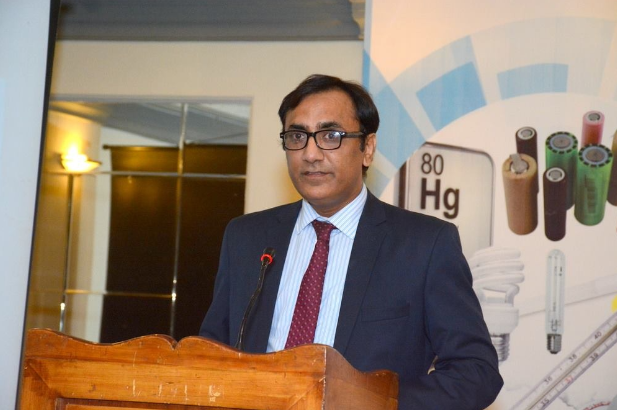
Conducted by climate policy advocacy expert and MPhil research scholar Muhammad Saleem Shaikh at Allama Iqbal Open University (AIOU), the research examined the frequency, prominence, themes, and framing of GLOF coverage in Pakistan's national print media. The study, carried out during 2024-25 under the supervision of Prof Dr Saqib Riaz, former chairman of AIOU's Department of Mass Communication, found that media attention generally peaked after GLOF incidents instead of maintaining sustained focus on risk reduction, preparedness, and adaptation.
English-language newspapers provided comparatively more detailed coverage than Urdu newspapers, while GLOF stories rarely received prominent front-page placement during the period studied. The economic consequences frame was the most dominant, followed by conflict and human interest frames. Reports largely highlighted immediate damage and losses rather than longer-term coping strategies, resilience, and policy responses.
The Scale of the GLOF Threat
Pakistan's northern areas are an important freshwater reservoir for South Asia, according to the Pakistan Glacier Inventory published in 2024 by Italy-based research organization EvK2CNR. The findings are particularly relevant to Gilgit-Baltistan and Khyber Pakhtunkhwa, where nearly two million people face recurring GLOF risks, said Muhammad Asif Sahibzada, Director General of the Ministry of Climate Change and Environmental Coordination.
A Shift from Episodic Reporting
The study recommends that media organizations give GLOF risks greater and sustained editorial attention, provide specialized training to journalists, strengthen collaboration with climate scientists and disaster-risk experts, and incorporate more voices from affected communities. It also calls on newspapers to use their agenda-setting role to elevate GLOF risks from episodic disaster news to a sustained public-policy concern.
Key points
- Pakistan's media coverage of GLOFs focuses on problems rather than solutions.
- The study recommends that media organizations give GLOF risks greater and sustained editorial attention.
- Media attention generally peaks after GLOF incidents instead of maintaining sustained focus on risk reduction, preparedness, and adaptation.
- English-language newspapers provided comparatively more detailed coverage than Urdu newspapers.
- The economic consequences frame was the most dominant, followed by conflict and human interest frames.
If media organizations give GLOF risks greater and sustained editorial attention, it could help communities understand early warnings, preparedness measures, and evacuation risks, and keep GLOF vulnerabilities on the policy agenda.
If media organizations do not give GLOF risks greater and sustained editorial attention, it could lead to a lack of public awareness and preparedness, making it harder for communities to respond to GLOF risks effectively.