Sethi House: Where Peshawar’s trading past lives on in wood, glass and light includes in UNESCO heritage list
Sethi House, a historic mansion in Peshawar, has been included in the UNESCO heritage list. The house is a surviving portrait of the cosmopolitan Peshawar that once stood at the crossroads of the Indian subcontinent, Afghanistan, and Central Asia.
Intelligence analysis by Llama
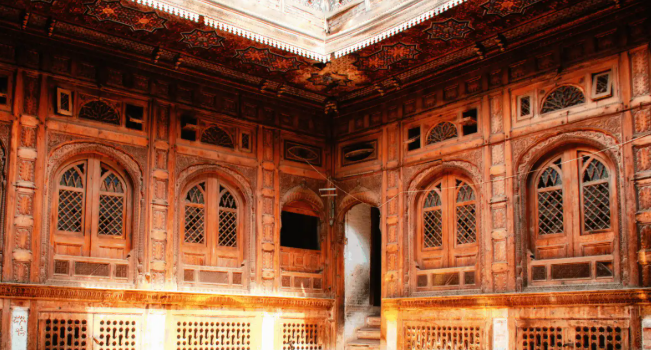
Sethi House is a historic mansion in Peshawar that has been included in the UNESCO heritage list. The house is a surviving portrait of the cosmopolitan Peshawar that once stood at the crossroads of the Indian subcontinent, Afghanistan, and Central Asia. The house is a blend of local and Central Asian architectural influences and features carved wood, coloured glass, brick, light, and …
Sethi House is a historic mansion in Peshawar that has been included in the UNESCO heritage list. The house is a surviving portrait of the cosmopolitan Peshawar that once stood at the crossroads of the Indian subcontinent, Afghanistan, and Central Asia. The house is a blend of local and Central Asian architectural influences and features carved wood, coloured glass, brick, light, and shadow. It's like a time machine that takes you back to another era.
Analysis
A Living Cultural Inheritance
The inclusion of Sethi House in the UNESCO heritage list is a significant recognition of Peshawar's architectural heritage. The house is a surviving portrait of the cosmopolitan Peshawar that once stood at the crossroads of the Indian subcontinent, Afghanistan, and Central Asia. The house is a blend of local and Central Asian architectural influences and features carved wood, coloured glass, brick, light, and shadow.
The Sethi merchant family, who built the house, were known for their extensive commercial networks that extended towards Central Asia. Their exposure to the architecture of Bukhara and other trading centres influenced the homes they built in Peshawar. What emerged was an architectural language that was distinctly their own.
Research on the Sethi haveli complexes describes them as examples of elite domestic architecture in which local building traditions were blended with Central Asian influences. Basements, upper-storey living spaces, large halls, decorated niches, courtyards, fountains, carved wood, and colourful glass became defining elements.
The buildings thus preserve more than the memory of a wealthy merchant family. They record the cultural exchange created by Peshawar's position along historic trade routes. For visitors, the experience begins before they enter the Sethi house. The journey through Mohallah Sethian takes them into a compact historic landscape where narrow lanes reveal old wooden façades and buildings that seem to belong to another era.
Inside Sethi House, the change for visitors is immediate. The courtyard forms the heart of the residence, with rooms and passageways opening around panes of glass that transform ordinary daylight into patches of red, green, and other hues. Carved doors, arches, balconies, and ventilators reveal the extraordinary skill of craftsmen who worked more than a century ago.
Small niches and glass shelves incorporated into the interiors once provided places for lamps and candles. When illuminated, the glass, wood, and mirrored surfaces would have created a shimmering interior landscape. For Engr. Fahim Khan, a civil engineer who recently revisited the house after a decade, the craftsmanship made the visit unforgettable.
The building's wooden screens, openings, and ventilators were designed to encourage airflow and bring natural light into the interior. The basement and internal spaces helped moderate the environment, while carefully positioned openings allowed air to circulate. Senior architect of C&W Development Gaffar Ali describes Sethi House as an example of early green architecture, pointing particularly to its ventilation and airy design.
Long before phrases such as sustainable architecture and climate-responsive design entered everyday vocabulary, craftsmen in Peshawar were designing buildings around shade, airflow, natural illumination, and the local climate. These features were not decorative additions. They were part of the way the house worked.
Research on the Sethi havelis has likewise highlighted the potential of adaptive reuse in conserving historic buildings while reducing the need for new construction and the associated consumption of materials and energy.
For many visitors, however, it is the woodwork that leaves the deepest impression on their minds. Doors, windows, balconies, and arches carry floral and geometric patterns carved with extraordinary precision. Depending on where a visitor stands, and how sunlight enters the room, the same surface can appear to change. The combination of wood, brick, and coloured glass also reflects the meeting of different artistic traditions.
Key points
- Sethi House is a historic mansion in Peshawar that has been included in the UNESCO heritage list.
- The house is a surviving portrait of the cosmopolitan Peshawar that once stood at the crossroads of the Indian subcontinent, Afghanistan, and Central Asia.
- The house is a blend of local and Central Asian architectural influences and features carved wood, coloured glass, brick, light, and shadow.
- The house is an example of early green architecture, with features such as ventilation and airy design.
- The house has the potential for adaptive reuse, which can help to conserve historic buildings while reducing the need for new construction.
The inclusion of Sethi House in the UNESCO heritage list is a significant recognition of Peshawar's architectural heritage. This recognition can help to promote tourism and cultural exchange between Peshawar and other cities around the world. It can also help to raise awareness about the importance of preserving cultural heritage and the need to conserve historic buildings.
The inclusion of Sethi House in the UNESCO heritage list may not necessarily lead to the preservation of the house. The house may still be vulnerable to damage or destruction due to natural disasters, neglect, or intentional destruction. Additionally, the recognition may not necessarily lead to increased tourism or economic benefits for the local community.