Grab what you can while you can: The new reality in the South China Sea
China and Vietnam are racing to reclaim reefs in the South China Sea, turning submerged outcrops into man-made land as territorial tensions stay high.
Intelligence analysis by GPT-5.4 Mini
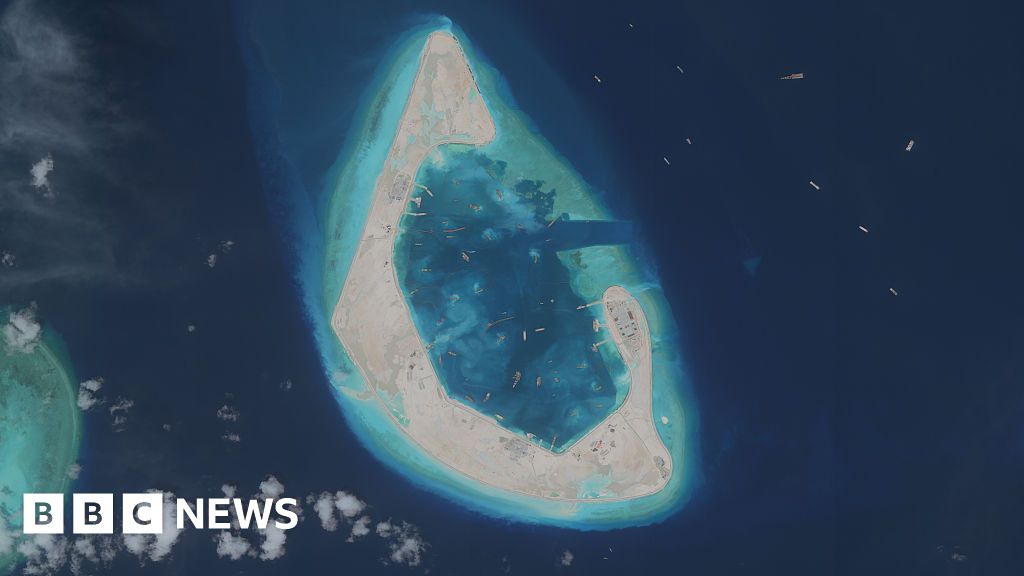
At Antelope Reef, China appears to be expanding disputed territory at speed, while Vietnam is also dredging reefs of its own. The piece frames this as a practical contest for leverage on the water, not just a diplomatic dispute.
It is like a king-of-the-hill game on tiny sea rocks: China and Vietnam are dumping sand to turn reefs into bigger platforms, so each side can claim more space and power.
Analysis
A fast-changing reef
Antelope Reef in the Paracels has been transformed in just six months from an almost entirely submerged feature into about 6 sq km of reclaimed land. The article says millions of tonnes of sand have been dredged up, with a lagoon full of ships that are almost certainly cutter suction dredgers.
A broader dredging race
China is not acting alone. After years of seeing China build artificial land to support its territorial claims, Vietnam has begun reclaiming reefs it controls in the South China Sea too. According to the Washington-based Asian Maritime Transparency Initiative, Vietnam has pumped sand around at least 20 reefs, created 11 new harbours, and now controls more than 11 sq km of reclaimed land, roughly half the area China controls.
What China may be signaling
The article suggests Antelope Reef may be more than just construction. A straight-line edge on one beach points to the possibility of a military-style runway, though the story notes China already has an airstrip nearby on Woody Island. That makes a practical need less obvious, which is why the piece argues Beijing may be sending a message to Vietnam instead.
Diplomacy on the surface, competition underneath
The article says Vietnam and China have been improving ties, with more restrained language from both governments over their disputes. But on the water, Vietnam has been more willing to stand up to Beijing, and China has mostly backed off in areas such as trying to stop Vietnamese oil and gas drilling. Analyst Greg Poling says Vietnam has been less public in its dispute with China, while Ray Powell says China may be answering Vietnam’s gains by rebuilding its own position at Antelope Reef.
Key points
- China has rapidly reclaimed Antelope Reef in the Paracels, turning a submerged reef into a 6 sq km landmass.
- Vietnam is also dredging reefs it controls, reclaiming more than 11 sq km across at least 20 reefs.
- The article says China may be using Antelope Reef to signal Vietnam, not just to add usable land.
- Analysts quoted in the piece say Vietnam has been less public but more assertive on the water.
- The South China Sea dispute remains a live geopolitical flashpoint with military and maritime stakes.
If the current mix of diplomacy and cautious pressure holds, the dispute may stay managed rather than turn into open conflict. Vietnam’s stronger posture at sea could also help keep China from blocking activities like oil and gas drilling.
The dredging race could lock both sides into a more militarized contest over reefs and sea space. New land, harbours and possible runways may deepen suspicion and make clashes at sea more likely.