Greece’s Mitsotakis: EU needs new tools to fight back against weaponized migration
Greece's Prime Minister Kyriakos Mitsotakis argues that the EU needs new tools to fight back against weaponized migration, where migration is used as a tool of geopolitical coercion. He proposes a dedicated European framework for situations of mass and instrumentalized mi…
Intelligence analysis by Llama
Greece's Prime Minister Kyriakos Mitsotakis calls for a new EU framework to combat weaponized migration, where migration is used as a tool of geopolitical coercion. He suggests a dedicated European framework with clear criteria for activation and temporary adjustments to standard procedures.
Imagine a situation where people are moving to Europe in huge numbers, often in a coordinated way, and it's overwhelming the countries' ability to handle them. This is not just a humanitarian issue, but also a tool for some countries to exert pressure on Europe. Greece's Prime Minister Kyriakos Mitsotakis thinks the EU needs new tools to deal with this kind of situation, where migration is used as a tool of geopolitical coercion.
Analysis
A New Reality for Europe’s Borders
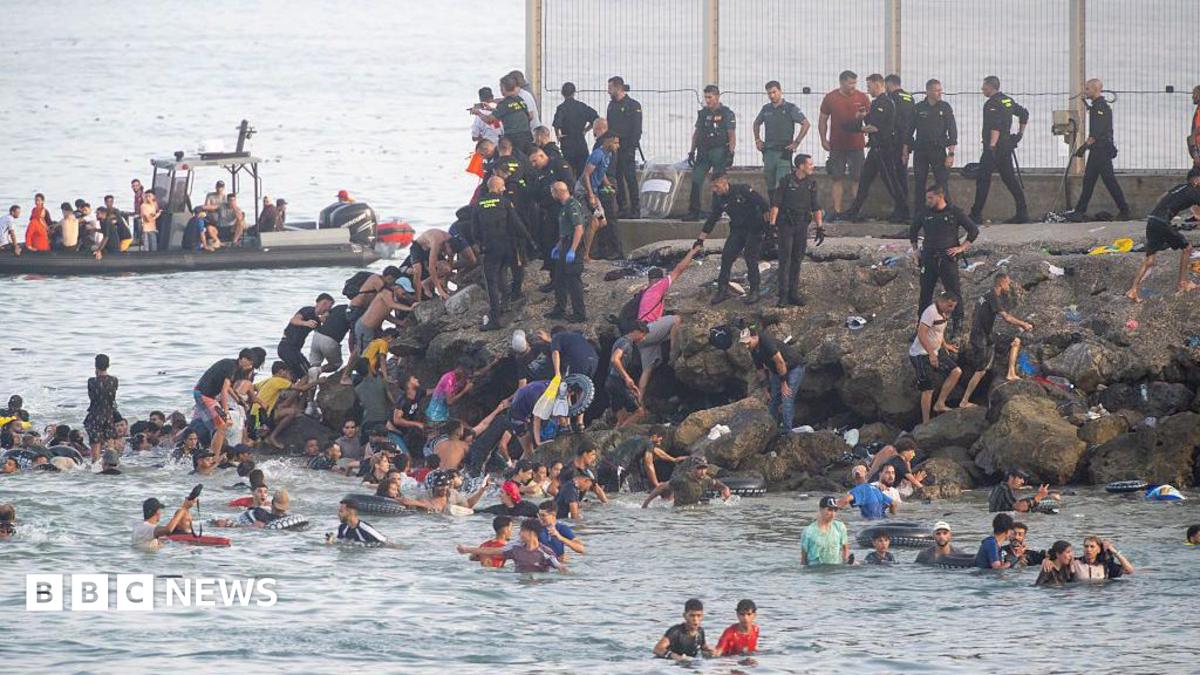
The security environment in Europe has fundamentally changed. Alongside conventional military threats and cyberattacks, the EU is increasingly confronted with a more insidious form of hybrid pressure: the deliberate instrumentalization of migration by state and non-state actors seeking to test Europe’s resilience, undermine its cohesion, and extract political concessions. Recent events at Europe’s borders, most notably in the Spanish exclave of Ceuta, are the latest reminder that migration is no longer just a humanitarian issue or management challenge. In some cases, it has become a tool of geopolitical coercion.
The EU’s Current Tools Are Insufficient
The EU has made important progress on this issue with its Pact on Migration and Asylum. It has introduced mechanisms to manage migratory pressure, including flexibility in its procedures and solidarity among member countries. But these tools are designed for situations that remain, at their core, manageable. They do not adequately address scenarios in which migration is weaponized, or where flows are engineered, amplified, or facilitated in a way that creates a de facto hybrid challenge.
A Dedicated European Framework Is Needed
To be sure, we don’t yet know what caused the situation that unfolded in Ceuta last week. But scenarios like these are not unprecedented. Greece faced a similar situation at its land border with Turkey in Evros in 2020, as did Lithuania, Poland, and Latvia at their borders with Belarus in 2021. What we are witnessing in these cases is not a gradual increase in arrivals but the sudden, massive, and often coordinated movements of people — sometimes in the tens of thousands within just a few days — that overwhelm national capacities and test the EU’s resilience as a whole. In such extreme circumstances, the immediate and full application of standard asylum and reception systems for all arrivals is not simply difficult — it is often impossible. Systems risk paralysis, public trust erodes, and the very functioning of Schengen is put under strain.
A New EU Framework Is Required
Europe needs to acknowledge this gap and act decisively. What is required is a dedicated European framework for situations of mass and instrumentalized migratory pressure, with clear and objective criteria for its activation. These criteria should combine quantitative elements — such as the scale and speed of arrivals relative to a country’s capacity — with qualitative indicators, including any evidence of coordination, facilitation, or involvement by third countries or organized criminal networks. Once triggered under a specifically defined EU emergency regime, a mechanism like this could allow for temporary, proportionate, and strictly controlled adjustments to standard procedures. Accelerated asylum processes must also continue to be part of the toolbox, particularly for individuals coming from countries with low recognition rates for international protection.
Key points
- The EU needs new tools to combat weaponized migration, where migration is used as a tool of geopolitical coercion.
- A dedicated European framework is required to address situations of mass and instrumentalized migratory pressure.
- The framework should have clear and objective criteria for activation, including quantitative and qualitative indicators.
- Temporary, proportionate, and strictly controlled adjustments to standard procedures are necessary in extreme circumstances.
- Accelerated asylum processes should continue to be part of the toolbox, particularly for individuals coming from countries with low recognition rates for international protection.
If the EU adopts a dedicated framework to combat weaponized migration, it could lead to a more effective and coordinated response to mass and instrumentalized migratory pressure. This, in turn, could help to maintain public trust and prevent internal divisions within the bloc.
If the EU fails to address the issue of weaponized migration, it could lead to a breakdown in the Schengen system, erosion of public trust, and increased internal divisions within the bloc.