Harry Potter publisher to receive millions in Anthropic copyright settlement
Bloomsbury, publisher of Harry Potter, is set to receive around $19m as part of a $1.5bn copyright settlement between AI startup Anthropic and a class of authors over the use of protected works to train chatbots.
Intelligence analysis by Llama
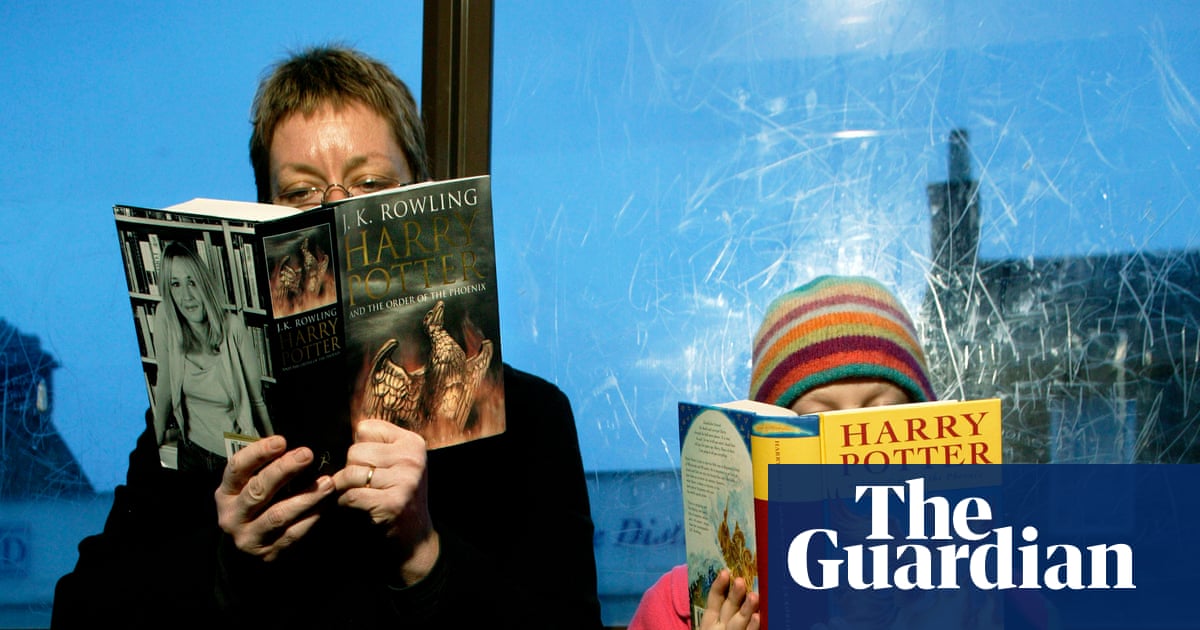
Anthropic has agreed to a $1.5bn copyright settlement with authors, with publisher Bloomsbury claiming 14,087 titles. After legal deductions, Bloomsbury and its authors stand to receive roughly $19m, marking the first major resolution in a wave of AI copyright lawsuits.
Imagine you let a neighbor borrow your toys to build a robot, but they used every toy in your whole toy box without asking. The neighbor just agreed to pay a giant fee. Bloomsbury is one of the toy-box owners getting some of that money, because many of its books were used to teach the AI chatbot how to write.
Analysis
A $1.5bn Price Tag on Training Data
The headline figure of $1.5bn, roughly £1.12bn, makes this the largest known copyright recovery in history, according to the authors' lead lawyer Justin Nelson. The scale of the payout is striking: it averages out to about $3,000 per claimed work, with Bloomsbury alone listing 14,087 titles within the settlement. That per-title number is modest in isolation, but multiplied across nearly half a million works claimed by 91% of the affected authors, it represents a structural revaluation of the raw material that powers generative AI systems like Anthropic's Claude chatbots.
The settlement does not require Anthropic to admit wrongdoing. US-based AI companies have consistently argued that training on copyrighted text is protected by the fair use doctrine. By paying out without a trial verdict, Anthropic avoids setting a judicial precedent that could have constrained its business model, while still removing a major overhang from its legal calendar.
Bloomsbury's New Revenue Stream
For Bloomsbury, a London-listed publisher whose roster includes JK Rowling, Sarah J Maas, and Susanna Clarke, the settlement delivers a windfall. The company expects to receive its share in instalments beginning in the second half of the current fiscal year, with proceeds to be split between the publisher and its authors after a roughly 10% deduction for attorney fees. The net figure of around $19m (£14m) is a meaningful but not transformative sum for a group of Bloomsbury's size, but it is essentially free money, compensation for catalog value the company had not previously been able to monetize in the AI context.
The settlement layers on top of a separate AI licensing deal Bloomsbury announced last year, which allows the firm to sell academic works for generative AI training on an opt-in basis with royalties paid to authors. Together, the two arrangements suggest a deliberate pivot: Bloomsbury is positioning its back catalog as a licensable asset for the AI industry, rather than treating AI as a purely defensive threat. The company noted recently that more subject areas are now being considered for AI training, hinting at further licensing revenue in the pipeline.
A Template for the Remaining Lawsuits
The Bartz v Anthropic case is the first of dozens of AI copyright lawsuits filed in the US on behalf of authors and news outlets to reach a settlement of this scale. The procedural mechanics — a class-style aggregation, a claims process that achieved 91% participation, and a per-title compensation formula — will be studied closely by plaintiffs and defendants in parallel litigation against OpenAI, Meta, and other model developers. US district judge Araceli Martínez-Olguín endorsed the outcome, stating that the settlement provided "meaningful relief" to affected authors and publishers, language that may embolden similar filings.
For the AI industry, the settlement's existence confirms that the cost of training data is no longer zero. Even with fair use defenses intact in principle, the financial risk of mass copyright claims now has a concrete number attached. That recalibration is likely to accelerate the trend of AI labs striking proactive licensing deals with publishers and media companies, reshaping the economics of model development.
Key points
- Anthropic agreed to a $1.5bn (£1.12bn) settlement with a class of authors over copyrighted works used to train AI chatbots.
- Bloomsbury listed 14,087 titles in the settlement and expects to receive roughly $19m (£14m) after a 10% legal fee deduction.
- About 91% of the 482,000 works covered by the suit have been claimed, making it the largest known copyright recovery, per the authors' lead lawyer.
- The case, filed in 2024 by novelist Andrea Bartz, is the first major settlement among dozens of AI copyright lawsuits pending in the US.
- Bloomsbury separately runs an opt-in AI licensing program for academic works, signalling a broader strategy of monetizing its catalog for AI training.
The settlement establishes a workable template for resolving AI copyright disputes without prolonged trials, encouraging more publishers to monetize their back catalogs through licensing deals. Bloomsbury's parallel opt-in licensing scheme suggests a sustainable new revenue stream that aligns creator compensation with the AI industry's demand for high-quality training data.
The settlement avoids a judicial ruling on fair use, leaving AI labs without definitive legal guidance and leaving open the possibility of further litigation. With 9% of works still unclaimed and dozens of similar lawsuits still working through US courts, the industry faces continued legal uncertainty and potentially larger cumulative payouts.
Market signals
- BLPU The settlement delivers a roughly $19m windfall and validates Bloomsbury's strategy of monetizing its catalog for AI training, though no immediate market reaction is reported in the article.
AI-generated analysis of potential market relevance. Not financial advice.