London loses again: FTSE 100 landlord Segro will be missed
FTSE 100 warehouse landlord Segro capitulates to a £14bn takeover from US logistics giant Prologis, ending a fight by its CEO to preserve independence and stripping London of its biggest listed commercial landlord.
Intelligence analysis by Llama
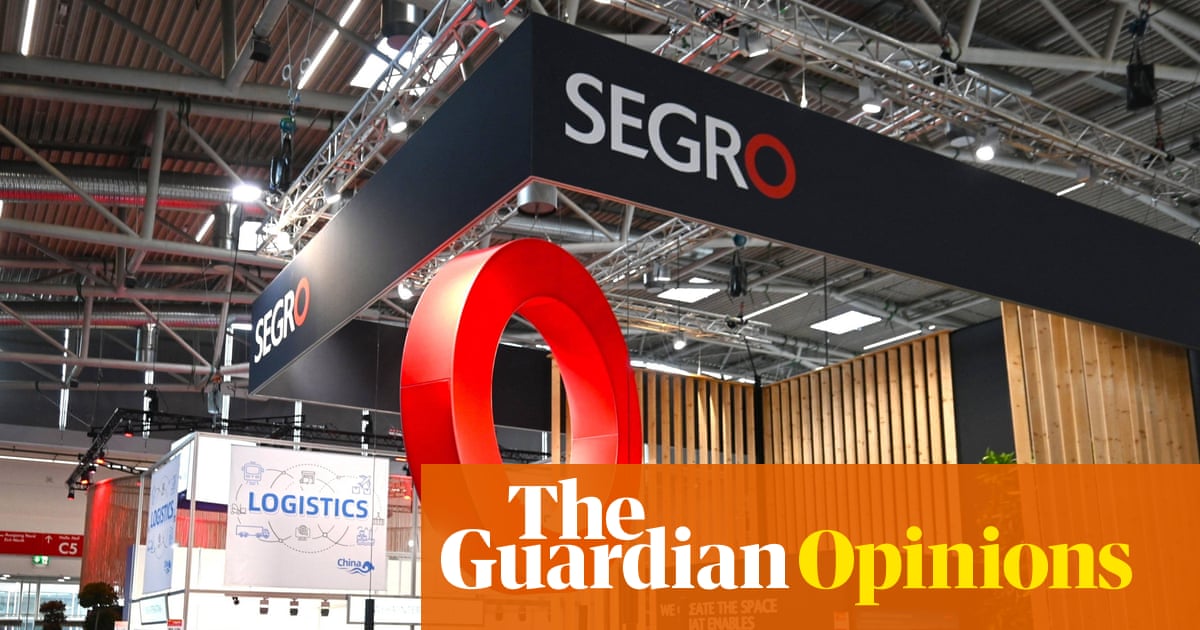
Nils Pratley argues that Segro's £14bn takeover by Prologis, agreed minutes before a deadline and pushed by Norway's sovereign wealth fund, is the most depressing Footsie deal of a busy year — not for the price, but for what it removes from the London market.
Analysis
A £14bn Capitulation, Two Minutes Before the Bell
The drama of Nils Pratley's column centres on a deadline. Segro's board, led by long-serving chief executive David Sleath, had mounted a credible defence of independence, arguing that the company's portfolio of warehouses in "Europe's most supply-constrained markets" deserved a standalone valuation closer to £18bn, about £13 a share, per a CBRE estimate cited by the company. The counter-argument from Prologis, made with a $135bn (£101bn) market capitalisation behind it, was straightforward: Segro lacked the financial muscle to develop datacentre and logistics opportunities at scale. The "minded to recommend" announcement at £10.32 a share, with only 25% in cash, gives the lie to the notion that this was ever a fair fight on price. It was shareholder arithmetic, not valuation, that settled it.
The Sovereign Wealth Fund Tilts the Board
The proximate cause of the U-turn was the 8% stake held by Norway's sovereign wealth fund, which joined other large institutional holders in publicly calling for "engagement" with Prologis. What makes the dynamic uncomfortable, as Pratley frames it, is that many of those same investors also held Prologis stock. The disagreement over price became less a fight over the future of a UK industrial landlord and more a portfolio-management spreadsheet exercise for investors with one foot in each camp. This is the "dead hand of institutional money" Pratley returns to: even when boards are willing to fight, the largest shareholders have the leverage to force a deal through, especially when 75% of the consideration is in the bidder's own shares.
Another Entry in the Hollowing-Out Ledger
The wider point is structural. Segro, which began life as the Slough Trading Company in 1920, is the biggest listed commercial landlord on the London market by a distance. Its absorption into Prologis, a global platform spanning 20 countries and £200bn of combined assets, removes from the London Stock Exchange a rare pure-play vehicle for UK and European datacentre and logistics growth. Panmure Liberum analyst Bjorn Zietsman is quoted warning that the "exposure gets absorbed and the capital allocation decision behind it disappears," leaving investors at the mercy of Prologis's global allocation choices. The promise of a secondary London listing for Prologis is little consolation: Pratley notes that such add-on listings historically migrate to the US as trading gravitates to the primary venue. Combined with terms that look "only so-so" on a long-term view, this is, in Pratley's words, "(another) bad one to lose" — another step in the hollowing out of the UK stock market as an "easy hunting ground for overseas firms with richer valuations."
Key points
- FTSE 100 warehouse landlord Segro is set to be taken over by US logistics giant Prologis in a £14bn deal, the biggest FTSE 100 takeover of the year
- Segro's board, led by long-serving CEO David Sleath, initially resisted but said it was 'minded to recommend' Prologis's £10.32/share offer just before the deadline
- Only 25% of the consideration is in cash, with the balance in Prologis shares, giving accepting shareholders exposure to a $135bn US group
- Norway's sovereign wealth fund, with an 8% stake, and other large institutional shareholders publicly pushed for engagement with Prologis
- Pratley argues the deal removes from London a rare pure-play vehicle for European datacentre and logistics growth, deepening the 'hollowing out' of the UK stock market
Pratley explicitly frames the Segro deal as another step in the hollowing out of the UK stock market, with London now stripped of its largest listed commercial landlord. If more UK companies continue to be picked off at share-swap-driven premiums that do not reflect long-term value, the London market loses further diversity and appeal, accelerating the very cycle the columnist warns about. The promised secondary London listing of Prologis is unlikely to offset the loss of a pure-play datacentre and logistics vehicle.