Healey faces £35bn Budget challenge to meet spending pledges, says think tank
Chancellor John Healey must find £35bn to avoid public spending cuts and meet defence pledges in his upcoming Budget, according to the Institute for Fiscal Studies (IFS). Higher inflation, partly due to the Iran war, is exacerbating the fiscal challenge.
Intelligence analysis by Gemini 2.5 Flash

An influential think tank, the Institute for Fiscal Studies, warns that Chancellor John Healey faces a significant £35bn shortfall in his first Budget. This gap arises from the government's desire to increase defence spending to 3% of national income by 2030 and boost health spending, all while inflation erodes existing departmental budgets. Healey must choose between tax rises, spend…
Imagine your family has a certain amount of pocket money for the month. Now, imagine some of your toys (like defence) suddenly cost a lot more, and the price of everything else (like food for other family needs) also went up a lot because of faraway problems. The grown-ups in charge, like John, need to find an extra £35 billion to pay for these new, more expensive toys and still have enough for everything else, without cutting back too much. He has to decide if everyone needs to pay a bit more (taxes) or if some things will get less money (spending cuts).
Analysis
The upcoming Budget, scheduled for October 28, presents a formidable challenge for Chancellor John Healey, who is under pressure to demonstrate fiscal discipline to financial markets. The Institute for Fiscal Studies (IFS) has underscored the severity of this situation, projecting a need for an additional £35bn to reconcile ambitious spending pledges with the current economic realities. This figure is not merely an arbitrary sum but represents the estimated cost of avoiding implicit cuts to public services while simultaneously fulfilling commitments to raise defence spending to 3% of national income by 2030 and protect health budgets.
£35bn Challenge
The £35bn figure is a critical estimate from the IFS, highlighting the scale of the fiscal gap Healey must bridge. This sum is required to prevent existing departmental spending plans from being eroded by higher inflation, which has been exacerbated by global conflicts, particularly the Iran war. Without this 'top-up,' departments would face real-terms cuts, contradicting the government's stated intentions for key public services. The challenge is compounded by the government's pledge to increase defence spending, a commitment that adds significant pressure to an already strained budget.
The IFS analysis suggests that simply maintaining the inherited tax and spending plans is not a viable option for the Chancellor. Such a 'steady-as-she-goes' approach would effectively mean allowing inflation to dictate the real value of public services, leading to unacknowledged cuts. The think tank explicitly warned against the practice of 'pencilling in implicit cuts' that the government has no intention of delivering, labeling such an approach as making the Budget a 'work of fiction' and undermining its credibility with financial markets.
Institute for Fiscal Studies
The Institute for Fiscal Studies (IFS) serves as a key independent voice in the UK's economic discourse, providing rigorous analysis of government policy. Their warning to Chancellor Healey is particularly significant because it frames the Budget not just as a routine financial statement but as a critical juncture for the government's economic credibility. The IFS's director, Helen Miller, emphasized that the Chancellor has inherited spending plans that already implied a slowdown in growth for government departments, making cuts likely even before recent inflationary pressures.
The IFS's assessment is that the Middle East war has further tightened these spending plans, making the need for difficult decisions more acute. Their expertise in fiscal policy provides a robust framework for understanding the trade-offs involved: either raise taxes, cut spending in other areas, or risk undermining the government's financial standing. The think tank also noted that while higher inflation might boost tax revenues, it simultaneously diminishes the purchasing power of departmental budgets, creating a net negative effect on public service provision.
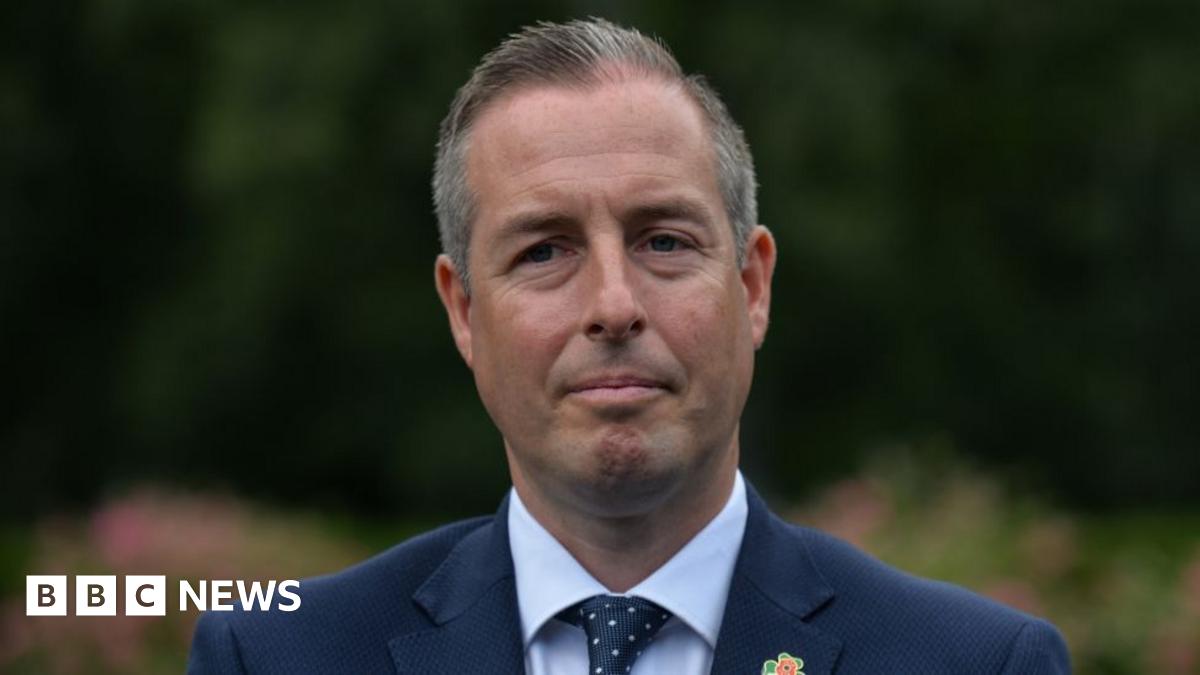
John Healey
Chancellor John Healey finds himself in a precarious position, tasked with navigating a complex economic landscape shaped by global conflicts and domestic spending pressures. His public statements ahead of the International Monetary Fund meeting underscored the impact of Middle East and European conflicts on global prices and domestic costs, such as mortgages. Healey has committed to a Budget that will demonstrate 'fiscal discipline' and deliver 'economic resilience,' aiming to provide 'breathing space' for people.
However, the IFS's analysis suggests that delivering on these promises will require more than just rhetoric. Healey's past resignation as defence secretary over military spending highlights his personal commitment to increased defence outlays, adding another layer of complexity to his current role. While he could defer some spending decisions to future fiscal events, the IFS cautions that such a delay would cast doubt on the credibility of his plans, especially given past chancellors' reliance on similar strategies that involved unrealistic future spending projections. The pressure on Healey is to not just state an intention to cut borrowing but to present a credible path to achieve it.
Key points
- Chancellor John Healey faces a £35bn challenge in his first Budget to meet defence and health spending pledges while avoiding cuts to other public services.
- The Institute for Fiscal Studies (IFS) warns that higher inflation, partly due to the Iran war, is eroding departmental budgets, making the fiscal situation very tight.
- Healey must choose between tax rises, spending cuts, or a mix of both, as a 'steady-as-she-goes' approach is not viable.
- The government is under pressure to present 'credible' spending plans to financial markets to manage rising borrowing costs.
- While the government is expected to meet its fiscal rules, it will likely do so with a smaller buffer, and forecasts remain highly uncertain.
The economic outlook could improve, potentially easing the fiscal pressures on the government and reducing the need for drastic cuts or tax rises. If global conflicts de-escalate and inflation subsides faster than expected, the government might find more 'headroom' to meet its pledges without severe austerity, allowing for temporary support for households.
Without credible plans, the government risks undermining its financial standing and facing increased borrowing costs, further straining public finances. Failure to address the £35bn challenge could lead to significant cuts to public services, higher taxes on working people, or a combination that negatively impacts economic growth and household budgets.