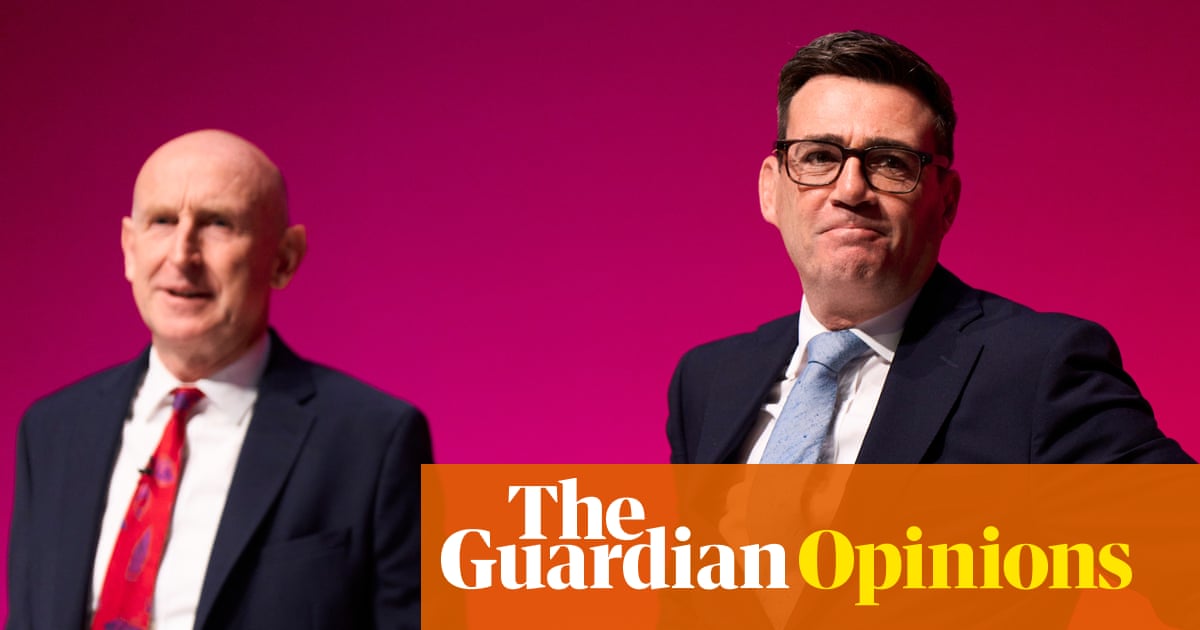
Healey's Budget needs to sustain the stronger economy through gathering clouds
Chancellor John Healey's upcoming Budget aims to sustain recent UK economic growth amidst rising inflation and borrowing costs, while also addressing cost-of-living concerns and maintaining market credibility.
Intelligence analysis by Gemini 2.5 Flash

The UK economy has shown unexpected resilience and growth, outperforming some G7 peers and defying recession predictions. However, the Chancellor faces the challenge of navigating potential headwinds like rising energy bills, interest rate hikes, and global instability to ensure continued stability and growth, all while keeping budget details under strict wraps.
Imagine the UK is like a family trying to manage its money. The person in charge, John Healey, is about to announce his plan for how the family will earn and spend. Even though the family has been doing better than expected lately, like getting good grades, there are some tricky things coming up, like higher electricity bills and maybe needing to pay more interest on loans. John Healey has to make sure his plan helps everyone feel good and keeps the family's money safe, without spending too much or making big promises he can't keep.
Analysis
Budget Omertà
Chancellor John Healey has implemented unprecedented security measures for the upcoming Budget, drawing on his background as a former defence secretary. The Budget plans have been compartmentalized, with limited access and codenames, and ministers are required to sign digital promises against leaks. This strict approach is a direct response to the economic destabilization caused by speculation surrounding the previous Budget, which was sometimes fueled by insider information.
The heightened secrecy aims to prevent market volatility and maintain investor confidence, which was previously undermined by perceived policy uncertainty. By controlling the flow of information, Healey seeks to present a unified and stable fiscal plan, contrasting with past episodes where the UK faced a 'moron premium' in bond markets due to policy U-turns and high borrowing costs.
Curious Case of the UK Economy
The UK economy has defied widespread predictions of stagnation, exhibiting stronger-than-expected growth. It has been the fastest-growing G7 country so far this year, with Q1 and Q2 growth at 0.6% and 0.5% respectively, and Q3 also heading for robust figures. This performance has consistently outpaced forecasts by the Office for Budget Responsibility and independent analysts, marking the fastest growth in the first eight months of a year since 2017, excluding the post-lockdown rebound.
Despite this resilience, economists debate whether the economy is truly strong or merely resilient. While the UK's borrowing costs have stabilized compared to previous years, global challenges persist, including the 'Iran war energy shock' and rising inflation. The weakening link between gas and electricity prices, alongside the nature of the Iran war being more of an oil shock than a gas shock, has provided some mitigation against higher inflation in the UK.
John Healey's Essential Judgement
Chancellor John Healey's core challenge is to balance sustaining economic growth and offering cost-of-living support with reassuring markets about fiscal prudence. He has emphasized the UK's 'huge latent potential,' including its talent and deep capital markets, while stressing the need to 'balance the books' and 'manage and control public spending.' This approach reflects a determination to maintain credibility with investors, ensuring that Budget calculations are sound and growth plans are realistic.
Healey and Prime Minister Burnham have so far relied on 'feel-better' policies, such as capped bus fares and a temporary VAT cut on energy bills, to boost consumer confidence without significantly increasing spending. However, with limited fiscal headroom, the scope for extensive new measures is constrained. The Chancellor's judgment will be tested as he navigates potential future headwinds, including predicted rises in energy bills, further interest rate hikes, and the enduring fear of an 'AI bubble' bursting in the new year.
Key points
- Chancellor John Healey has implemented strict security measures for the upcoming Budget to prevent leaks and market destabilization.
- The UK economy has shown unexpected resilience and growth, outperforming G7 peers and defying recession predictions.
- Despite positive growth, the economy faces potential headwinds including rising inflation, higher borrowing costs, and global energy shocks.
- Healey's Budget must balance sustaining growth and offering cost-of-living support with maintaining fiscal credibility and controlling public spending.
- The government has used 'feel-better' policies like capped bus fares and temporary VAT cuts to boost confidence without significant spending increases.
If the Budget successfully balances fiscal responsibility with targeted support, the UK's recent economic growth could be sustained, further boosting consumer and investor confidence. Effective measures to manage inflation and borrowing costs could solidify the UK's improved standing in international bond markets.
Should inflation continue to rise unexpectedly or interest rates increase further, households could face significant financial strain from higher mortgage repayments and energy bills. A failure to convince markets of the Budget's fiscal credibility could also lead to renewed concerns about UK borrowing costs and economic stability.
Market signals
- OIL The article notes that advanced economies are experiencing an 'Iran war energy shock,' which has primarily manifested as an 'oil shock,' impacting global energy prices.
AI-generated analysis of potential market relevance. Not financial advice.