Hegseth attacks Europe over 'invasion' of migrants in D-Day speech
US defence secretary Pete Hegseth attacked European migration policy in a Normandy D-Day speech, calling migrant arrivals an "invasion."
Intelligence analysis by GPT-5.4 Mini
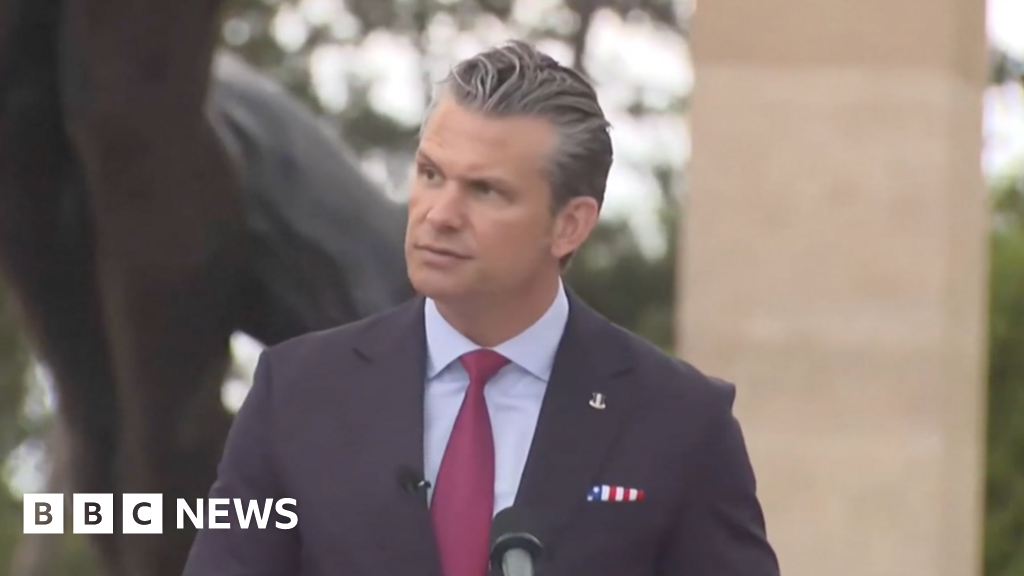
Speaking in Normandy on the 82nd anniversary of D-Day, Pete Hegseth used a commemorative speech to criticize European countries over migration, warning that leaders have grown too comfortable with the freedoms won in 1944. His remarks fit a broader Trump-administration line that sees European migration as a civilizational threat.
Hegseth used a big WWII remembrance speech to say Europe is not doing enough about migration. It is like using a ceremony about old heroes to argue about today’s border fights.
Analysis
What Hegseth said
US Defence Secretary Pete Hegseth delivered a D-Day anniversary speech in Normandy and used it to attack Europe’s handling of migration. He said that instead of the Allied beaches of 1944, “different European beaches” are now being reached by what he described as dangerous ideologies, pointing to Spain, Italy, Greece and Bulgaria and calling the arrivals an “invasion.”
The wider political context
The article places his remarks inside a broader hardline shift in US rhetoric. It says migration has become a major issue across Europe, with parties backing tougher immigration policies rising in the polls. Hegseth’s comments are described as part of a pattern of criticism from senior figures in Donald Trump’s administration. The piece also notes that Vice-President JD Vance recently blamed the killing of British student Henry Nowak on a “mass invasion of migrants,” drawing a sharp response from Downing Street.
Why D-Day matters here
The speech was especially loaded because it happened at a D-Day commemoration. Hegseth argued that the freedom won by Allied soldiers must be preserved by today’s leaders and military forces, saying freedom is not permanent or automatic. The article frames this as a contrast between the wartime sacrifice remembered in Normandy and the political disputes over migration now dominating Europe.
The migration backdrop
The story adds that sea arrivals into mainland Europe peaked in 2015, and that between April 2025 and March 2026 there were 169,341 sea arrivals to the UK, Greece, Italy, Spain and Cyprus combined. It says UK crossings made up about 23% of that total, while small-boat crossings to the UK from France fell 38% year on year in the period cited. The article also notes that the Trump administration’s national security strategy warned Europe could become “unrecognisable” within 20 years if current trends continue.
Key points
- Pete Hegseth used a D-Day speech in Normandy to criticize European migration policy.
- He described migrant arrivals on European shores as an "invasion" and named Spain, Italy, Greece and Bulgaria.
- The article says the remarks fit a wider Trump-administration push against European immigration policy.
- Downing Street has already pushed back against similar comments from JD Vance.
- The piece links the rhetoric to broader migration pressure and recent sea-arrival figures across Europe and the UK.
If the speech pushes more serious talks about migration, European leaders could use the attention to sharpen border policy and respond to voters’ concerns. The article also suggests some cross-border migration pressure has already eased in certain places, which could make coordinated action easier.
The remarks could deepen tensions between the US and European governments by turning a memorial event into a political attack. The rhetoric may also intensify division around migration without offering any practical solution, especially given how sensitive the issue already is.