Hesai rides on lidar growth as smart cars gain ground despite China’s struggling market
Hesai Group, a leading lidar sensor maker, sees growth in smart car components despite a sluggish auto market. Orders are up as more new car models integrate lidar technology.
Intelligence analysis by Gemini 2.5 Flash Lite
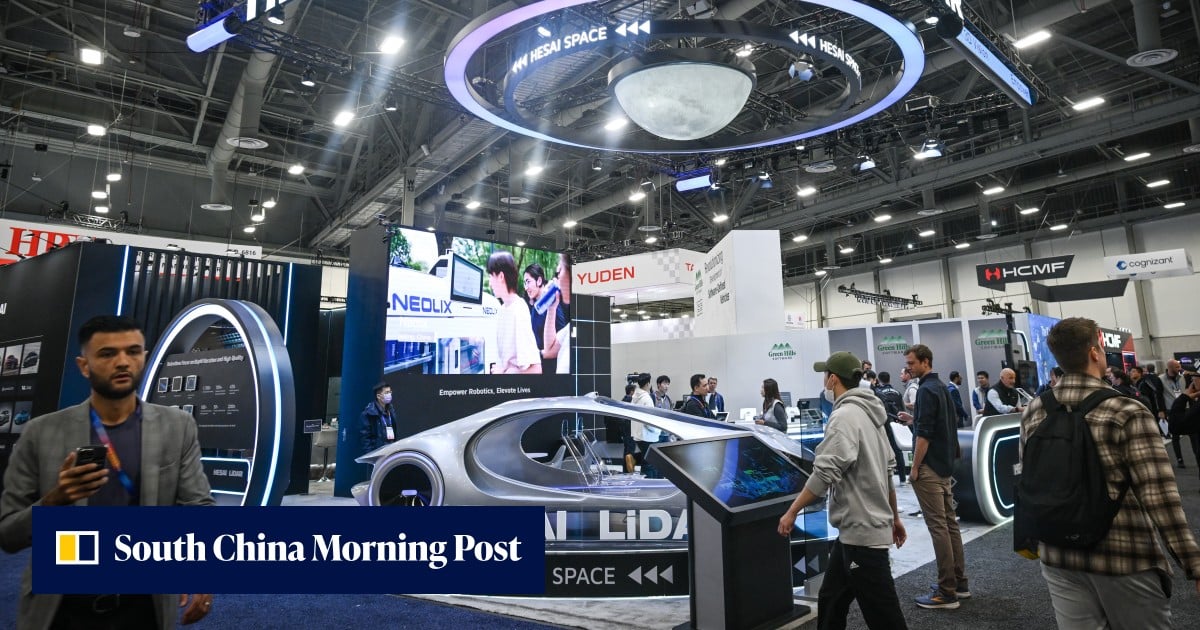
Despite a struggling overall automotive market in China, Hesai Group, the world's largest maker of lidar sensors, is experiencing growth. This is driven by the increasing adoption of lidar technology in new smart car models, as automakers race to develop driverless vehicles. The company anticipates millions of new cars will be equipped with lidars, fueling further expansion.
Imagine cars are getting super-smart eyes called lidar, which use lasers to see everything around them, like a super-powered radar. Even though fewer people are buying cars overall, more and more new smart cars are getting these special eyes. This is great news for Hesai, the company that makes these eyes, because they are getting lots of orders to help cars see better and drive themselves.
Analysis
Hesai Group
Hesai Group, recognized as the world's largest manufacturer of lidar sensors, is strategically positioning itself beyond its traditional role as an automotive supply chain vendor. The company's chief financial officer, Andrew Fan, articulated a vision to transform Hesai into a prominent technology firm. This ambition is fueled by the burgeoning demand for sophisticated components that enable advanced driver-assistance systems and autonomous driving capabilities in vehicles. Hesai's lidar technology, which uses lasers to measure distances and create detailed environmental maps, is crucial for smart cars to navigate and understand their surroundings.
The company's performance is closely tied to the evolving landscape of China's automotive sector. While the overall market may be experiencing a downturn, the segment focused on smart and new energy vehicles is showing resilience. Hesai's order book for lidar sensors has reportedly increased compared to the previous year, indicating a strong demand from automakers. This surge is attributed to a growing trend where a larger proportion of newly launched car models are being equipped with lidar technology as manufacturers strive to enhance vehicle intelligence and competitiveness.
Lidar Adoption
The increasing integration of lidar sensors in new vehicle models is a significant indicator of the automotive industry's trajectory towards greater autonomy and intelligence. Data from the China Passenger Car Association reveals a substantial rise in lidar adoption among new cars in China. In 2025, 12 percent of new vehicles priced between 150,000 yuan (US$22,300) and 200,000 yuan were equipped with lidars. This figure saw a remarkable jump to 27 percent in the first quarter of 2026. This upward trend suggests that lidar is rapidly becoming a standard feature, rather than a niche luxury, in mid-range smart vehicles, underscoring its growing importance in the automotive ecosystem.
This escalating adoption rate is a critical growth driver for Hesai and other lidar manufacturers. The expectation that millions of new cars will eventually be equipped with these sensors provides a substantial market opportunity. Hesai is currently supplying its products to the top 10 Chinese automotive groups, positioning itself as a key player in the race to develop and deploy driverless vehicle technology. The company's continued expansion efforts are directly supported by this robust demand, which is expected to sustain its growth trajectory.
Smart Cars
The push for more smart vehicles in China, despite broader market headwinds, is a crucial factor supporting component suppliers like Hesai. Automakers are intensifying their efforts to produce vehicles with advanced intelligent features, including sophisticated navigation, enhanced safety systems, and the foundational technology for autonomous driving. This strategic focus on smart car development is creating a sustained demand for high-tech components that were once considered specialized or experimental.
Hesai's CFO, Andrew Fan, emphasized that an increasing percentage of new car models are now being fitted with lidars, a direct consequence of brands aiming to make their vehicles more intelligent. This trend is not confined to high-end luxury vehicles but is also penetrating the mid-range market, as evidenced by the rising adoption rates in the 150,000 to 200,000 yuan price bracket. The company views this as a sufficiently large growth driver to justify further investment and expansion, signaling confidence in the future of intelligent mobility.
Key points
- Hesai Group, the world's largest lidar sensor maker, is experiencing growth despite a struggling Chinese auto market.
- Increased adoption of lidar technology in new smart car models is driving demand for Hesai's products.
- Lidar sensors use lasers to help smart cars map their surroundings for advanced driver-assistance and autonomous functions.
- Data shows a significant rise in lidar adoption in mid-range new cars in China.
- Hesai aims to evolve from an automotive supplier to a broader technology firm.
The increasing integration of lidar sensors into smart cars, even in a challenging market, suggests a strong future for advanced automotive technology. Hesai's growth indicates that the demand for intelligent vehicle components is robust, potentially leading to wider adoption of autonomous driving features and enhanced vehicle safety across the industry.
Despite Hesai's current growth, the broader Chinese automotive market remains sluggish, posing a risk to overall sales volumes. A significant economic downturn or a slowdown in the adoption of smart car technology could hinder Hesai's expansion plans and impact its revenue streams.