Unitree launches a seven-axis dexterous arm starting at RMB9,900
Unitree has introduced its new R1 bionic seven-axis dexterous arm, priced from RMB9,900, featuring high precision and a 2-kilogram payload. The arm is designed for diverse applications, including research, education, and industrial use.
Intelligence analysis by Gemini 2.5 Flash
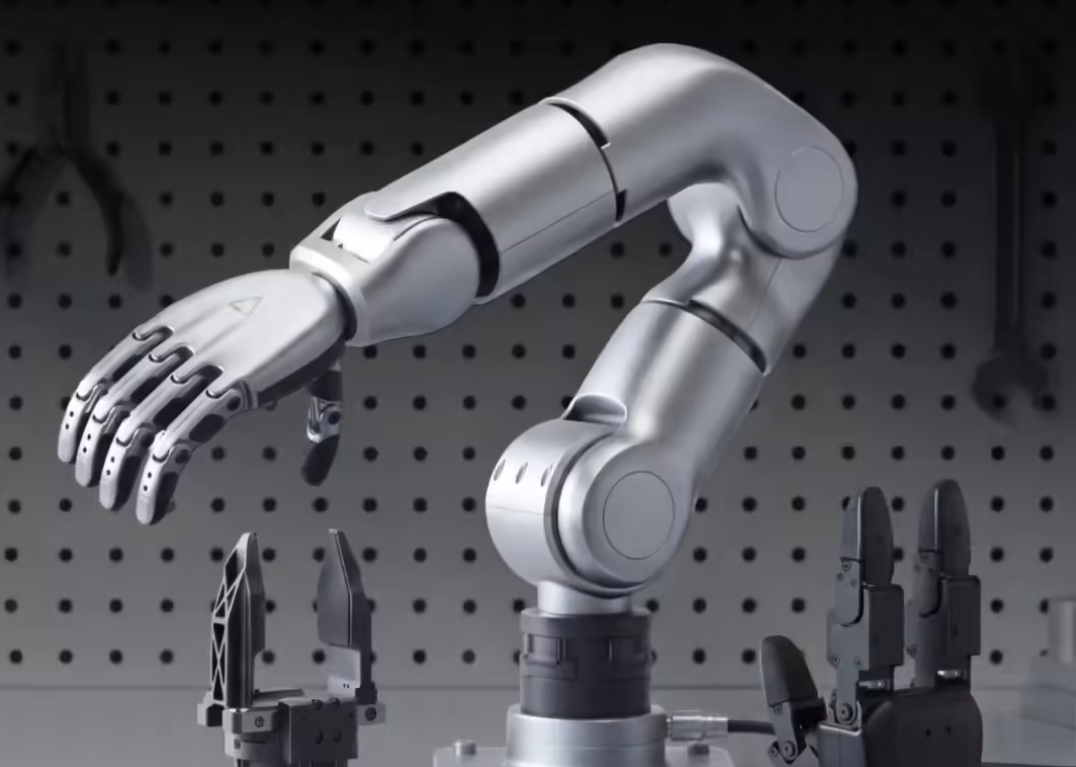
Chinese robotics firm Unitree has unveiled its R1 bionic seven-axis robotic arm, boasting a starting price of RMB9,900. This lightweight, precise arm offers features like force feedback and collision detection, runs on an Ubuntu-based system, and is intended for a wide range of uses from academic research to industrial automation.
Imagine a super clever robot arm, like a really fancy toy crane, that can pick up things very carefully and quickly. This new arm, called R1, is made by a company called Unitree, and it's special because it has seven joints, making it super flexible, almost like a human arm. It's also not too expensive, so more schools and inventors can get one to teach robots new tricks, like building things or helping around.
Analysis
RMB9,900
Unitree's introduction of the R1 bionic seven-axis dexterous arm at a starting price of RMB9,900 marks a significant development in the accessibility of advanced robotics. This aggressive pricing strategy could democratize access to sophisticated robotic manipulation capabilities, making them available to a broader range of institutions and developers. By offering a high-performance arm at a relatively low cost, Unitree is positioning itself to capture market share in emerging robotics sectors. The affordability of the R1 arm is particularly impactful for educational and research institutions, which often operate with limited budgets for high-end equipment. This could foster a new generation of robotics engineers and researchers, accelerating the pace of innovation and application development. Furthermore, the lower entry cost could enable smaller businesses and startups to integrate robotic solutions into their operations, driving efficiency and automation in areas previously deemed too expensive.
Seven-axis
The R1 arm's seven-axis design provides enhanced dexterity and flexibility, allowing it to perform more complex movements and reach into confined spaces compared to arms with fewer axes. This increased articulation is crucial for applications requiring fine motor skills, such as intricate industrial assembly tasks or delicate manipulations in service robotics. The bionic design suggests an emphasis on mimicking human-like movement, which can improve adaptability and ease of programming for various tasks. Coupled with its claimed repeat-positioning accuracy of about 0.1 millimeter and maximum joint speeds exceeding 180 degrees per second, the R1 arm demonstrates a balance of precision and agility. These specifications are competitive for its target applications, ensuring that the arm can reliably execute precise movements at a reasonable pace. The inclusion of force feedback and collision detection further enhances its operational safety and adaptability, allowing it to interact more dynamically and safely within its environment.
Ubuntu
The decision to base the R1 arm's development environment on Ubuntu is a strategic move that leverages the widespread adoption and robust ecosystem of this Linux distribution. Ubuntu provides a familiar and powerful platform for developers, offering extensive libraries, tools, and community support. This choice simplifies the development process for users, as they can utilize existing knowledge and resources to program and integrate the R1 arm into their systems. Unitree's plan to open-source the arm's control software and interfaces further amplifies the benefits of the Ubuntu-based environment. Open-sourcing encourages community contributions, accelerates the development of new applications, and ensures greater transparency and flexibility for users. This approach can lead to a richer ecosystem of tools and functionalities around the R1 arm, making it a more versatile and attractive option for researchers, educators, and industrial users seeking customizable and adaptable robotic solutions.
Key points
- Unitree has launched the R1 bionic seven-axis dexterous arm, starting at RMB9,900.
- The arm features a repeat-positioning accuracy of 0.1 millimeter and a 2-kilogram payload capacity.
- It includes force feedback, collision detection, and runs on an Ubuntu-based development environment.
- Unitree plans to open-source the arm's control software and interfaces.
- Target applications include research, education, industrial assembly, and service robots.
The launch of the R1 arm at a competitive price point could significantly lower the barrier to entry for advanced robotics, fostering innovation in research, education, and industrial automation. Its open-source software plan promises a vibrant developer community, potentially leading to a rapid expansion of applications and capabilities.
While affordable, the long-term reliability and support for a new, low-cost robotic arm could be a concern, especially for demanding industrial applications. The success of its open-source initiative will heavily depend on community engagement, which is not guaranteed, potentially limiting its broader impact if adoption is slow.