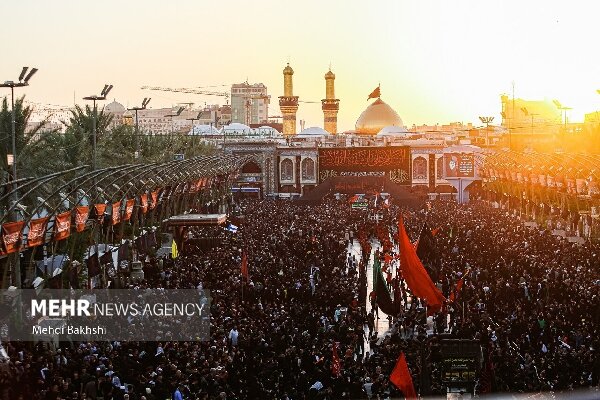
Hezbollah's Dilemma: Keep Weapons or Accept Retreat?
Hezbollah faces its toughest political and military test, caught between maintaining its arsenal and negotiating Lebanon's future. The group is at a crossroads regarding its weapons and role in potential regional agreements.
Intelligence analysis by Gemini 2.5 Flash Lite
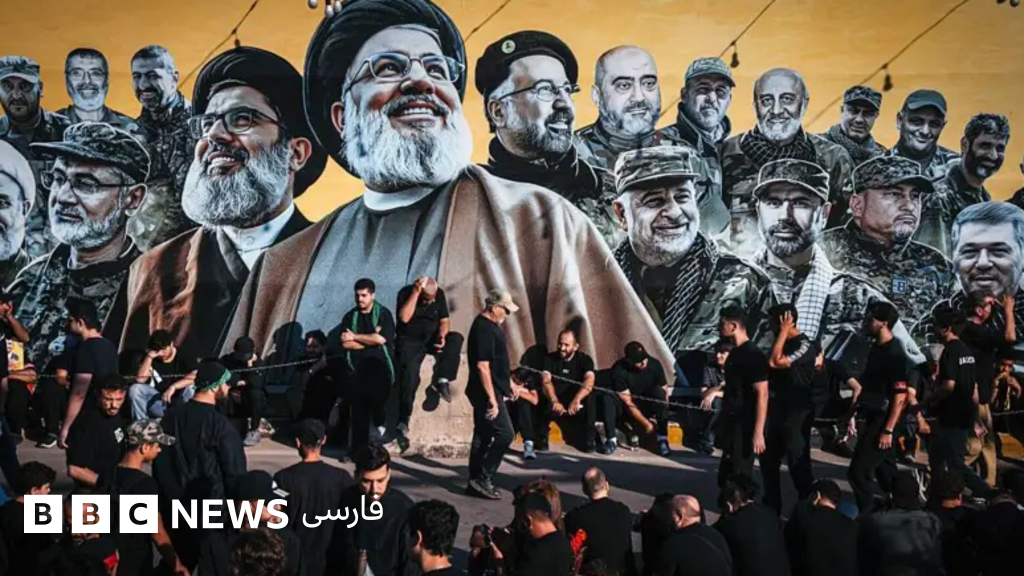
Hezbollah is in a critical bind, weighing whether to preserve its military power or concede to a withdrawal as Lebanon navigates complex US-brokered negotiations. The group's options are limited, each carrying significant costs.
Imagine Lebanon is like a big house, and Hezbollah is a strong guard with his own special tools (weapons). Now, the house owner (Lebanon) and a neighbor (Israel) are talking with a helper (USA) about how things should be. Hezbollah has to decide: keep his tools and maybe cause trouble, or give them up to help make peace, or keep fighting and risk the whole house getting damaged. It's a tough choice with no easy answers.
Analysis
The Crossroads of Power and Influence
Hezbollah finds itself at a pivotal moment, confronting its most significant political and military challenge in recent years. The severe blows to its leadership and military structure have shifted the focus from merely responding to Israel to a more fundamental question: who truly represents Lebanon and holds decision-making power in negotiations concerning the nation's future and the contentious issue of Hezbollah's weapons? The current diplomatic landscape, mediated by the United States and channeled through the Lebanese government, presents a direct challenge to Hezbollah's established military and political influence. The group is now forced to grapple with whether it can maintain its arsenal and its significant military role amidst these evolving dynamics.
Navigating Limited Options
The available paths for Hezbollah are starkly limited, each fraught with considerable risk and sacrifice. One option involves waiting for a comprehensive agreement between Iran and the United States that explicitly includes Lebanon, a scenario that offers potential but uncertain outcomes. Alternatively, Hezbollah could align with a US-backed agreement between Lebanon and Israel, which would likely necessitate the Lebanese army taking control of security and the disarmament of Hezbollah. The third, and perhaps most perilous, option is a return to escalating military confrontations. This path carries immense dangers, not only for the southern regions of Lebanon and Beirut's southern suburbs but also for Hezbollah's crucial popular base, potentially alienating the very constituency it relies upon.
The Erosion of Deterrence and Shifting Equations
Hezbollah's previous strategic doctrine, articulated by its former Secretary-General Hassan Nasrallah, relied on a deterrence equation where attacks on Beirut's southern suburbs would be met with strikes on Tel Aviv. However, the group's capacity to enforce this equation has been significantly diminished following the 2024 war. The loss of numerous high-ranking military commanders, including Nasrallah himself and his designated successor, coupled with extensive damage to Hezbollah's military infrastructure, including missile depots, has weakened its offensive capabilities. A new battlefield equation has emerged in the recent conflict: Hezbollah's restraint in launching missiles and drones towards Israel has been met with a cessation of bombing in Beirut and its suburbs. However, its operations against Israeli forces within southern Lebanon have continued. This delicate balance, while offering some respite to urban centers, constrains Hezbollah's broader military actions and its ability to project power beyond its immediate operational zones.
Key points
- Hezbollah faces a critical juncture regarding its military arsenal and its role in Lebanon's future.
- The group is navigating complex US-brokered negotiations where its weapons are a central point of contention.
- Hezbollah's options include awaiting a broader Iran-US deal, accepting a US-backed Lebanese-Israeli agreement, or escalating conflict.
- Significant leadership losses and damage to military infrastructure have weakened Hezbollah's strategic capabilities.
- A new, delicate balance exists where restraint in cross-border attacks is met with a halt in urban bombing, but internal operations continue.
If Hezbollah can successfully negotiate to retain its arms while contributing to a stable Lebanese state and regional de-escalation, it could solidify its political standing and secure its role in Lebanon's future. A diplomatic resolution could also lead to the withdrawal of Israeli forces and the return of displaced populations, fostering a period of relative peace and reconstruction.
Conversely, if Hezbollah insists on maintaining its arms without a clear diplomatic path, it risks further military confrontation, potentially leading to devastating consequences for Lebanon and its own organization. Failure to reach an agreement could also exacerbate internal divisions within Lebanon and isolate the group further regionally and internationally.