HICOOL Gathers Global Innovation Seeds to "Break Ground" in Beijing
The HICOOL 2026 Global Entrepreneur Summit in Beijing showcased over 300 startup projects and 300 investment institutions, fostering innovation and international collaboration. The event highlighted Beijing's role as a growing hub for global talent and technology.
Intelligence analysis by Gemini 2.5 Flash

Beijing recently hosted the HICOOL 2026 Global Entrepreneur Summit, an event designed to connect global innovators with resources and opportunities in the city. The summit, featuring a "competition + exhibition + conference" format, underscored Beijing's commitment to fostering a vibrant innovation ecosystem, attracting both domestic and international tech enterprises.
Imagine Beijing is hosting a big science fair called HICOOL, but for grown-ups who want to start new businesses with cool ideas, especially in technology. They bring their inventions, like a special camera that can see through fog, and meet people who might give them money or help them build their ideas bigger. It's like planting tiny seeds of new ideas in Beijing's garden, hoping they grow into big, successful trees that help everyone.
Analysis
HICOOL 2026
The HICOOL 2026 Global Entrepreneur Summit, held in Beijing, served as a significant platform for fostering innovation and entrepreneurship on an international scale. Over its seven-year history, the competition associated with HICOOL has seen a more than five-fold increase in project registrations, leading to the incubation of five listed companies and eighteen unicorn enterprises. This growth underscores the platform's effectiveness in identifying and supporting high-potential ventures.
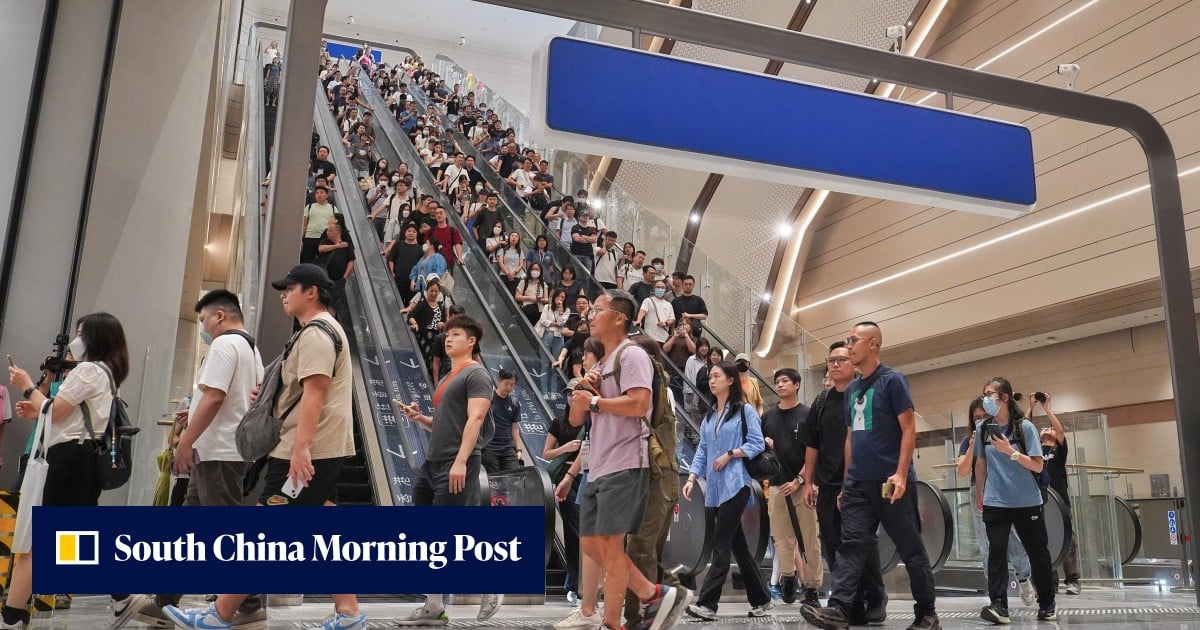
The summit itself adopted an integrated "competition + exhibition + conference" format, utilizing a vast 23,000 square meter exhibition space. This expansive setup allowed for the convergence of over 600 exhibitors, more than 300 startup projects, and an equal number of investment institutions, creating a dynamic environment for intellectual exchange and crucial resource matching. The theme, "From Innovation Source to Industry Trendsetter," aptly captured the ambition to transform nascent ideas into market-leading solutions.
Beijing Kunyu Quantum Technology
A notable participant at the summit was Beijing Kunyu Quantum Technology Co., Ltd., which unveiled its quantum imaging engineering prototype. According to CEO Kuang Liang, the global quantum imaging industry is still in its nascent "0-to-1" stage, lacking widespread commercial application. Their prototype, developed and produced entirely in Beijing, leverages spatiotemporal correlation to achieve clear imaging even under challenging conditions like strong scattering or weak light.
The company is actively using the HICOOL platform to forge partnerships, having already connected with several robotics enterprises. Their goal is to develop a "robot body + quantum eye" collaboration model, aiming to participate in HICOOL again next year. This strategy seeks to facilitate real-world market integration, enabling simultaneous product delivery, research and development, and iterative innovation, showcasing the practical application of the summit's networking opportunities.
Fengrui Zhilian
The summit also highlighted Beijing's appeal to international enterprises, exemplified by Fengrui Zhilian, a green technology and AI company headquartered in Singapore. Co-founder Xu Xin, who first participated in the HICOOL competition last year, was particularly impressed by Beijing's welcoming stance towards overseas entrepreneurs. This positive experience led the company to establish a registered entity in Beijing in August of the current year.
Xu Xin emphasized Beijing's robust ecosystem for AI, citing its top-tier universities, research institutions, and a comprehensive industrial chain that provides strong data support and algorithm iteration capabilities. Furthermore, the city's open market and supportive talent policies enable companies like Fengrui Zhilian to leverage their technological advantages and secure a competitive position. The presence of such international firms reinforces Beijing's ambition to become a global hub for science, talent, and innovation.
Key points
- The HICOOL 2026 Global Entrepreneur Summit in Beijing attracted over 600 exhibitors and 300 startup projects.
- The HICOOL platform has cumulatively incubated 5 listed companies and 18 unicorn enterprises over seven years.
- Beijing Kunyu Quantum Technology showcased a quantum imaging prototype, aiming for "robot body + quantum eye" collaborations.
- Singaporean green tech and AI firm Fengrui Zhilian registered a company in Beijing due to the city's strong AI ecosystem and talent policies.
- The summit underscores Beijing's strategy to become a world-leading science center, talent hub, and innovation highland.
The continued success of platforms like HICOOL suggests Beijing is effectively cultivating a vibrant innovation ecosystem, attracting both domestic and international talent and capital. This could lead to accelerated technological breakthroughs, particularly in cutting-edge fields like AI and quantum computing, strengthening China's position as a global leader in science and technology and fostering economic growth.
While the summit highlights positive trends, the intense competition and the early stage of many technologies, such as quantum imaging, mean that many startups may struggle to achieve commercial viability. Over-reliance on government-backed platforms could also create an artificial environment, potentially hindering truly market-driven innovation if not balanced with organic growth and private sector investment.