High Court upholds partial mosque demolition for Kumbh project in Ujjain
The Madhya Pradesh High Court has dismissed petitions challenging the partial demolition of a mosque in Ujjain for road widening ahead of the Simhastha Kumbh 2028, citing public interest and adherence to legal procedures.
Intelligence analysis by Gemini 2.5 Flash
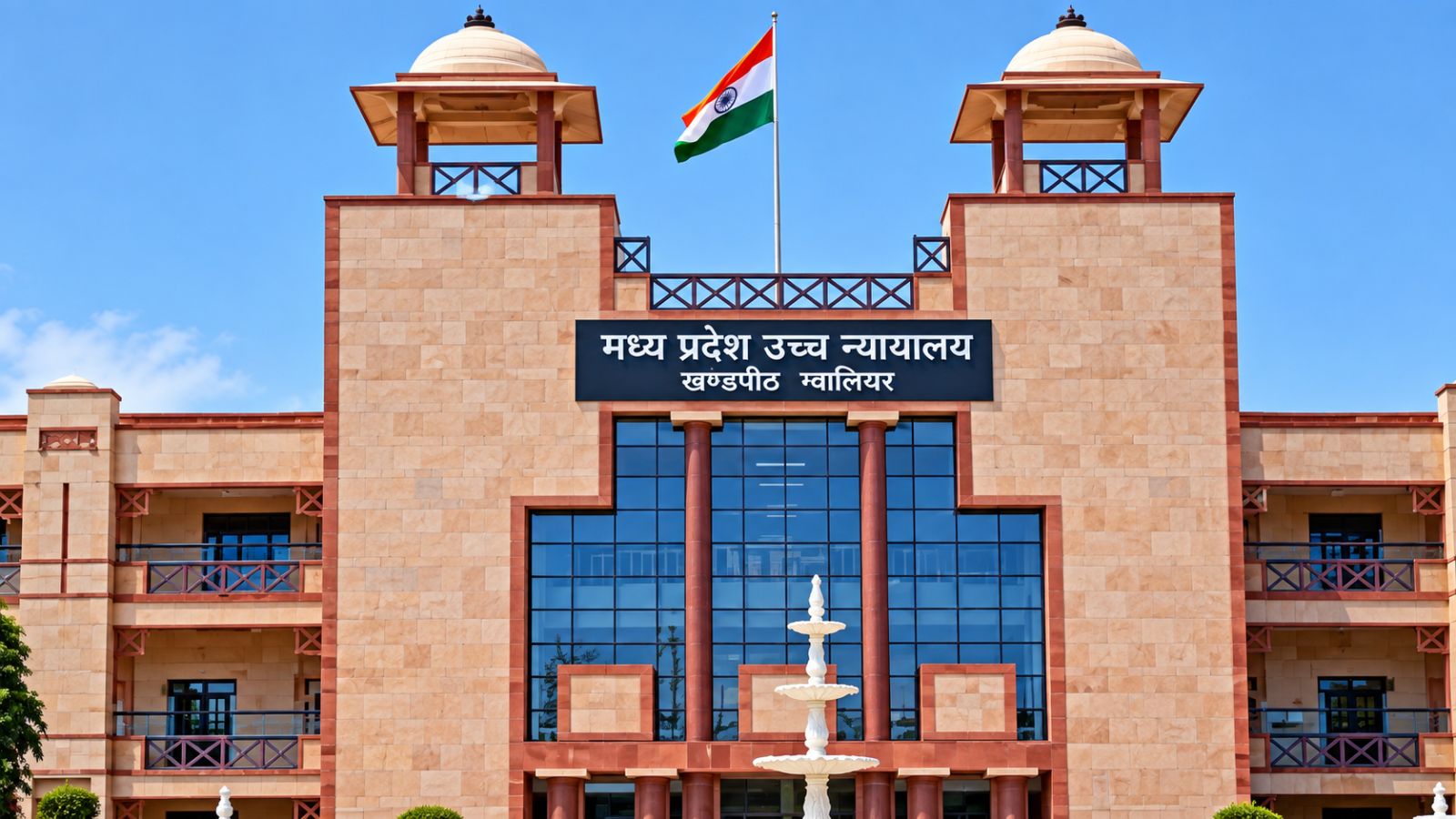
The High Court ruled that the Ujjain Municipal Corporation's action to demolish portions of a mosque for road widening was lawful and non-discriminatory, emphasizing the need for public safety and traffic management for the upcoming Simhastha Kumbh 2028. The court noted similar actions were taken against other religious structures.
Imagine Ujjain is getting ready for a huge party called Kumbh Mela, where millions of people will visit! To make sure everyone can move around safely and easily, the city needs wider roads. A small part of an old building, which is a mosque, was in the way. The court said it's okay to move that part because the city followed all the rules, and they've also moved parts of other religious buildings, like temples, for the same reason. It's like moving a big toy to make space for a parade, but only after asking nicely and making sure it's fair to everyone.
Analysis
The Madhya Pradesh High Court's decision to uphold the partial demolition of a mosque in Ujjain underscores a critical balance between urban development, public interest, and religious freedoms in India. The court explicitly rejected claims of discrimination, noting that the Ujjain Municipal Corporation had previously acted against numerous other religious structures, including temples, along the same road. This context was vital in establishing that the action was not targeting a specific community but was part of a broader, legally sanctioned urban renewal effort.
Simhastha Kumbh 2028
The impending Simhastha Kumbh in 2028 served as a significant factor in the court's deliberation. This massive religious gathering is expected to draw crores of devotees to Ujjain, necessitating robust infrastructure for traffic management and public safety. The court acknowledged the immense scale of the event, stating that the expectations of these millions of visitors must be considered. The road widening project, from Kanthal Chouraha to Gopal Mandir, is deemed crucial for ensuring smooth movement and preventing congestion during the Shahi Sawari, Peshwai, and the main Kumbh festivities.
The court's decision highlights the state's prerogative to prioritize large-scale public events and associated infrastructure, even when it involves altering existing structures. The need to accommodate such a vast influx of people for a religious festival was presented as a compelling public interest, outweighing the petitioners' objections. This framing suggests that the judiciary is willing to support administrative actions that are demonstrably necessary for managing major public congregations.
Ujjain Development Plan, 2035
The legal basis for the demolition was firmly rooted in the Ujjain Development Plan, 2035. This long-term urban planning document provides the municipal corporation with the authority to undertake necessary infrastructure projects, including road widening. The court found that the Corporation had followed all statutory procedures and principles of natural justice, including considering the petitioners' objections before issuing the demolition order. This adherence to due process was a cornerstone of the High Court's judgment.
The existence of a comprehensive development plan lends legitimacy to the municipal corporation's actions, framing them as part of a planned urban evolution rather than arbitrary decisions. The court's emphasis on the 'efflux of time' and increased population further contextualizes the necessity of such development. By validating actions taken under a pre-existing development plan, the ruling reinforces the importance of urban planning frameworks in guiding municipal governance and infrastructure development.
Articles 14, 25 and 26
The petitioners had challenged the demolition on the grounds that it violated their constitutional rights under Articles 14 (equality before law), 25 (freedom of conscience and free profession, practice and propagation of religion), and 26 (freedom to manage religious affairs). However, the High Court systematically rejected these contentions. Justice Sandeep N Bhatt observed that the corporation was not acting arbitrarily merely because the property was a religious place, especially given that similar actions had been taken against other religious structures.
By demonstrating that the action was not discriminatory and that due process was followed, the court concluded that the constitutional rights cited were not infringed. The ruling clarifies that while religious places hold significance, they are not entirely immune from lawful development actions undertaken in the larger public interest. This interpretation sets a precedent for how constitutional protections for religious freedom are balanced against the state's power to manage urban spaces and public infrastructure for the common good.
Key points
- The Madhya Pradesh High Court dismissed petitions against the partial demolition of a mosque in Ujjain.
- The demolition is part of a road widening project for the Simhastha Kumbh 2028, expected to draw crores of devotees.
- The court ruled the action was lawful, in public interest, and not discriminatory, noting similar actions against 10 temples and 80 religious places.
- Petitioners had argued the demolition violated constitutional rights under Articles 14, 25, and 26.
- The Ujjain Development Plan, 2035, provides the legal framework for the road widening project.
The court's decision ensures that critical infrastructure projects for major public events like the Simhastha Kumbh can proceed efficiently, enhancing public safety and convenience for millions of visitors. It reinforces the principle that urban development, when executed with due process and without discrimination, serves a larger public interest.
Despite the court's ruling, such demolitions, even partial ones, can lead to lingering resentment and perceptions of religious insensitivity among affected communities. This could potentially fuel future disputes over religious sites and urban development, especially if the process is not perceived as consistently fair and transparent across all communities.