Hitler's Favorite Opera? Not So Sure, Say Bayreuth's New 'Rienzi' Directors
Bayreuth's new production of Richard Wagner's 'Rienzi' premiered on July 27, 2026, amidst controversy over its association with Adolf Hitler. The opera's themes of power and the dangers of authoritarianism are more relevant than ever, say the directors.
Intelligence analysis by Llama
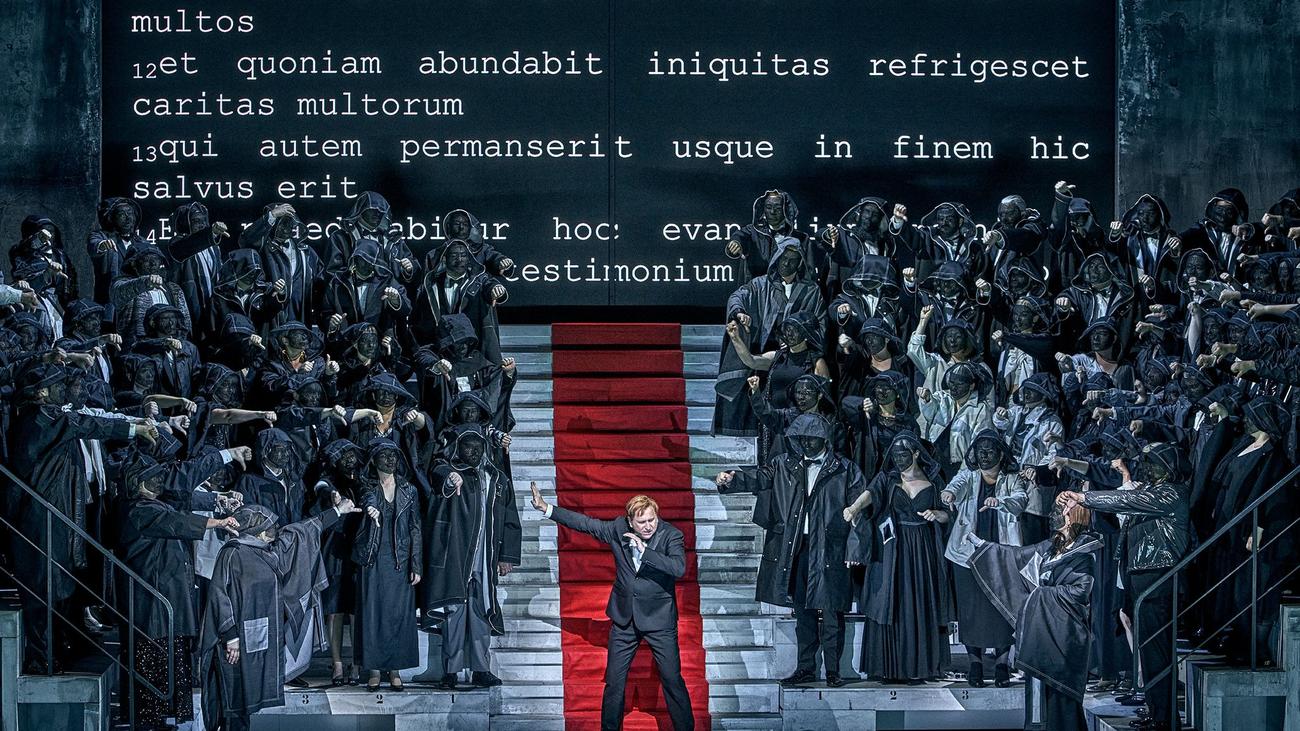
Bayreuth's new 'Rienzi' production tackles the opera's themes of power and authoritarianism, making it a timely commentary on contemporary politics. The directors aim to spark reflection on the dangers of forgetting history and the importance of democratic values.
Imagine a world where a charismatic leader uses social media to manipulate people and gain power. That's the world of Richard Wagner's opera 'Rienzi.' The new production of the opera at the Bayreuth Festival is a commentary on the dangers of unchecked power and the importance of democratic values. It's like a warning sign that says, 'Be careful, because this could happen to us too.'
Analysis
A $60B Vote of Confidence
The Bayreuth Festival's decision to stage Richard Wagner's 'Rienzi' has sparked controversy, with some critics arguing that the opera's association with Adolf Hitler makes it inappropriate for the festival's 150th anniversary. However, the directors of the production, Alexandra Szemerédy and Magdolna Parditka, argue that the opera's themes of power and the dangers of authoritarianism are more relevant than ever.
The production, which premiered on July 27, 2026, is a dystopian retelling of Wagner's 1842 opera, set in a world where social media has enabled a charismatic leader to rise to power and manipulate the masses. The opera's themes of the dangers of unchecked power and the importance of democratic values are timely and thought-provoking, making it a significant commentary on contemporary politics.
The directors' decision to stage the opera is also significant because it highlights the importance of remembering and learning from history. By staging 'Rienzi,' the Bayreuth Festival is encouraging audiences to reflect on the dangers of forgetting the past and the importance of democratic values.
Why Cursor?
The production of 'Rienzi' is also significant because it raises questions about the role of art in society and the responsibility of artists to engage with contemporary issues. The directors' decision to stage the opera is a bold statement about the importance of art in sparking reflection and debate about the issues of the day.
The Road Ahead
The production of 'Rienzi' is a significant event in the world of opera, and its themes and messages are highly relevant to contemporary politics. The directors' decision to stage the opera is a bold statement about the importance of art in sparking reflection and debate about the issues of the day.
Key points
- The Bayreuth Festival's production of 'Rienzi' is a commentary on the dangers of authoritarianism and the importance of democratic values.
- The opera's themes are highly relevant to contemporary politics, particularly in the context of rising right-wing and fascist tendencies.
- The production is a bold statement about the importance of art in sparking reflection and debate about the issues of the day.
- The directors' decision to stage the opera is significant because it highlights the importance of remembering and learning from history.
- The production of 'Rienzi' could lead to a greater understanding of the dangers of authoritarianism and the importance of democratic values.
The production of 'Rienzi' could lead to a greater understanding of the dangers of authoritarianism and the importance of democratic values. It could also spark a national conversation about the role of art in society and the responsibility of artists to engage with contemporary issues.
The production of 'Rienzi' could be seen as a celebration of Wagner's music and a nostalgic look back at the past, rather than a commentary on contemporary politics. It could also be seen as a distraction from the real issues of the day, rather than a call to action.