Honda Atlas expects strong sales growth as hybrid expansion gains momentum
Honda Atlas anticipates a 25% growth in Pakistan's auto industry next year, driven by its expanding hybrid lineup and increased production, despite policy uncertainties.
Intelligence analysis by Gemini 2.5 Flash
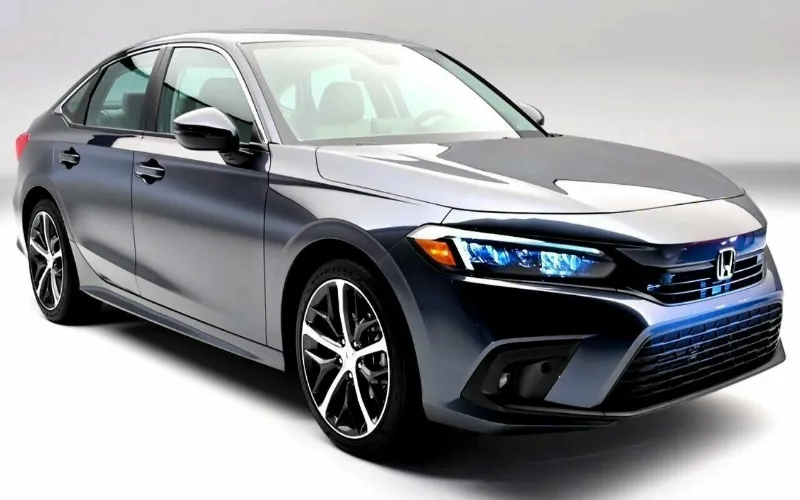
Honda Atlas remains confident about future demand in Pakistan, planning to strengthen its market share through hybrid vehicle expansion and higher production. The company faces challenges from evolving tax policies, import costs, and currency fluctuations, which have pressured profit margins, but it expects improved utilization and sales growth.
Imagine a car company called Honda Atlas in Pakistan is like a kid who loves building toy cars. They're super excited because they think lots more people will want their special 'hybrid' toy cars, which are like toys that use less fuel. Even though some rules about buying parts keep changing, and some parts cost more because of money exchange rates, they're still confident they'll sell lots, especially their popular 'City' model, and are making more of the eco-friendly ones.
Analysis
Navigating Policy Shifts and Market Dynamics
Honda Atlas is operating within a dynamic and often uncertain policy environment in Pakistan. The company noted that the new auto policy has not been finalized, though some tariff adjustments were introduced in the latest federal budget. Specifically, there's a proposal to increase customs duty on certain hybrid vehicle parts from 4% to 5%, while duties on completely knocked down (CKD) parts remain unchanged at 30% for non-localized and 46% for localized components. Completely built unit (CBU) duties now range from 30% to 50% based on engine size.
These policy shifts, coupled with the weakening Thai baht against the U.S. dollar, have put significant pressure on Honda Atlas's profit margins by increasing the cost of imported parts. Despite these challenges, the company has opted not to fully pass on these higher costs to consumers, indicating a strategic decision to maintain competitive pricing and market position rather than maximize short-term profits. This approach underscores the delicate balance automakers must strike between profitability and market accessibility in Pakistan.
Hybrid Push and Model Performance
A key pillar of Honda Atlas's strategy is the expansion of its hybrid technology, which it considers a top priority. The company is willing to accept lower profit margins in the short term to solidify its presence in Pakistan's burgeoning hybrid vehicle market. This commitment is evident in the performance of its HR-V model, where hybrid versions now account for 45% of sales, alongside conventional fuel models at 55%, with the HR-V achieving a 61% localization level.
The Honda City remains the company's best-selling model, contributing approximately 70% of total sales. Its pricing, around Rs4.9 million, strategically keeps it below the Rs5 million threshold, allowing it to qualify for a lower 18% sales tax compared to the 25% levied on vehicles above that price point. Within the City lineup, the 1.2-liter model dominates with 85% of sales. The Civic and HR-V each account for about 15% of total sales. Notably, the company has discontinued the BR-V as part of its evolving product strategy.
Future Outlook and Production Strategy
Honda Atlas expresses strong confidence in future demand, projecting a 25% growth for Pakistan's auto industry in the coming year. The company aims to capitalize on this anticipated growth by increasing production and launching new models, which it expects will improve its current 52% production capacity utilization. This optimistic outlook is maintained despite ongoing policy uncertainty and import cost pressures.
Furthermore, the company noted a sharp decline in used vehicle imports recently due to changes in import rules, although the government's policy on commercial used-car imports is still under review. This reduction in used imports could potentially benefit local manufacturers like Honda Atlas by reducing competition. In April 2026, Honda Atlas sold approximately 2,700 vehicles, with the Honda City leading at 2,000 units, demonstrating steady demand as the company gears up for its planned expansion and market strengthening initiatives.
Key points
- Honda Atlas expects Pakistan's auto industry to grow 25% next year, driven by its hybrid expansion strategy.
- Profit margins are under pressure due to the weakening Thai baht and increased import costs, which the company chose not to fully pass on.
- The Honda City remains the best-selling model, contributing 70% of sales, partly due to its pricing below the Rs5 million sales tax threshold.
- The company is prioritizing hybrid technology expansion and has achieved 61% localization for the HR-V, with hybrids accounting for 45% of its sales.
- Honda Atlas is operating at 52% production capacity but expects improvement with higher demand and new model launches, having also discontinued the BR-V.
Honda Atlas's focus on hybrid expansion and anticipated 25% industry growth could lead to increased market share and profitability for the company. The strategic pricing of the Honda City below the higher sales tax threshold is likely to sustain its strong sales performance, contributing to overall revenue growth.
Ongoing policy uncertainty regarding auto tariffs and the new auto policy could create an unpredictable business environment, impacting Honda Atlas's long-term planning and investment. The weakening Thai baht and the company's decision not to fully pass on increased costs could continue to pressure profit margins, potentially affecting financial performance.
Market signals
- HCAR The company anticipates 25% industry growth and aims to strengthen market share through hybrid expansion and increased production, suggesting positive future performance.
AI-generated analysis of potential market relevance. Not financial advice.