Hong Kong leader to hold town hall on Sunday to gather views on twin blueprints
Hong Kong Chief Executive John Lee will hold a district consultation session in Tuen Mun to gather public views on his upcoming policy address and the city's first five-year plan.
Intelligence analysis by Gemini 2.5 Flash
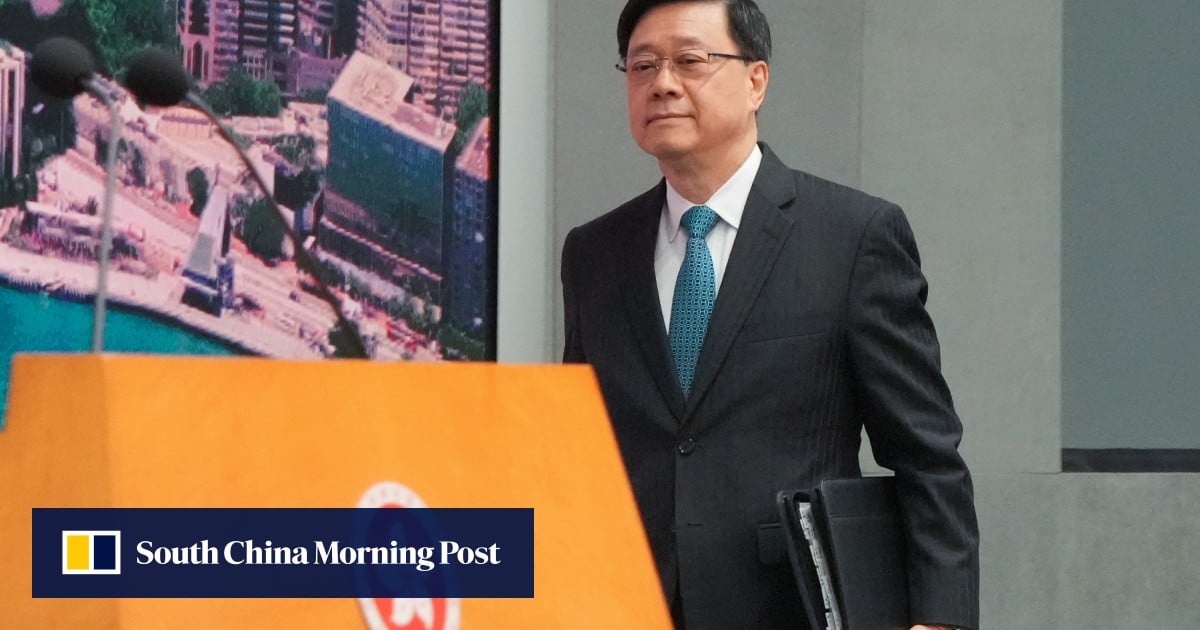
Hong Kong's leader, John Lee, is initiating a series of district consultation sessions to solicit feedback on two key government documents: his next policy address and the city's inaugural five-year development plan. This marks the first face-to-face public exchange for the five-year plan, which aims to align Hong Kong's future with mainland China's national blueprint.
Imagine Hong Kong is building a big new playground, and the grown-ups in charge, led by John Lee, are asking people what they think. But instead of asking everyone, they're mostly talking to people they've picked. They're trying to make sure their playground plans fit with the bigger plans for the whole country, like making sure all the playgrounds in China have similar swings and slides. They want to finish their plans by the end of the year.
Analysis
Aligning with National Strategy
The upcoming consultation sessions are crucial as they focus on Hong Kong's first five-year plan, a strategic document designed to integrate the city's development more closely with mainland China's national blueprint for 2026 to 2030. This move underscores Beijing's increasing influence over Hong Kong's long-term trajectory, shifting from a more autonomous planning approach to one that explicitly mirrors the mainland's top-down economic and social development models. The plan's introduction reflects a broader effort to ensure Hong Kong contributes to and benefits from national goals, particularly in areas like technology, finance, and trade, within the framework of 'one country, two systems'.
This alignment is not merely symbolic; it is expected to translate into concrete policy directives that will shape Hong Kong's infrastructure projects, economic priorities, and social welfare initiatives over the next half-decade. The emphasis on a five-year plan, a staple of mainland Chinese governance, suggests a more structured and centrally guided approach to Hong Kong's future. It also highlights the ongoing process of integrating the special administrative region into the national governance system, a trend that has accelerated since the implementation of the national security law.
The Consultation Process
Chief Executive John Lee and his team have been actively engaged in public consultations since June, attending over 80 sessions, both in-person and online, to collect feedback from various sectors. However, the nature of these consultations, particularly the district sessions, raises questions about the breadth of public participation. The article notes that only "government-chosen residents and district representatives" were invited to the Tuen Mun exchange, suggesting a curated rather than open public forum. This controlled environment could limit the diversity of opinions gathered and potentially prioritize voices that align with the government's existing agenda.
The two-month public consultation period is set to conclude on August 14, with Lee pledging to release the final five-year plan by the end of the year. While the government emphasizes its commitment to gathering views, the restricted access to these sessions for ordinary citizens might lead to perceptions of a top-down process rather than genuine grassroots engagement. The limited media access, with Lee only addressing inquiries after the next district session, further reinforces this impression of a carefully managed communication strategy.
Implications for Governance
The introduction of a five-year plan for Hong Kong, coupled with the policy address, signifies a more structured and perhaps less flexible approach to governance. While previous leaders held town halls for policy addresses, the simultaneous consultation on a long-term strategic plan is a new development that binds Hong Kong more tightly to national planning cycles. This could lead to greater stability and predictability in policy-making, especially for businesses and investors seeking clarity on the city's future direction within the broader Chinese economy.
However, the controlled nature of the public engagement process could also fuel concerns about diminishing public input and the erosion of local autonomy. If the consultation is perceived as a mere formality, it might not effectively address the diverse needs and aspirations of Hong Kong's population, potentially leading to a disconnect between government policies and public sentiment. The success of these blueprints will ultimately depend on their ability to foster genuine development while maintaining public trust and addressing the unique characteristics of Hong Kong society.
Key points
- Hong Kong Chief Executive John Lee is holding district consultation sessions for his upcoming policy address and the city's first five-year plan.
- The five-year plan aims to align Hong Kong's development with mainland China's national blueprint for 2026-2030.
- The first face-to-face session in Tuen Mun on Sunday will involve only government-chosen residents and district representatives.
- The two-month public consultation period will end on August 14, with the plan expected to be released by year-end.
- Lee and his team have already attended over 80 consultation sessions, both in-person and online, since June.
The consultation process could lead to a well-defined five-year plan that effectively integrates Hong Kong's development with national strategies, fostering economic stability and growth while addressing local needs. A clear roadmap could attract investment and provide a stable environment for residents and businesses.
The limited and controlled nature of the consultation, with only government-chosen residents invited, suggests the process might be more of a formality than genuine public engagement. This could result in policies that do not fully reflect diverse public opinion or adequately address underlying societal issues, potentially leading to public dissatisfaction.