Hong Kong should adopt the “Hefei model” in the Northern Metropolis
The article argues Hong Kong should speed up the Northern Metropolis by creating a special economic zone and copying Hefei's state-led industrial model.
Intelligence analysis by GPT-5.4 Mini
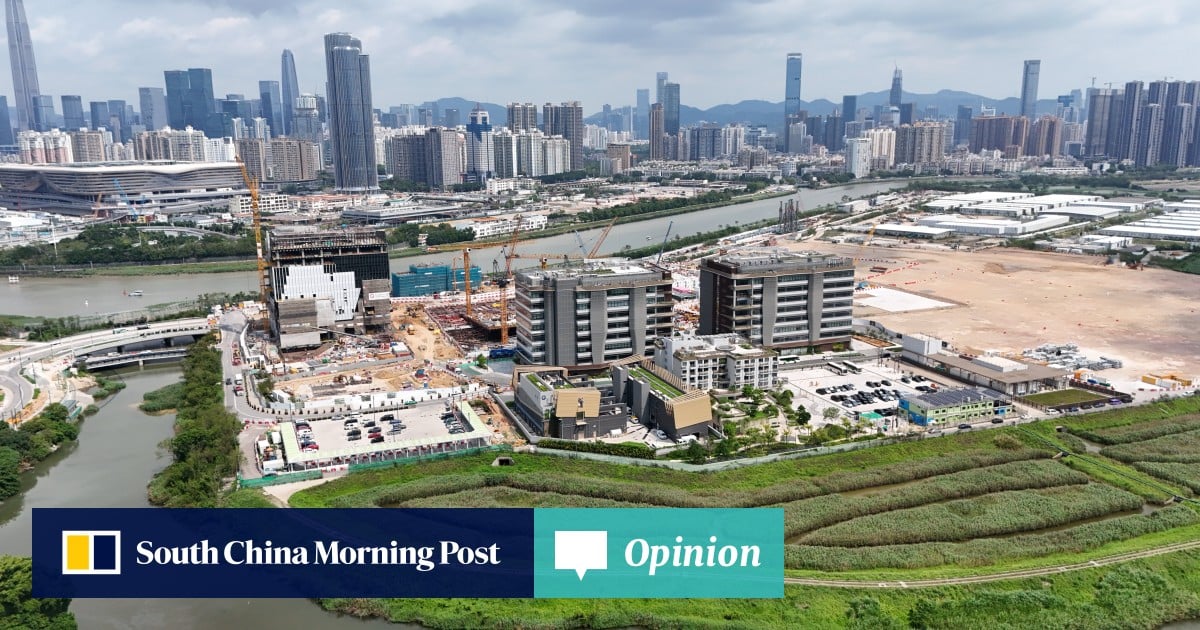
Ningrong Liu says the Northern Metropolis needs a legal and development reset, not just existing rules. He points to Hefei's state-capital-led approach, especially its support for CXMT, as a model for building hard-tech ecosystems in Hong Kong.
The article says Hong Kong should build the Northern Metropolis like a city that helps new tech companies grow, not just like a place that builds roads and buildings. It uses Hefei as an example, like planting a whole garden around one strong tree so many other plants can grow too.
Analysis
Main argument
Ningrong Liu argues that if Hong Kong wants the Northern Metropolis to move faster, it cannot rely on the current legal framework and development model. He says the project needs a fundamental overhaul and suggests that a special economic zone could provide the needed structure.
He contrasts two different development paths. Shenzhen is held up as the classic example of liberalisation and market-driven growth. Hong Kong, in his view, would not necessarily follow the same path. Its version of a special zone may require a stronger government role in industrial strategy and long-term planning.
Why Hefei is the reference point
Liu presents the "Hefei model" as a newer Chinese approach to development. Instead of depending mainly on land finance and infrastructure building, it uses state capital to cultivate industries over the long term. The emphasis is on strategic hard-tech sectors, accepting early losses, and building a wider ecosystem around anchor companies.
He says Hefei has already shown results through ChangXin Memory Technologies, or CXMT, which he describes as China's only domestic DRAM producer to reach mass production. According to the article, Hefei backed CXMT through state investment platforms and helped it enter a market dominated by Samsung, SK Hynix, and Micron.
The article uses that example to argue that Hong Kong should think less like a property-and-infrastructure project and more like an industrial platform. The core claim is that the Northern Metropolis will only accelerate if the city is willing to redesign both its rules and its development logic.
Key points
- The article says the Northern Metropolis needs more than the current legal and development setup.
- It argues for a special economic zone as a possible fix.
- Unlike Shenzhen's market-led path, Hong Kong may need a stronger government role.
- The article points to Hefei as a model of state-capital-led industrial cultivation.
- CXMT is used as the main example of Hefei's success in hard tech.
If Hong Kong creates a special zone and gives the Northern Metropolis a clearer industrial strategy, the project could move faster and attract hard-tech investment. A stronger state-backed approach could also help build a full ecosystem around major firms, similar to the Hefei example the article highlights.
If the legal framework is not changed, the Northern Metropolis may stay slow and struggle to accelerate. A more state-led industrial model also carries risk because it may need long-term public backing and can tolerate early losses before any payoff appears.