How America’s 250-year China dream became its greatest strategic challenge
Historians trace how US hopes of trade, reform and friendship with China gave way to rivalry with the power it once sought to transform.
Intelligence analysis by Llama
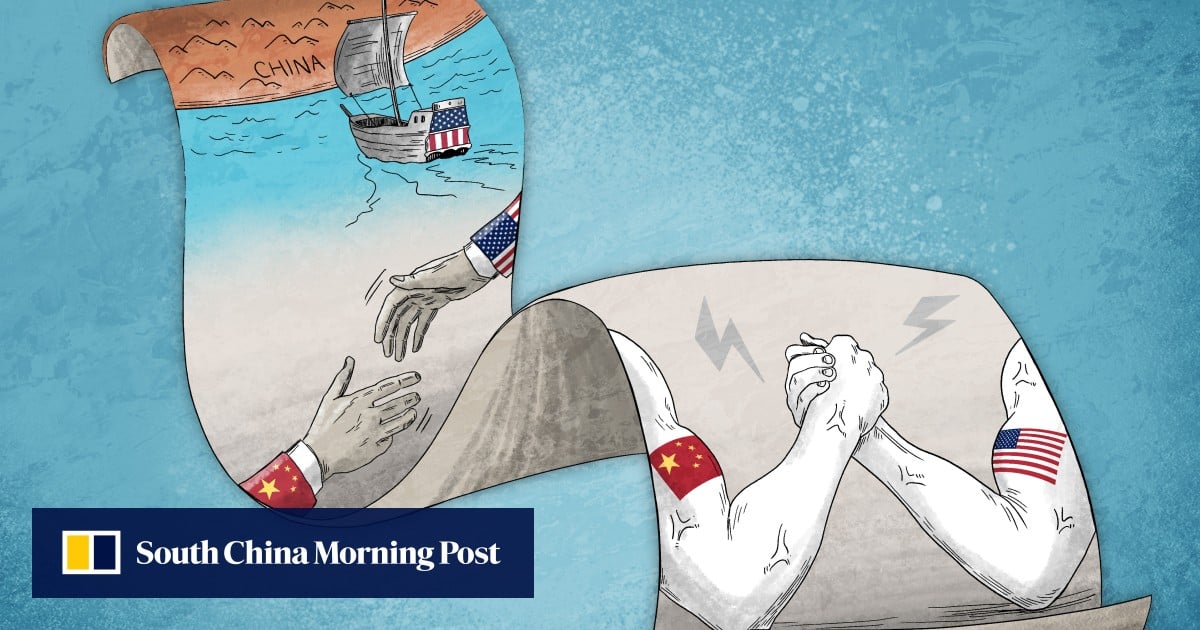
The US and China, now the world’s two largest economies, are locked in a struggle over trade, technology, security and the global order. The US once saw China as a coveted market, admired civilisation, missionary project, and strategic rival.
Imagine you're on a ship sailing across the ocean. Two and a half centuries ago, the US was like that ship, dreaming of reaching China. But as it got closer, the US saw China as a market, a civilisation, a missionary project, and eventually, a strategic rival. Today, the US and China are like two ships racing across the ocean, competing for influence and power.
Analysis
A 250-Year Journey of Reinvention
The Empress of China, a converted privateer, sailed out of New York harbour in February 1784, bound for China. This marked the beginning of a relationship in which America repeatedly reinvented what China represented. From a coveted market to an admired civilisation, from a missionary project to a strategic rival, each reinvention said as much about America as it did about China.
From Market to Civilisation
In the 19th century, the US saw China as a market for its goods. The Qing dynasty's restrictive trade policies and the Opium Wars led to the signing of the Treaty of Nanjing in 1842, which forced China to open up to Western trade. However, this period also saw the rise of American missionaries in China, who sought to spread Christianity and modernise Chinese society.
The Missionary Project
The early 20th century saw the US become increasingly involved in China's affairs. The US government and missionaries collaborated to promote modernisation and reform in China. However, this period also saw the rise of Chinese nationalism, which led to the Chinese Revolution of 1911 and the establishment of the Republic of China.
The Strategic Rivalry
In the post-World War II era, the US and China became strategic rivals. The US saw China as a potential threat to its interests in Asia, while China saw the US as a threat to its sovereignty. The Korean War and the Vietnam War further strained relations between the two countries. In the 1970s, the US and China began to normalise relations, but this was short-lived. The Tiananmen Square Massacre in 1989 led to a deterioration in relations, which continued until the 1990s.
The Current State of US-China Relations
Today, the US and China are locked in a struggle over trade, technology, security, and the global order. The US sees China as a strategic rival and a threat to its interests, while China sees the US as a threat to its sovereignty and economic development. The current state of US-China relations is complex and multifaceted, with both countries vying for influence in the Asia-Pacific region.
Conclusion
The US-China relationship has evolved significantly over the past 250 years, from a dream of trade and reform to a strategic rivalry. Understanding this evolution is crucial for grasping the current state of US-China relations. As the two countries continue to compete for influence in the Asia-Pacific region, it is essential to consider the historical context of their relationship and the implications for the future.
Key points
- The US and China have been locked in a struggle over trade, technology, security, and the global order for over 250 years.
- The US once saw China as a coveted market, admired civilisation, missionary project, and strategic rival.
- The current state of US-China relations is complex and multifaceted, with both countries vying for influence in the Asia-Pacific region.
- Understanding the historical context of the US-China relationship is crucial for grasping the current state of US-China relations.
If the US and China can find a way to cooperate on trade and technology, it could lead to a more stable and prosperous Asia-Pacific region. This could also create new opportunities for economic growth and development in both countries.
If the US and China continue to compete for influence and power, it could lead to a new Cold War. This could result in a destabilisation of the global order, economic stagnation, and increased tensions between the two countries.