How Britain Prevented Dubai from Becoming Part of India?
For decades, significant parts of the Arabian Peninsula, including Dubai and Aden, were legally and administratively considered part of British India, a historical fact largely forgotten today. Britain later severed these ties just months before India gained independence.
Intelligence analysis by Gemini 2.5 Flash
This article uncovers the surprising historical reality that much of the Arabian Peninsula, from Aden to Kuwait, was once governed by British India, with strong cultural and administrative links. It details how Britain strategically detached these territories from India in the mid-20th century, reshaping the geopolitical landscape of both regions.
Imagine a long time ago, a big country called Britain ruled India, and some places like Dubai and Aden were actually like little towns connected to India, even using Indian passports! But then, Britain decided to separate them, like taking a few toys from one big toy box and putting them in another, right before India became its own country. This changed who belonged to what country forever.
Analysis
The Forgotten Reach of the Raj
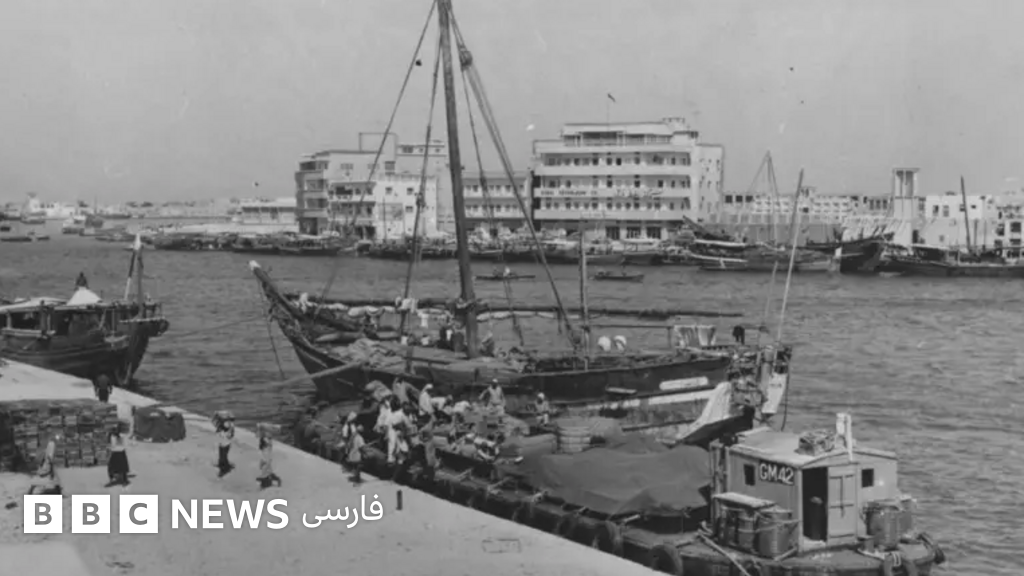
For a significant period in the early 20th century, the British Empire's administrative reach extended from Delhi across a substantial portion of the Arabian Peninsula. Territories such as Aden, Dubai, Abu Dhabi, and Kuwait were not merely protectorates but were legally considered part of British India under the Interpretation Act of 1889. This meant they were supervised by the political machinery of British India, secured by Indian forces, and ultimately answered to the Viceroy of India. The cultural and administrative integration was profound, with Indian passports issued in Aden and many local Arabs identifying as Indian nationalists, as observed during Mahatma Gandhi's visit in 1931. The Sultan of Oman, educated in Rajasthan, even spoke Urdu more fluently than Arabic, highlighting the deep, albeit often overlooked, connections.
Shifting Imperial Priorities and Secrecy
Despite this extensive integration, the full extent of British India's dominion over parts of the Arabian Peninsula was largely kept secret, even from most Britons and Indians. Maps detailing these territories were classified, and Arab lands were deliberately omitted from official documents to avoid provoking the Ottoman Empire and later Saudi Arabia. This secrecy, as a Royal Asiatic Society speaker sarcastically noted, created an opaque situation. However, by the 1920s, the political landscape began to shift dramatically. The rise of Indian nationalism, which sought to define India's identity based on its own traditions rather than imperial borders, prompted London to reconsider its administrative arrangements. Britain saw an opportunity to redraw these colonial boundaries in line with its evolving imperial strategy.
The Severance of Ties
The process of disentanglement began with Aden, which was formally separated from British India on April 1, 1937, becoming a Crown Colony. King George VI's message at the time underscored this break, stating Aden would find its place in the 'colonial empire' rather than the 'Indian Empire.' Despite this, the administration of Persian Gulf affairs remained under British Indian responsibility for another decade. However, British officials eventually concluded that it was 'inappropriate' for newly independent India or Pakistan to manage Arab affairs. Consequently, the sheikhdoms and governments of the Persian Gulf, including Dubai and Kuwait, were officially detached from India on April 1, 1947. This crucial separation occurred just months before the partition of British India into independent India and Pakistan, ensuring that these Arab states were not included in the complex process of integrating hundreds of local governments into the new South Asian nations.
Key points
- In the early 20th century, nearly one-third of the Arabian Peninsula, including Dubai and Aden, was administered as part of British India.
- These territories were legally considered part of India under the Interpretation Act of 1889 and were overseen by the Viceroy of India.
- Indian passports were issued in Aden, and many young Arabs there identified as Indian nationalists.
- The full extent of British India's control over these Arab territories was kept secret to avoid angering other regional powers.
- Due to changing political climates and the rise of Indian nationalism, Britain began to separate these territories from India.
- Aden was formally separated from British India on April 1, 1937, becoming a Crown Colony.
- The Persian Gulf sheikhdoms, including Dubai and Kuwait, were officially separated from India on April 1, 1947, just months before India and Pakistan gained independence.