How Canada could hit back to hurt the US economy - and Trump
Canada has several options to apply economic pressure on the US in the ongoing trade dispute, including energy and critical minerals, purchasing power, and political pressure. Ontario Premier Doug Ford has suggested an energy surcharge and has also threatened to restrict …
Intelligence analysis by Llama
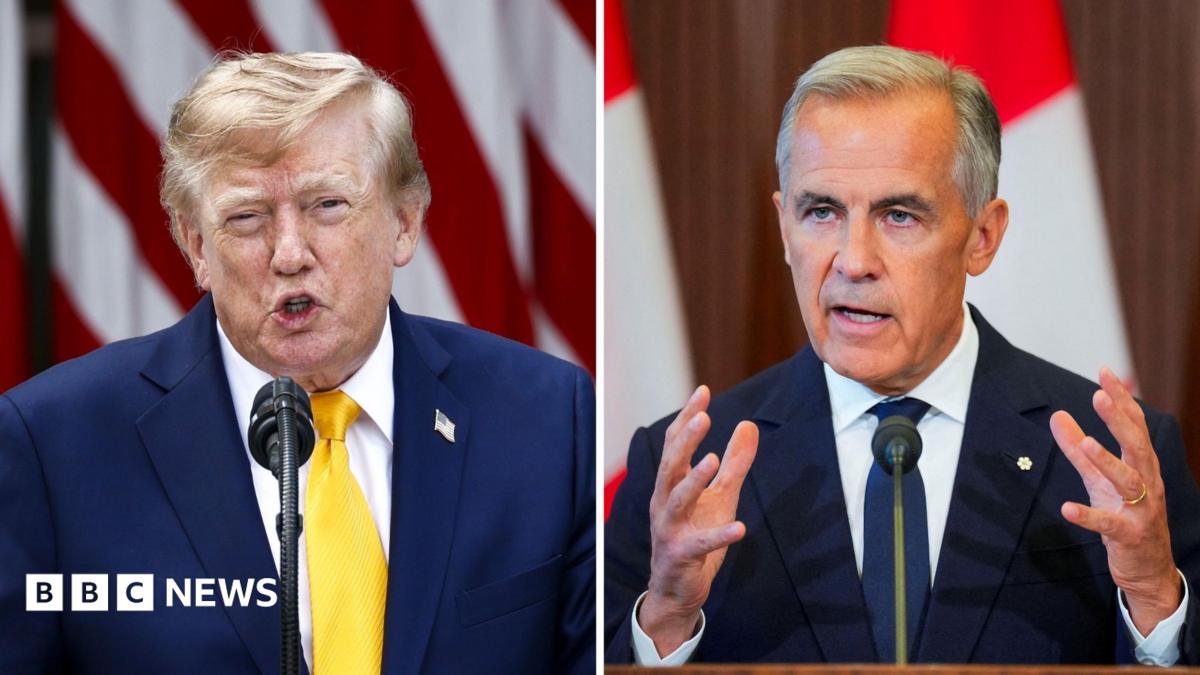
Canada has several options to apply economic pressure on the US in the ongoing trade dispute, including energy and critical minerals, purchasing power, and political pressure. Ontario Premier Doug Ford has suggested an energy surcharge and has also threatened to restrict the export of potash, a key commodity used in fertilizers.
Imagine you're playing a game of chess with your friend. You both have pieces on the board, and you're trying to outmaneuver each other. In this game, Canada and the US are like two players trying to outdo each other. Canada has some powerful pieces, like energy and critical minerals, that it can use to hurt the US economy. But the US also has its own powerful pieces, and it's trying to use them to hurt Canada. It's a game of cat and mouse, and both sides are trying to outsmart each other.
Analysis
Energy and Critical Minerals
Canada is a significant supplier of energy to the US, with the majority of US natural gas and electricity imports coming from Canada. The country is also a major source of critical minerals such as lithium, nickel, and graphite. Ontario Premier Doug Ford has suggested an energy surcharge and has also threatened to restrict the export of potash, a key commodity used in fertilizers. This could have significant implications for the US economy, particularly in the energy sector.
Purchasing Power
Canada has already proven that it can cause economic pain in the US. Even before trade talks broke down, a decision by most provinces to ban US alcohol from liquor store shelves - in response to the first wave of US tariffs early last year - dealt a devastating blow to that industry in the US. American wine had a significant collapse in exports, one the Wine Institute called the "most significant market disruption in decades". US wine exports to Canada fell 78% year over year, a $357m (C$494m; £261m) loss in export value, according to government data.
Political Pressure
Timing and Canadian political will could also be a tool for negotiations. Canadians know they will feel economic pain in this dispute - financial analysists estimated the most recent tariffs of 50% on about $20bn of Canadian imports could trim between 0.3% to 0.6% off the country's GDP in the short term. Still, a majority in the country broadly back Ottawa's decision to drive a hard bargain against the Trump administration, and other Canadian political leaders have shown a united front.
Key points
- Canada has several options to apply economic pressure on the US in the ongoing trade dispute, including energy and critical minerals, purchasing power, and political pressure.
- Ontario Premier Doug Ford has suggested an energy surcharge and has also threatened to restrict the export of potash, a key commodity used in fertilizers.
- Canada has already proven that it can cause economic pain in the US, particularly in the energy sector.
- Timing and Canadian political will could also be a tool for negotiations.
- A majority in the country broadly back Ottawa's decision to drive a hard bargain against the Trump administration, and other Canadian political leaders have shown a united front.
If Canada and the US can come to a mutually beneficial agreement, it could lead to increased trade and economic growth for both countries. This could also lead to a more stable and predictable trade relationship, which would be beneficial for businesses and investors.
If the trade dispute continues to escalate, it could lead to significant economic pain for both countries. This could include job losses, reduced economic growth, and increased prices for consumers. It's also possible that the dispute could lead to a more protectionist trade policy, which could have far-reaching consequences for global trade.