How China is turning historic African slave port into waterfront tourism destination
Chinese state firms are building a waterfront project in Ouidah, Benin, to link a former slave port with heritage sites. The plan is meant to boost tourism around a painful historic route.
Intelligence analysis by GPT-5.4 Mini
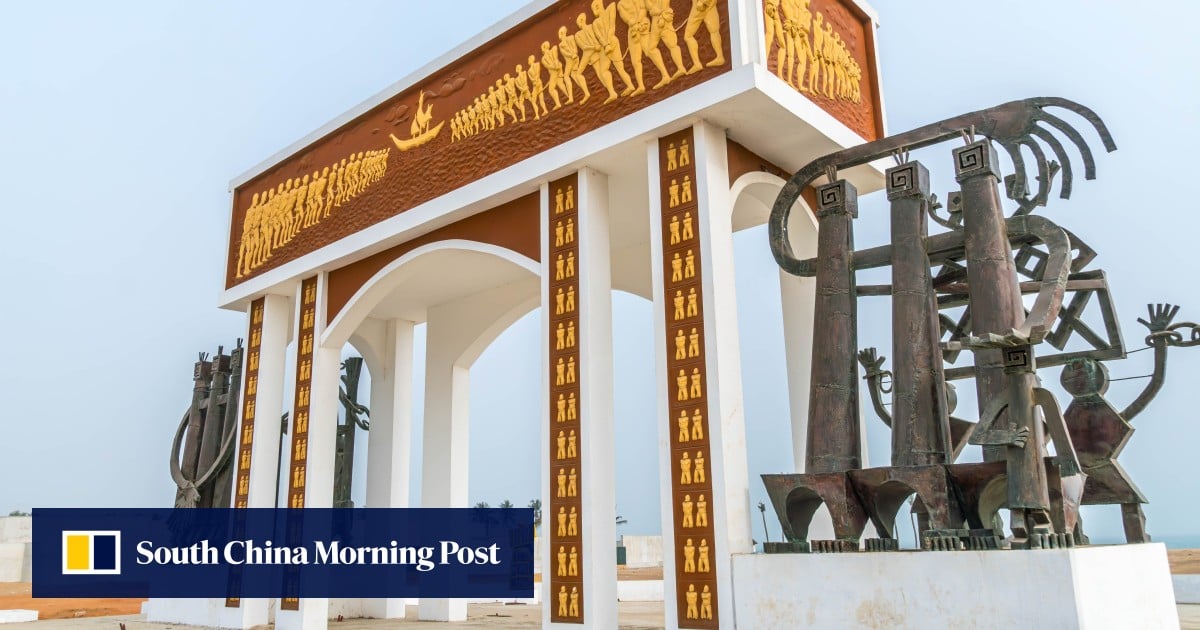
In Ouidah, Benin, Chinese state-owned firms are helping develop a seaside complex on land tied to the transatlantic slave trade. The project connects modern tourism infrastructure with memorial sites such as the Slave Route and the Gate of No Return.
A place where people were once forced onto ships is being turned into a tourist spot with a new seaside area. It is like adding a visitor center next to a very old and sad monument so more people can learn the story and visit.
Analysis
What is being built
In the coastal town of Ouidah, about 40km west of Benin’s economic capital Cotonou, the government has contracted Chinese state-owned firms to build the La Marina waterfront complex. The site sits at what was once the main slave port.
The historical setting
Ouidah was one of the places from which enslaved Africans were forced toward the Atlantic during the transatlantic slave trade. The article says nearly 2 million people were marched along the 2km “Slave Route” from the auction plaza to the beach. At the shore, they passed through the “Gate of No Return”, where a memorial arch now stands.
The development plan
The project is meant to connect the new seaside complex directly to the historic slave route and memorial sites, with tourism as the stated goal. Benin’s National Agency for Heritage Promotion and Tourism Development is managing the project. Construction began under former president Patrice Talon, and the article says the infrastructure agenda has now been inherited by newly sworn-in president Romuald Wadagni, who was finance minister at the time.
The bigger picture
The story shows how Chinese firms are embedded in a tourism-and-heritage project, not only in roads, ports, or power. It also reflects a government effort to turn a site marked by the slave trade into a destination that can draw visitors while preserving its memorial meaning.
Key points
- Chinese state-owned firms are building the La Marina waterfront complex in Ouidah, Benin.
- The project is being developed on land tied to the history of the transatlantic slave trade.
- The plan links the new seaside complex to the Slave Route and the Gate of No Return memorial.
- Benin’s heritage and tourism agency is managing the project, which began under former president Patrice Talon.
- The article frames the project as a tourism-development effort rather than a transport or industrial one.
If the project works as planned, it could bring more visitors to Ouidah and create a stronger tourism economy around the slave-route memorial sites. The new waterfront could also make the historic area easier to visit and more visible to international travelers.
The project could fail to attract enough tourists to justify the investment, especially if the heritage connection is not compelling enough for visitors. There is also a risk that the development could be seen as prioritizing waterfront construction over the careful preservation of a site tied to slavery.