How China is working to turn Saishiteng Mountain into the world’s largest astronomy base
China is building powerful optical telescopes on Saishiteng Mountain in Qinghai, aiming to surpass Mauna Kea by the mid-2030s.
Intelligence analysis by GPT-5.4 Mini
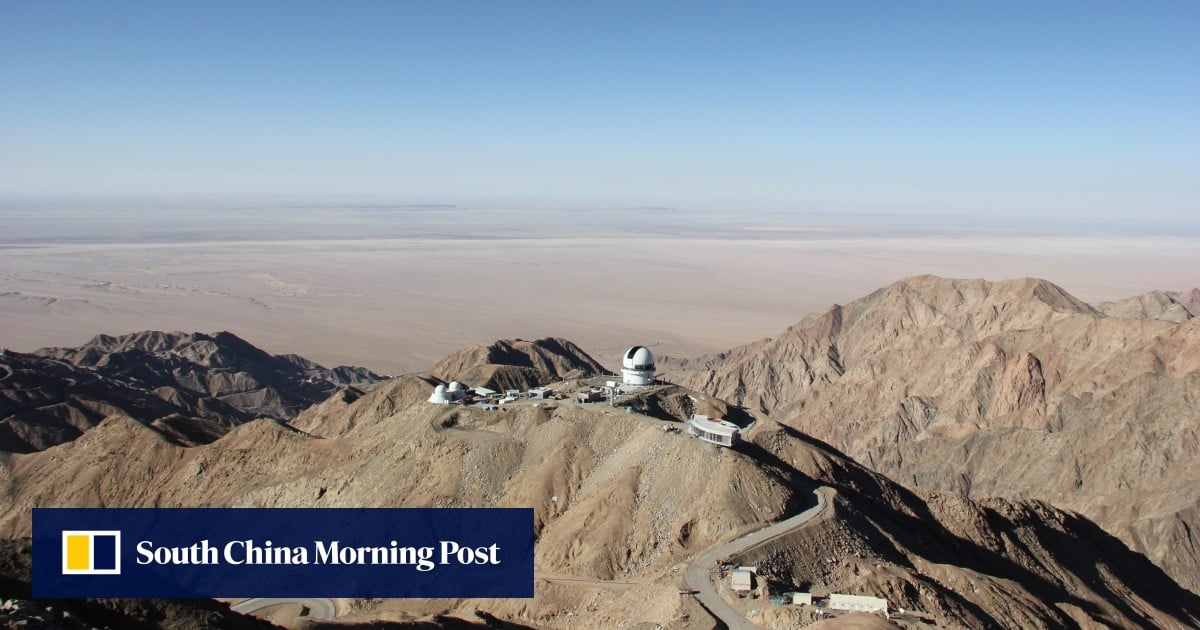
Project scientists say Saishiteng Mountain on the Tibetan plateau is being developed into a major astronomy hub, anchored by two large telescopes now under construction. The plan is for its combined light-gathering power to exceed Hawaii’s Mauna Kea by the mid-2030s.
China is building a giant set of telescopes on a high mountain, like putting many super-powered binoculars in one place. If it works, it could become the biggest place in the world for looking at stars and space from the ground.
Analysis
A new astronomy base
China is building out Saishiteng Mountain in northwestern Qinghai province as a major astronomy site, with project scientists saying it could become the world’s largest by the mid-2030s. The location is being developed around some of the Earth’s most powerful optical telescopes, along with dozens of smaller instruments.
The main instruments
According to Deng Licai of the National Astronomical Observatories of China, the telescopes planned for the site will range from 6.5 metres to 14.5 metres across. He said their combined light-gathering power is expected to exceed that of Hawaii’s Mauna Kea, long considered the top ground-based astronomy site. Mauna Kea currently hosts instruments including the twin 10-metre Keck telescopes, Subaru, and Gemini North.
Funding and timeline
The article says groundwork, mirror polishing and instrument development are already under way for two key projects: the 2.5 billion yuan Large Optical Telescope, led and funded by the NAOC, and the 1.5 billion yuan MUltiplexed Survey Telescope, backed mainly by private capital and led by a Tsinghua University team. Both aim for “first light” by 2030, meaning they should become operational enough for practical use by then.
What this shows
The story points to a coordinated effort that combines public science funding, university leadership and private capital. It also shows China trying to build not just one telescope, but a clustered observatory base with enough scale to challenge the world’s best-known astronomy site.
Key points
- Saishiteng Mountain in Qinghai is being developed into a major astronomy base.
- Scientists say its combined light-gathering power could surpass Hawaii’s Mauna Kea by the mid-2030s.
- The Large Optical Telescope is a 2.5 billion yuan government-funded project led by NAOC.
- The MUltiplexed Survey Telescope is backed mainly by private capital and led by a Tsinghua University team.
- Both flagship telescopes aim for first light by 2030.
If construction stays on track, the site could become a major global center for optical astronomy by the mid-2030s. The mix of large telescopes and smaller instruments could give researchers a much stronger observing platform than a single telescope alone.
The timeline depends on complex construction, mirror polishing and instrument work all reaching first light by 2030. Large observatories can also face technical delays, funding pressures or difficulty matching the performance that project scientists expect.