How dangerous are Iran's shoulder-fired missiles?
A Reuters report says Iran has signed a $60-70 million deal to buy 300-400 Chinese shoulder-fired air defense systems, including QW-12 and FN-16 missiles. The article examines what MANPADS can and cannot do.
Intelligence analysis by Llama
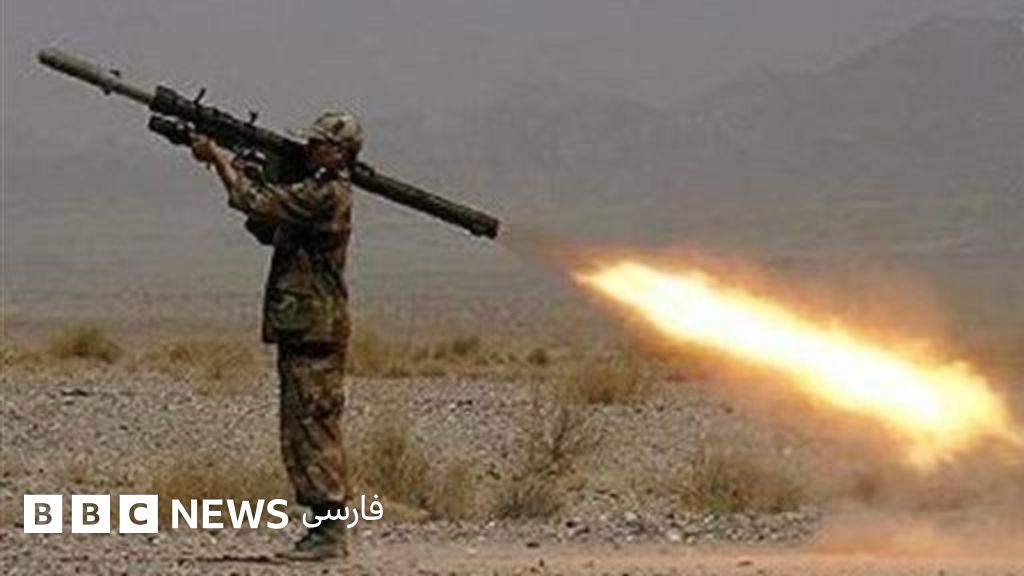
BBC Persian analyzes Iran's reported purchase of Chinese MANPADS, placing the deal in the context of a parallel Russian Verba contract and US sanctions. Experts say modern Chinese MANPADS could meaningfully raise the risk for US and Israeli helicopter and low-altitude flight operations, though they are not a substitute for medium- and long-range air defense.
Iran wants backpack-sized missiles that one soldier can carry and shoot at low-flying planes and helicopters. Think of them like really advanced firework tubes that lock onto engine heat. They cannot reach jets flying very high, but they make it much riskier for helicopters and drones to fly close to the ground.
Analysis
A Quiet Deal, Loudly Denied
The Reuters dispatch at the center of this story describes a $60-70 million contract for 300-400 man-portable air defense systems, including the Chinese QW-12 and FN-16 missiles, with a first shipment potentially routed through Pakistan within weeks. Beijing called the report "completely unfounded," and the Pakistani army rejected claims of any transit role as "fabricated and false." Such coordinated denials are standard practice in covert arms transfers, but they do not resolve the underlying question of whether the systems are actually moving. The article notes this is not the first time Iran's pursuit of these weapons has surfaced. In February 2026, the Financial Times reported a separate secret deal, worth €495 million, for 500 Verba launchers and 2,500 missiles from Russia, signed in December 2025 between two rounds of war, though no official source confirmed it. In June 2026, the US Treasury sanctioned individuals and companies it said were facilitating Chinese arms purchases for the IRGC and Iran's defense ministry, specifically naming man-portable air defense systems among the targeted equipment. The pattern, in other words, is older than any single shipment and broader than any single supplier.
What MANPADS Can and Cannot Do
Man-portable air defense systems, the article explains, are short-range, shoulder-fired weapons that typically use infrared seekers to lock onto the heat signature of an aircraft engine. A small team can set up near an airport, a flight path, or a sensitive facility, fire, and relocate quickly, which makes them hard to find and destroy. The article's expert sources frame their utility in measured terms. Justin Bronk, senior airpower researcher at the Royal United Services Institute, told BBC Persian that modern Chinese MANPADS could "significantly" raise the risk to US and Israeli helicopter operations and possibly to low-altitude fighter flights, because the latest generations are better at distinguishing real aircraft from thermal decoys. But they primarily threaten aircraft flying below roughly 15,000 feet (about 4,500 meters). Farzin Nadimi of the Washington Institute emphasized that these systems have "limited capabilities" compared to long-range air defense but could help fill part of Iran's gap at low altitude, against helicopters, drones, and transport aircraft on takeoff or landing. Their effectiveness varies sharply by target: large combustion-engine drones produce strong heat signatures and are easier to intercept, while small electric drones generate very little heat and are far harder to lock onto.
Iran's Domestic Stack: Misaq and Beyond
Iran's history with these weapons, the article shows, stretches back decades. The Small Arms Survey reported in 2024 that Iran imported Chinese QW-1 missiles in the 1990s and QW-18 missiles in the early 2000s, then assembled them domestically as the Misaq-1 and Misaq-2. Iran presents the Misaq family as a homegrown product, but according to experts cited in the piece, it remains unclear which components are made in Iran and which are imported and assembled locally. The article also flags the older Soviet-era Strela-2, known to NATO as SA-7 or SAM-7, and its upgraded variant as part of the inventory. The Iranian defense ministry's export center lists the engagement ceiling of Misaq-1 and Misaq-2 at 3,500 meters. The Sahand-3, advertised in ministry brochures as a sea-, land-, rooftop-, and moving-vehicle-launched infrared system for low-altitude targets, sits in the same category. Iran's defense industry is clearly betting that layered low-altitude coverage, even if built partly on imported Chinese and Russian technology, is a more attainable near-term goal than the kind of integrated medium- and long-range air defense network that would be needed to deter a sustained US or Israeli air campaign.
Key points
- Reuters reported a $60-70 million deal for 300-400 Chinese man-portable air defense systems, including QW-12 and FN-16 missiles, with possible transit through Pakistan.
- China called the report 'completely unfounded' and Pakistan's army denied any transit role; the article notes parallel reports of a €495 million Russian Verba deal and US Treasury sanctions on the procurement network.
- Iran has imported and domestically assembled Chinese QW-1 and QW-18 missiles as the Misaq-1 and Misaq-2, with an engagement ceiling of about 3,500 meters.
- Experts say modern Chinese MANPADS could 'significantly' raise risks for US and Israeli helicopter and low-altitude flight operations but cannot replace medium- and long-range air defenses.
- Effectiveness varies by target: large combustion-engine drones are easier to intercept, while small electric drones producing little heat are far harder to lock onto.
If the reported Chinese and Russian deals deliver as planned, Iran would meaningfully harden its low-altitude airspace, potentially complicating Israeli and US helicopter and drone operations and raising the cost of any future strikes. A more layered Iranian air defense could also serve as leverage in any future negotiation, strengthening Tehran's bargaining position at the table.
These shoulder-fired systems are a short-range layer, not a substitute for the medium- and long-range defenses Iran would need to blunt a sustained US or Israeli air campaign. Their effectiveness is also highly dependent on operator training, integration with broader air defense networks, and counter-countermeasure tactics, all of which the article flags as limited or uncertain. The public denials from Beijing and Islamabad, combined with the renewed US sanctions on the procurement network, suggest the supply chain remains fragile and contested.