How dangerous are the shoulder-fired missiles Iran is trying to acquire?
A Reuters report says Iran is trying to buy Chinese QW-12 missiles and FN-16 launchers worth $60–70 million, with the first shipment potentially routed through Pakistan. Beijing and Pakistan's military deny the claims.
Intelligence analysis by Llama
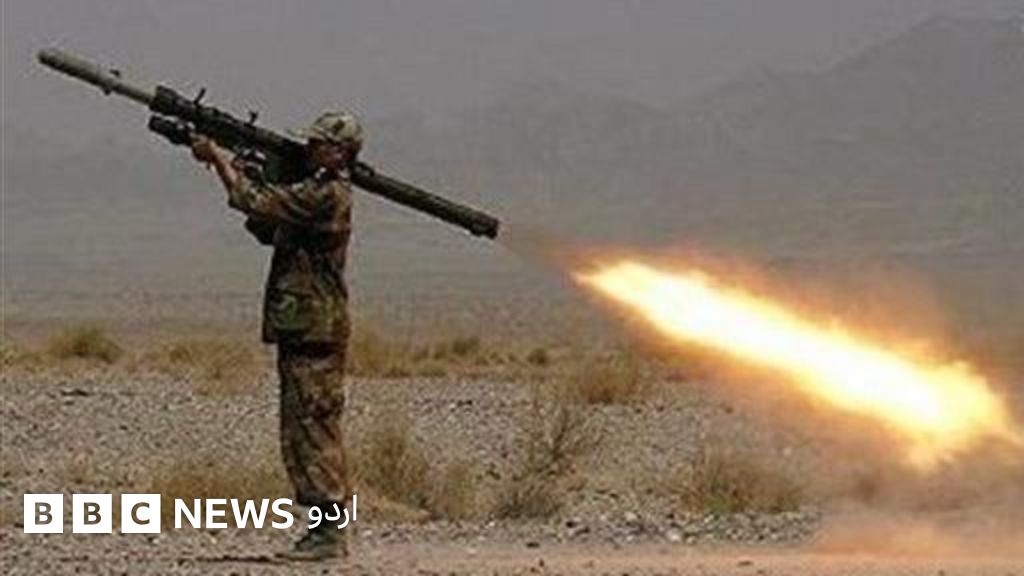
Reports claim Iran is expanding its arsenal of shoulder-fired air-defense missiles, sourcing from China and previously Russia, while denials from Beijing and Islamabad raise questions about transit routes through Pakistan.
Iran is trying to buy small missiles that soldiers can carry on their shoulders to shoot down low-flying planes and helicopters, like a giant heat-seeking slingshot. The missiles might travel through Pakistan on their way from China, which has upset all three governments, and Pakistan says it had nothing to do with it.
Analysis
The China–Iran–Pakistan Triangle
A recent Reuters investigation alleges that Tehran signed a $60–70 million deal with Chinese suppliers for 300–400 units of QW-12 missiles and FN-16 launchers, with the first consignment potentially reaching Iran "in a few weeks" via Pakistan. The specifics matter: a Chinese origin, a Pakistani transit corridor, and an Iranian end-user create a triangular pressure point that none of the three capitals wanted to be seen acknowledging. Beijing called the report "completely baseless," and the Pakistan Army dismissed allegations of facilitating the transfer as "fabricated and false." The denials, however, do not erase the commercial and logistical logic of the route, especially given Iran's long-documented reliance on Chinese man-portable air-defense systems (MANPADS) since the 1990s.
Why MANPADS Matter in Modern Air Warfare
MANPADS, or shoulder-fired missiles, are short-range, heat-seeking weapons designed to bring down low-flying aircraft. Unlike larger systems such as the S-300, they do not need bulky radar or vehicles, which makes them ideal for guerrilla-style deployment near airbases, helicopter corridors, or sensitive installations. The Royal United Services Institute's Justin Bronk told BBC Persian that newer Chinese MANPADS could pose a "significant" added danger to US and Israeli helicopters and low-altitude fighter jets, with better discrimination between real aircraft and heat decoys than older Iranian variants. Yet their ceiling remains the binding constraint: Iran's own Mersad-1 and Mersad-2 reach only about 3,500 meters, leaving medium- and long-range threats untouched.
A Layered, Not a Game-Changing, Buildup
Experts frame the procurement as a layered upgrade, not a strategic revolution. Farzin Nadimi of the Washington Institute for Near East Policy says these systems have "limited capability" compared with longer-range defenses but can partially close Iran's low-altitude gap, especially against helicopters, drones, and transport aircraft taking off or landing. The pattern echoes earlier moves: a February 2026 Financial Times report on a 495 million-euro secret deal with Russia for Verba-500 launchers and 2,500 missiles, and US Treasury sanctions in June 2026 on networks allegedly facilitating Chinese arms purchases for the IRGC and Defense Ministry. Taken together, the picture is one of Iran systematically plugging vulnerabilities in its air-defense web, with Pakistan's territory and Pakistan's reputation sitting uncomfortably in the middle of the supply chain narrative.
Key points
- Reuters reported Iran is trying to buy 300–400 Chinese QW-12 missiles and FN-16 launchers for $60–70 million, with a possible transit through Pakistan.
- Beijing called the report "completely baseless"; Pakistan's military called the transit allegations "fabricated and false."
- Earlier in 2026, the Financial Times reported a 495 million-euro secret Iran-Russia deal for Verba-500 launchers and 2,500 missiles.
- In June 2026, the US Treasury sanctioned networks accused of helping Iran's IRGC and Defense Ministry buy Chinese arms, including MANPADS.
- Iran has imported Chinese QW-1 and QW-18 missiles since the 1990s, later rebranded domestically as Mersad-1 and Mersad-2.
- Experts say newer Chinese MANPADS meaningfully raise risks for US and Israeli helicopters and low-flying jets, but cannot replace medium- or long-range air defenses.
If the allegations prove unfounded, Pakistan can use the official denials to push back against external pressure and reaffirm its non-involvement in sanctions-busting networks. A transparent Pakistani investigation could even strengthen Islamabad's standing with both Washington and Beijing as a responsible transit state.
If evidence emerges that Pakistani territory was indeed used as a corridor, Islamabad could face US Treasury sanctions, secondary sanctions from Washington on Chinese entities, and a serious diplomatic blow from Gulf states already wary of Iran-Pakistan ties. Repeated denials followed by confirmed shipments would also erode Pakistan's credibility on non-proliferation commitments.
Market signals
- OIL Reports of expanded Iran-China air-defense ties heighten Middle East tension risk, which historically supports a risk premium on oil supply routes.
AI-generated analysis of potential market relevance. Not financial advice.