How Deep Cleaner's Self-Developed Technology Enables Mass Production of Pool Cleaning Robots
Deep Cleaner, a Chinese company, has developed self-researched technology that enables mass production of pool cleaning robots. Their products have a 95% export rate to the US, Europe, and Australia, with a yearly output of tens of thousands of units. The company's techno…
Intelligence analysis by Llama
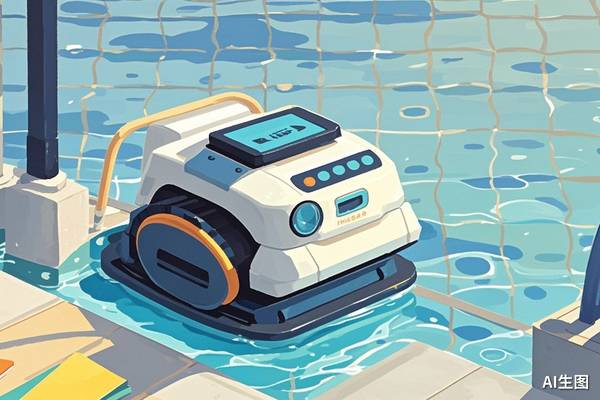
Deep Cleaner's self-developed technology has enabled the mass production of pool cleaning robots, which has improved their performance and efficiency. The company's products have a 95% export rate to the US, Europe, and Australia, with a yearly output of tens of thousands of units.
Imagine you have a pool, and you want to clean it without getting your hands dirty. Deep Cleaner's self-developed technology helps make pool cleaning robots that can do the job efficiently and effectively. Their products are popular among consumers, and the company's success shows the importance of investing in research and development to stay competitive in the market.
Analysis
A $60B Vote of Confidence
The global pool cleaning robot market is experiencing a structural shift driven by Chinese suppliers. According to overseas listed company data, the category has maintained a yearly growth rate of over 20% in recent years. Five years ago, the market was dominated by three overseas companies, but domestic manufacturers are gradually rewriting the market landscape. In the cross-border export end, a batch of Chinese companies with self-research capabilities have transformed from simple production execution roles to technology scheme providers.
Located in Taizhou, Zhejiang Province, Deep Cleaner (Di Tu Ke Ji) is a typical example of this transformation. Its products account for 95% of exports to the US, Europe, and Australia, with a yearly output of tens of thousands of units, covering three major categories: water bottom cleaning, water surface cleaning, and pool disinfection. The company's core components are all self-developed.
Technology Differentiation: From 'How Long Can It Run' to 'How Long Can It Last'
The pool cleaning robot industry has a commonly overlooked yet crucial indicator: single-run time. The reason is that the ideal state of pool cleaning is 'put it in and forget it, and it will be clean when taken out.' Single-run time directly determines cleaning coverage and user experience. Deep Cleaner's performance in this indicator comes from a non-consensus technical route choice.
Traditional water bottom robots in pools often collide with the pool wall and adopt a metal spring arm scheme. However, this scheme has a problem: the metal parts will accelerate aging and performance degradation in high-corrosive environments, leading to frequent maintenance. Deep Cleaner's solution is a magnetic collision buffer technology, which uses magnetic force to sense and respond to collisions without mechanical contact, unaffected by chemical corrosion. This technology has been patented in the US.
Dissecting the Logic Chain
Problem → Traditional Mechanical Collision Scheme Fails in Corrosive Environment → Scheme → Magnetic Non-Contact Sensing Replaces Metal Spring → Result → Key Components Have No Wear and Tear, Single-Run Time Significantly Extended → Commercial Value → Whole Machine Run Time 50% Longer Than Similar Products, Fault Rate Controlled Below 3%
Water Surface Cleaning: Electric Motor Self-Development Brings Cost and Life Cycle Benefits
The water surface cleaning machine is the fastest-growing subcategory in the industry. Deep Cleaner has invested heavily in this area, with a focus on developing self-researched electric motors. The company's motor has a lifespan of 3000 hours, with a cost advantage of over 50% compared to external competitors. The motor's lifespan is 50% longer than similar products, with a fault rate controlled below 3%.
Export Business Hard Threshold: Certification and Product Control
Exporting pool cleaning robots to the US, Europe, and Australia has a hard threshold: certification. Deep Cleaner's products have passed six international certifications, including CE (Europe), ETL (US safety), SAA (Australia), FCC (electromagnetic compatibility), ROHS (environmental protection), and UN38.3 (battery transportation safety). The company also meets the requirements of California's 65 law.
Industry Perspective Positioning
The pool cleaning robot market is at a critical juncture, with Chinese manufacturers gradually replacing imported products. Deep Cleaner's strategy is not to rely solely on low prices but to use self-developed technology to improve product performance and efficiency. The company's products have a 95% export rate to the US, Europe, and Australia, with a yearly output of tens of thousands of units. The company's success has been validated by customer feedback, with one client stating, 'Your product's entire run time is far beyond other models.' Another client gave a comprehensive evaluation, 'Overall performance is better than competitors, with a higher price-performance ratio and higher stability.'
Risks and Variables
It is essential to note that Deep Cleaner is a relatively new company (established in 2022), and its brand recognition in the terminal consumer market is still in the accumulation phase. The company's success also highlights the importance of investing in research and development to stay competitive in the market.
Key points
- Deep Cleaner has developed self-researched technology that enables mass production of pool cleaning robots.
- The company's products have a 95% export rate to the US, Europe, and Australia, with a yearly output of tens of thousands of units.
- Deep Cleaner's self-developed technology has improved the performance and efficiency of pool cleaning robots.
- The company's products have passed six international certifications, including CE, ETL, SAA, FCC, ROHS, and UN38.3.
- Deep Cleaner's self-developed electric motor has a lifespan of 3000 hours, with a cost advantage of over 50% compared to external competitors.
If Deep Cleaner continues to innovate and improve its products, it may become a leading player in the pool cleaning robot market. The company's self-developed technology and focus on quality and efficiency may help it to expand its market share and increase its revenue.
However, Deep Cleaner's relatively new status in the market and its limited brand recognition among consumers may pose a risk to its success. If the company fails to maintain its quality and efficiency standards, it may struggle to compete with established players in the market.