How Did a U.S. Sea Drone Help Rescue a Helicopter Crew Off the Coast of Oman?
The U.S. says a sea drone helped rescue two helicopter crew members off Oman, in what it describes as the first public use of an uncrewed vessel in a rescue.
Intelligence analysis by GPT-5.4 Mini
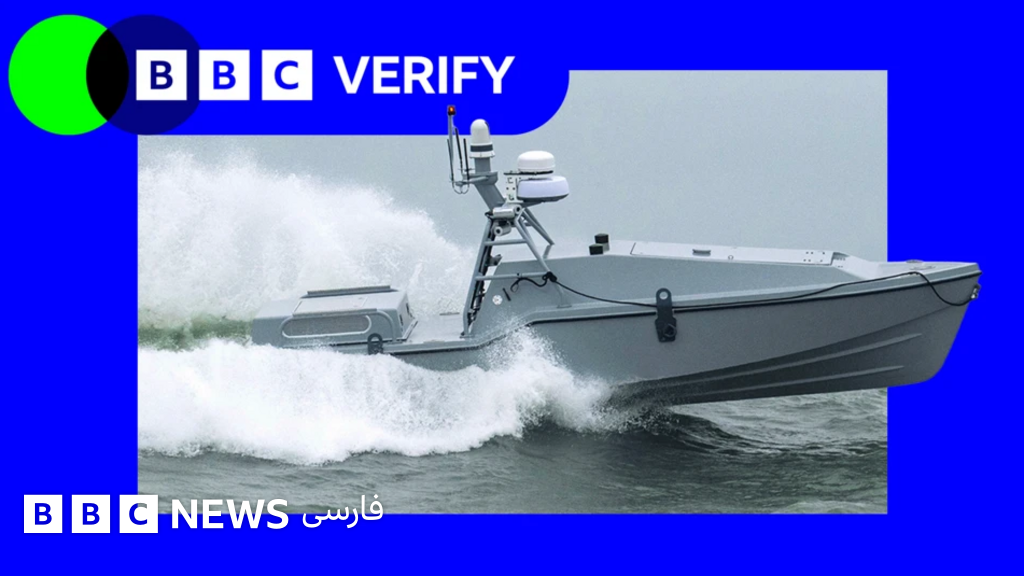
BBC Persian says the U.S. used a Corsair sea drone to reach two soldiers after an Apache helicopter crash near the Strait of Hormuz. The article explains the drone’s capabilities, how the rescue likely worked, and why it matters for future military use of uncrewed vessels.
A remote-controlled boat helped save two soldiers after their helicopter crashed. Instead of sending another helicopter straight in, the military used the robot boat to reach them safely, like sending a delivery cart before bringing in the ambulance.
Analysis
What happened
The U.S. military says it used a sea drone earlier this week to rescue two crew members from a crashed Army helicopter off the coast of Oman. According to the article, Donald Trump said the Apache was shot down by Iran near the Strait of Hormuz, though the piece does not independently verify that claim.
CENTCOM said the two soldiers were rescued successfully in about two hours and were in stable condition. The article says this is the first known public example of an uncrewed surface vessel being used in a rescue operation.
What the drone is
The vessel involved was the Corsair, built by the Texas company Saronic. BBC Persian cites the company’s website and experts saying the drone is about 24 feet long, can carry roughly 450 kilograms, and can travel at more than 35 knots. Analysts quoted in the article say it is roughly the size of a small fishing boat and has room for several people.
The drone is equipped with a 360-degree camera, radar for long-range navigation, and electronic sensors for communications and intelligence gathering. It is operated by U.S. Navy Task Force 59, the first Navy unit dedicated to uncrewed systems, which was formed in 2021 and has been deployed to the Middle East since March.
How the rescue worked
The article says the vessel likely was driven remotely by a human operator rather than running fully autonomously. Experts quoted by BBC say it was probably guided close to the crew’s location, where the soldiers boarded it like a small boat. They were then moved to another point on the water and lifted into a helicopter.
Wider context
BBC Persian notes that sea drones are already being used in the Ukraine war and in attacks by Houthi forces and Iran in the region. The article frames this rescue as part of a broader U.S. effort to expand uncrewed naval systems after watching battlefield innovation elsewhere.
Key points
- The U.S. says it used a Corsair sea drone to rescue two helicopter crew members off Oman.
- CENTCOM said the soldiers were rescued in about two hours and were stable.
- BBC Persian describes this as the first known public use of an uncrewed vessel in a rescue mission.
- Experts say the Corsair is likely being used remotely, not fully autonomously, in this operation.
- The article places the event in the wider context of Iran, the Strait of Hormuz, and growing military use of sea drones.
If this approach works reliably, uncrewed boats could help rescue people faster without putting more crews in danger. The article suggests they may become useful for risky missions in places where sending a manned vessel or helicopter would be more hazardous.
The article also shows that the system still appears to depend on human control, so it may not be fully autonomous in high-stakes situations. If the drone is misdirected or the environment is too dangerous, a rescue could still fail or arrive too late.