How generative AI helps SenseTime turn a profit even as Chinese peers struggle
Chinese AI firm SenseTime achieved its first-ever first-half profit, reporting 617.3 million yuan (US$92.0 million), largely driven by generative AI applications.
Intelligence analysis by Gemini 2.5 Flash
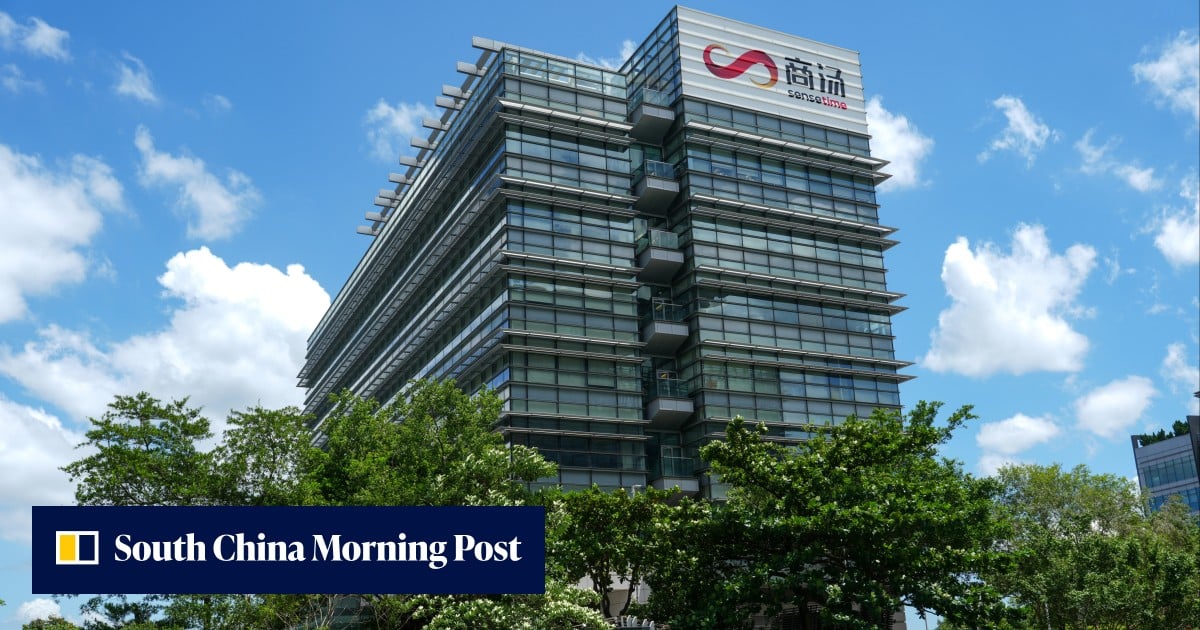
SenseTime has carved a unique path to profitability by focusing on generative AI productivity tools for enterprise clients and solo entrepreneurs, rather than solely pursuing large model sizes. This strategy contrasts with domestic rivals like MiniMax and Zhipu AI, who remain loss-making despite significant revenue growth.
Imagine a company that makes super-smart computer brains, like a super-helper. Instead of just trying to make the biggest, smartest brain, this company, SenseTime, focused on making smaller, useful tools that help people and businesses get work done, like a special app for drawing or writing. Because they made things people actually paid for, they earned money and made a profit for the first time, even while other big brain-making companies were still losing money trying to build the biggest brains.
Analysis
SenseTime's recent financial performance marks a significant turning point for the Chinese AI giant, demonstrating a viable path to profitability in a sector often characterized by heavy investment and delayed returns. The company's strategic pivot away from a singular focus on large model development towards practical, monetizable applications for enterprise clients and solo entrepreneurs has proven effective. This approach emphasizes solving specific business problems with AI productivity tools, rather than merely chasing technological benchmarks.
SenseTime
SenseTime's success is rooted in its ability to translate advanced AI capabilities into tangible commercial value. The firm's core strengths, encompassing models, a token factory, and an agent-harness system, have each been developed into "independent commercial closed loops," as articulated by CEO Xu Li. This modular approach allows for diverse revenue streams and a more resilient business model. The company's focus on recurring revenue, which saw a remarkable 124.4 percent year-on-year surge to 1.14 billion yuan, now constitutes nearly 40 percent of its total sales, indicating a stable and growing customer base for its AI solutions.
The emphasis on generative AI has been particularly instrumental in SenseTime's financial turnaround. This technology contributed a substantial 2.33 billion yuan, accounting for nearly 80 percent of the group's total sales. This high contribution underscores the market demand for practical generative AI applications that enhance productivity and streamline operations for businesses and individual users. The company's ability to identify and cater to these specific market needs has allowed it to differentiate itself in a crowded and competitive landscape.
617.3 million yuan
The reported net profit of 617.3 million yuan (US$92.0 million) for the first half of 2026 represents a historic achievement for SenseTime. This marks the company's first-ever first-half profit under International Financial Reporting Standards since its listing in Hong Kong in 2021. This financial milestone is not merely a one-off event but reflects a fundamental shift in the company's operational strategy and market positioning. The accompanying revenue growth of 23.4 percent year-on-year to 2.91 billion yuan further solidifies the sustainability of its current business trajectory.
This profitability demonstrates that a focused application of generative AI can lead to significant financial gains, challenging the perception that AI development is solely a long-term, capital-intensive endeavor. SenseTime's ability to achieve this profit while simultaneously growing its revenue base suggests a healthy balance between innovation and commercial viability. The company's executives have clearly articulated a vision for a sustainable business model, moving beyond the initial phase of heavy investment into a period of return.
MiniMax
SenseTime's financial performance stands in stark contrast to that of its high-flying Chinese peers, such as MiniMax and Zhipu AI (also known as Z.ai). While these companies reported impressive triple-digit revenue growth for the same period, they both remained significantly loss-making. MiniMax logged a net loss of US$358 million, and Zhipu AI reported a net loss of 2.07 billion yuan (US$308 million). This divergence highlights the different strategic paths being taken within the Chinese AI industry.
The struggles of MiniMax and Zhipu AI, despite their rapid revenue expansion, underscore the challenges of monetizing large-scale AI model development without a clear, profitable application strategy. Their focus on growth, potentially at the expense of immediate profitability, contrasts sharply with SenseTime's more pragmatic approach. This situation suggests that while technological prowess is crucial, a well-defined commercial strategy, particularly one that leverages generative AI for specific productivity tools and niche markets, is essential for achieving financial sustainability in the current AI landscape.
Key points
- SenseTime reported its first-ever first-half net profit of 617.3 million yuan (US$92.0 million) since its 2021 Hong Kong listing.
- The company's profitability is largely attributed to its focus on generative AI productivity tools for enterprise clients and solo entrepreneurs.
- Generative AI contributed nearly 80% of SenseTime's total sales, amounting to 2.33 billion yuan.
- Recurring revenue surged 124.4% year-on-year to 1.14 billion yuan, representing nearly 40% of total sales.
- SenseTime's performance contrasts sharply with Chinese peers like MiniMax and Zhipu AI, who remain loss-making despite high revenue growth.
SenseTime's success could serve as a viable blueprint for other AI companies, demonstrating that a focused strategy on practical, monetizable generative AI applications can lead to profitability. This approach may encourage a shift in the industry towards sustainable business models rather than solely pursuing large-scale model development.
Despite SenseTime's current profitability, the broader AI market remains highly competitive and capital-intensive, with many peers still incurring significant losses. Sustaining this niche and fending off new entrants or larger competitors could prove challenging, potentially impacting long-term growth and profitability.
Market signals
- 0020.HK The company reported its first-ever first-half profit, driven by generative AI, indicating a successful business model and potential for investor confidence.
AI-generated analysis of potential market relevance. Not financial advice.