How Hong Kong’s strengths can help unlock Central Asia’s potential
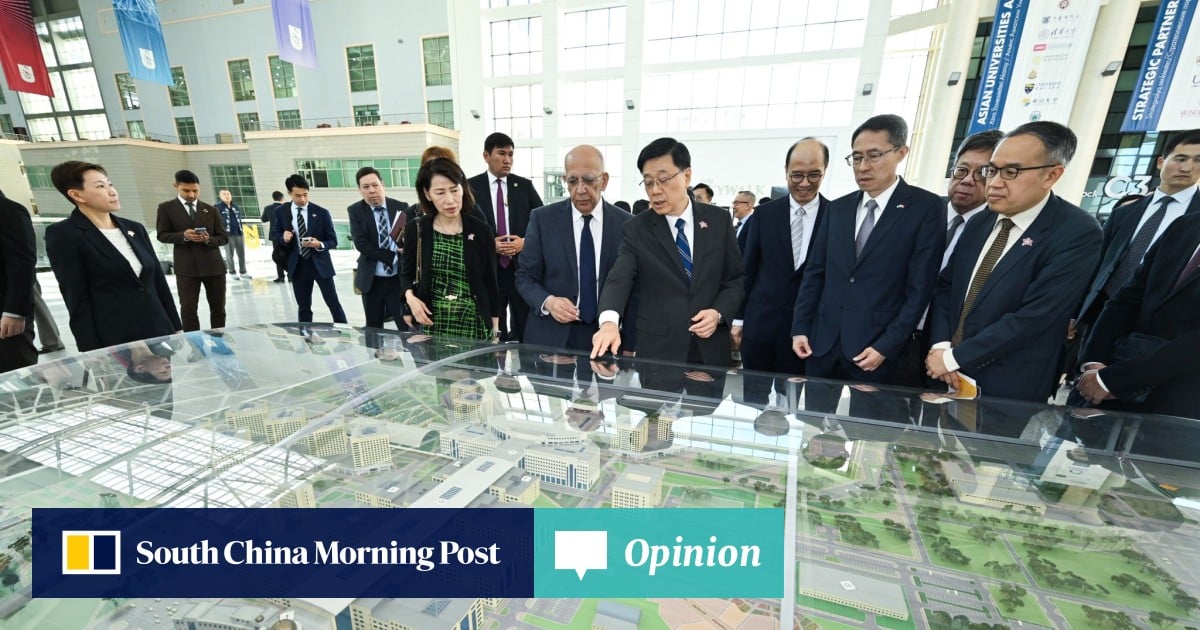
A Hong Kong opinion piece says John Lee’s trip to Kazakhstan and Uzbekistan produced 96 agreements worth over US$1.65 billion and could deepen Hong Kong-Central Asia ties.
Intelligence analysis by GPT-5.4 Mini
The article argues that Hong Kong can use its financial, legal and innovation strengths to become a key bridge for Central Asia. It frames the chief executive’s first mission to the region as a sign of a broader push to build hub-to-hub links under the Belt and Road Initiative.
The article says Hong Kong is trying to be a bridge between two faraway places, like a busy train station that helps people and goods move between different cities. By making deals with Kazakhstan and Uzbekistan, it hopes to help both sides do more business and grow faster.
Analysis
What the article argues
The article presents Chief Executive John Lee Ka-chiu’s five-day visit to Kazakhstan and Uzbekistan as a milestone for Hong Kong’s external economic strategy. It says the trip produced 96 cooperation agreements and memorandums of understanding worth more than US$1.65 billion, and describes that result as evidence of strong economic synergy between Hong Kong and Central Asia.
Where Hong Kong fits
The piece says the agreements covered commercial and government cooperation in sectors such as financial services, including green finance, innovation and technology, aviation and logistics. It argues that Hong Kong’s role is not just to sign deals, but to act as a “superconnector” and “super value-adder” for the Belt and Road Initiative by linking different markets and institutions.
The strategic logic
According to the article, Lee’s approach is built around three ideas: exploring emerging markets, strengthening government-to-government ties, and creating a hub-to-hub architecture. In that framing, Kazakhstan and Uzbekistan serve as gateways to Central Asia and Europe, while Hong Kong serves as a financial and technological launch pad into East and Southeast Asia.
The article also says Hong Kong’s institutional setup under “one country, two systems” can help support reform efforts in Central Asian economies. The author’s central claim is that Hong Kong’s strengths in finance, regulation and connectivity align well with the development goals of the two countries, making deeper cooperation commercially and strategically useful.
Key points
- John Lee’s trip to Kazakhstan and Uzbekistan was described as Hong Kong’s first chief-executive-led mission to Central Asia.
- The visit reportedly produced 96 agreements and MOUs worth more than US$1.65 billion.
- The article highlights finance, green finance, technology, aviation and logistics as key cooperation areas.
- It argues Hong Kong can serve as a financial and technological launch pad for Central Asia.
- The author says Hong Kong’s institutional setup gives it an edge in helping regional economies connect to wider markets.
If the partnerships described in the article turn into real projects, Hong Kong could gain new business, finance and logistics links across Central Asia. The article suggests this could also strengthen Hong Kong’s role as a connector between regions under the Belt and Road Initiative.
The article’s promise depends on the signed agreements turning into workable projects, not just announcements. If the political and commercial ties do not deepen, the stated synergy between Hong Kong and Central Asia could remain mostly symbolic.