How long can the AI memory price boom last? Research suggests not much longer
The global memory-chip stock rally is faltering as price growth cools, despite robust AI demand. Analysts warn the sector is entering a late-stage cycle, with Chinese producers poised to increase supply.
Intelligence analysis by Gemini 2.5 Flash
The article highlights growing concerns among analysts and investors regarding the sustainability of the memory-chip price boom, which has been fueled by AI demand. Despite continued appetite for high-end memory, a deceleration in price increases and impending supply expansion from Chinese manufacturers like CXMT are signaling a shift towards a more mature, less profitable phase of th…
Imagine everyone suddenly wants a super-fast brain for their smart robots, making the special memory chips that act like these brains very expensive, like a popular toy. But now, more toy factories are making these brains, and the price isn't going up as fast anymore. Experts think the super-high prices won't last much longer because more chips are coming, even though robots still need them.
Analysis
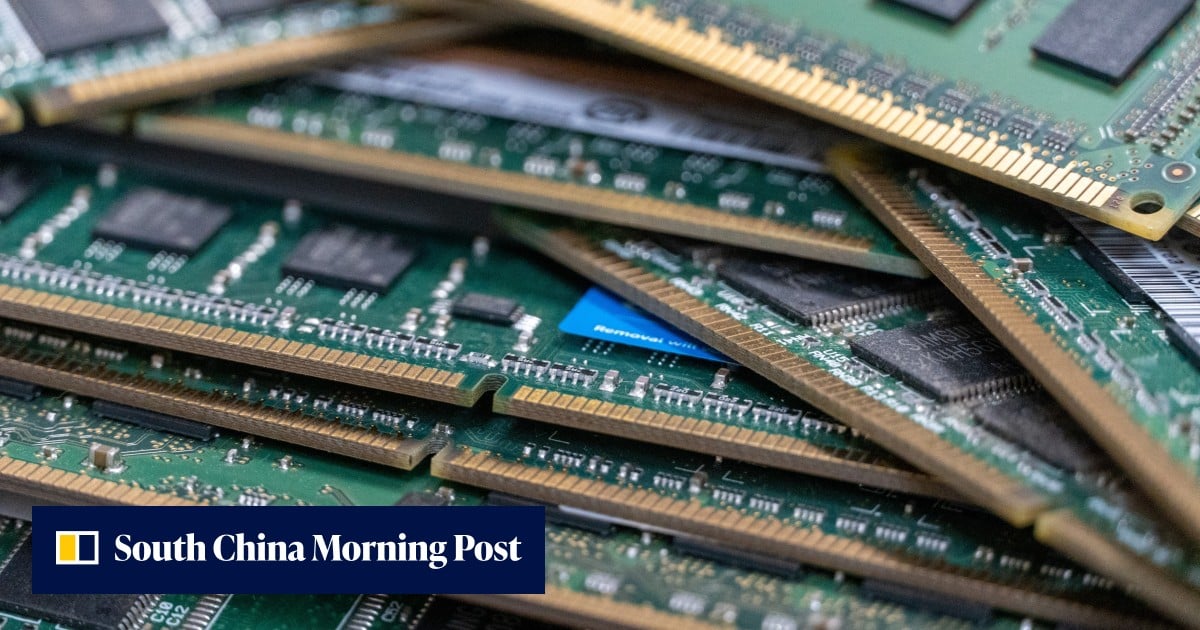
The recent surge in memory-chip stocks, largely driven by insatiable demand from the artificial intelligence sector, is showing signs of significant deceleration. This shift is prompting analysts to re-evaluate the longevity of the current boom, suggesting that the industry might be transitioning into a more mature phase characterized by moderating price increases and increasing supply.
Morgan Stanley
In a recent report, Morgan Stanley issued a cautionary outlook, predicting that the memory cycle is poised to enter its late stage during the fourth quarter. This assessment is primarily based on observations of moderating price increases and a gradual build-up of inventories within the sector. This warning from a prominent institutional forecaster has contributed to a broader pullback in the shares of major memory firms. Companies like Micron, SK Hynix, and those associated with SanDisk have seen their stock prices retreat from recent highs, as investors begin to reassess the long-term durability of the sector's explosive growth.
Bernstein Research
Further reinforcing the concerns about the memory market's trajectory, Bernstein Research provided data illustrating a sharp slowdown in contract price growth. Their report indicated that conventional DRAM contract prices are projected to increase by approximately 17 per cent in the third quarter, a significant drop from the roughly 65 per cent jump observed in the preceding April-June period. This deceleration in contract pricing is a critical indicator of weakening market momentum, directly impacting the revenue and profit margins of memory chip manufacturers. The stark contrast between the two quarters underscores the rapid shift in market dynamics, moving away from the steep price increases that previously drove record profits.
CXMT
Adding to the anticipated supply-side pressures are the ambitious expansion plans of China's leading memory producers. UBS specifically highlighted ChangXin Memory Technologies (CXMT), which is expected to nearly double its monthly DRAM capacity. CXMT's capacity is projected to increase from around 240,000 wafer starts at the end of 2025 to an impressive 466,000 by late 2028. This substantial expansion is anticipated to significantly boost CXMT's share of global DRAM bit supply, rising from about 7 per cent to 10 per cent, thereby intensifying competition and potentially further moderating prices in the global memory market.
Key points
- The global memory-chip stock rally is beginning to falter despite strong AI demand.
- Analysts, including Morgan Stanley, warn the memory cycle is entering a late stage due to moderating price increases and inventory build-up.
- Conventional DRAM contract prices are expected to see a sharp slowdown in growth, from 65% to 17% quarter-on-quarter.
- Chinese producers like ChangXin Memory Technologies (CXMT) are planning significant capacity expansions, nearly doubling monthly DRAM output by late 2028.
- Increased supply from China is projected to raise CXMT's share of global DRAM bit supply from 7% to 10%.
A moderation in memory chip prices could lead to more affordable components for AI infrastructure, potentially accelerating the development and deployment of AI technologies across various industries. Increased supply from producers like CXMT might also foster greater competition, driving innovation and efficiency in the memory sector.
The cooling price growth and increased supply could lead to reduced profit margins for memory chip manufacturers, potentially impacting their investment in future research and development. This late-stage cycle could also signal a broader slowdown in tech spending, affecting the overall economic outlook for the semiconductor industry.
Market signals
- MU Shares of Micron are retreating from highs as the memory cycle enters a late stage with cooling price growth.
- SK Hynix Shares of SK Hynix are retreating from highs due to moderating memory chip price increases and increased supply concerns.
AI-generated analysis of potential market relevance. Not financial advice.