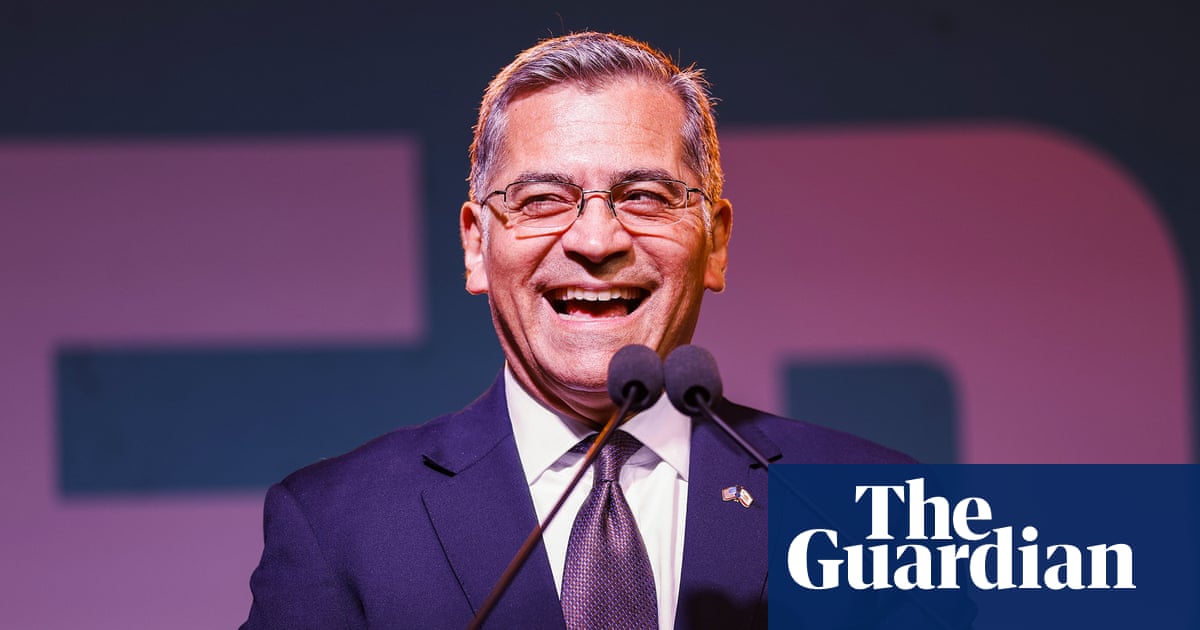
How Xavier Becerra turned around his campaign to be California’s governor
Becerra went from 3% in March to the general election after a series of shifts reshaped the California race. His experience and Latino appeal helped him fill a vacuum left by scandal and party panic.
Intelligence analysis by GPT-5.4 Mini
This analysis tracks Xavier Becerra’s rebound from a weak start to a serious run for California governor. A crowded field, a Democratic scare over being shut out, and fresh attention to his background all helped reset the race.
Becerra was like a player who started far behind in a race, then suddenly moved up when another player dropped out. People who wanted a familiar, experienced leader started choosing him because his life story felt real to them.
Analysis
From long shot to contender
Xavier Becerra began the California governor’s race as an underperformer. In late March, polling put him around 3%, well behind several Democrats and two Republicans in the state’s non-partisan primary. He was seen as an old-school, mild-mannered veteran at a time when many Democratic voters wanted a louder fight against Donald Trump and the Republican agenda.
What changed
The race shifted in April after sexual misconduct and assault allegations emerged against Eric Swalwell. Swalwell denied the claims, then withdrew and resigned from Congress. That opened space for Becerra, who had the résumé, public recognition, and institutional experience to become a natural fallback option for voters looking for a familiar Democrat.
The article also says broader Democratic anxiety played a role. With the primary field crowded, there was real concern that Republicans could finish first and second and leave Democrats off the November ballot altogether. That fear made party leaders and voters more attentive to candidates who could consolidate support.
Why Becerra connected
Becerra’s campaign leaned on his personal story as the son of Mexican immigrants. He has used that background to speak about immigration and the Trump administration’s mass deportation drive targeting undocumented Latinos. The article says that message, along with his long record in California and Washington, resonated with Latino voters.
A poll cited in the piece found 37% of Latino voters backing Becerra just before the primary. Republican candidates Chad Bianco and Steve Hilton were next among Latino voters in that survey, which shows how much Becerra’s appeal cut across the usual party lines.
The bigger picture
The piece frames Becerra’s rebound as both a campaign story and a party story. Democrats in California were looking for someone who could unite the vote and prevent a humiliating general-election lockout. Becerra’s rise suggests that experience, familiarity, and identity can still matter when the field is unstable and the electorate is uneasy.
Key points
- Becerra’s polling rose sharply after starting near 3% in late March.
- Eric Swalwell’s withdrawal after misconduct allegations changed the race’s balance.
- Democratic leaders feared Republicans could lock Democrats out of the general election runoff.
- Becerra’s Mexican-American background and long public career resonated with Latino voters.
- If elected, he would be California’s first Latino governor since 1875.
If Becerra keeps building on this momentum, he could unite enough Democratic voters to win in November. His background and experience could also help him make history as California’s first Latino governor since 1875.
His comeback may still rest on a fragile mix of party panic and a rival’s collapse rather than broad enthusiasm. If Democrats split again or his support proves shallow, the race could still tilt away from him in November.