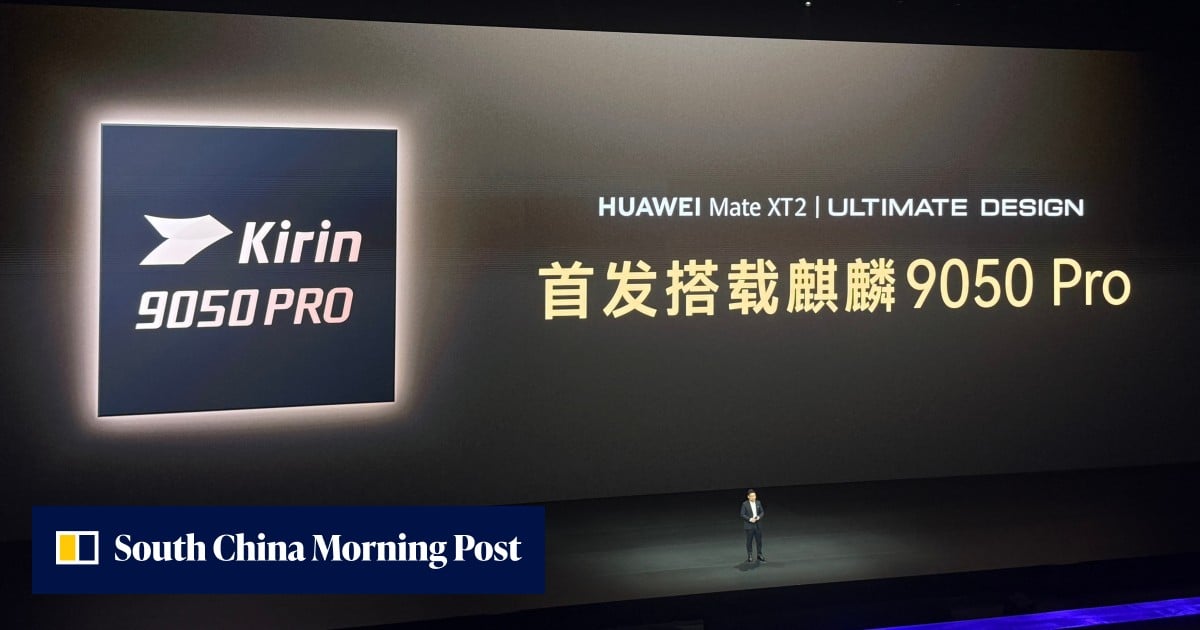
Huawei unveils Kirin 9050 Pro chip, debuts new Mate XT 2 tri-folding smartphone
Huawei has unveiled its new Kirin 9050 Pro chip, its first flagship chip launch in six years, debuting in the Mate XT 2 Ultimate tri-folding smartphone. The company claims significant performance boosts and hardware-accelerated ray tracing.
Intelligence analysis by Gemini 2.5 Flash
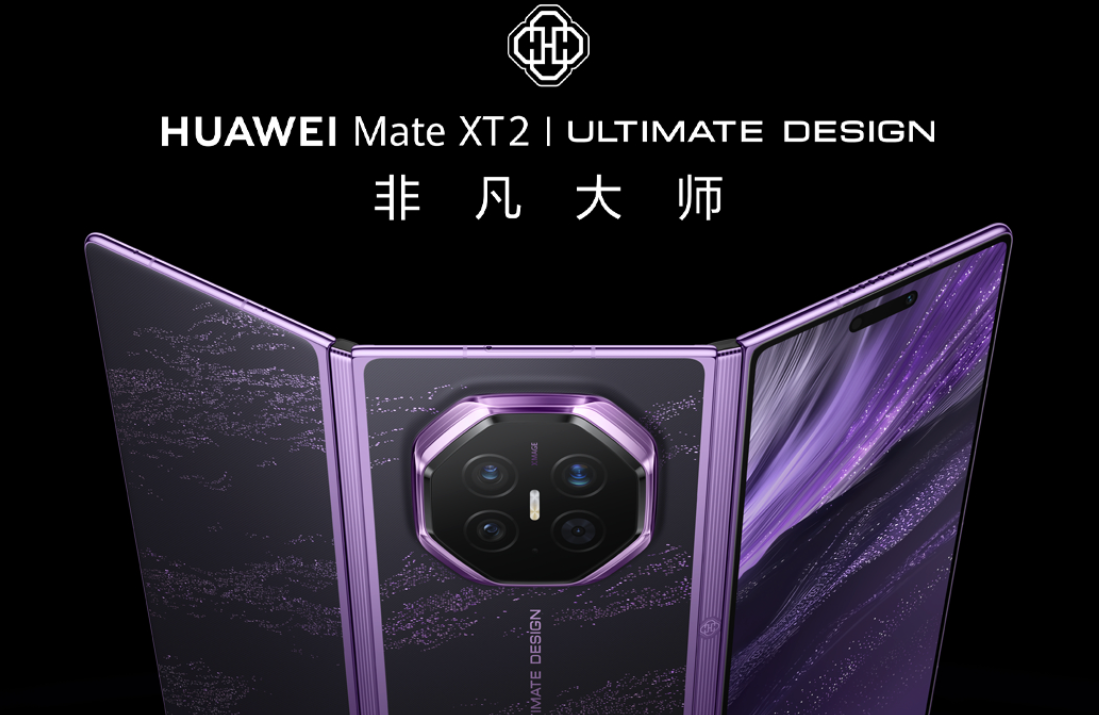
Huawei has launched its Kirin 9050 Pro chip, a significant development in its semiconductor efforts, integrated into the new Mate XT 2 Ultimate tri-folding smartphone. This release highlights Huawei's strategy to enhance device performance and user experience through innovative chip architecture, vertical stacking technology, and deep hardware-software optimization with HarmonyOS 7, c…
Imagine a super smart toy company, Huawei, just made a brand new brain for its super cool transforming phone. This new brain, called the Kirin 9050 Pro, is like a tiny city with buildings stacked on top of each other, making it much faster and more powerful than older brains. It helps the phone, called the Mate XT 2 Ultimate, fold in three ways and makes everything run smoother, like playing games or taking amazing pictures, all while making the battery last longer.
Analysis
Huawei's introduction of the Kirin 9050 Pro chip marks a significant milestone, being the company's first new Kirin chip at a flagship product launch in six years. This release underscores Huawei's continued commitment to advancing its proprietary semiconductor technology despite ongoing challenges in accessing advanced manufacturing processes. The chip's debut in the Mate XT 2 Ultimate tri-folding smartphone highlights a strategic integration of hardware and software designed to optimize performance for complex mobile form factors.
Kirin 9050 Pro
The Kirin 9050 Pro introduces a novel two-layer vertical stacking architecture, leveraging Huawei's Tao Law technology framework. This innovative design incorporates vertical interconnects within the chip, effectively shortening signal transmission paths and enhancing efficiency. Huawei reports a substantial increase in transistor density, from 155 MTr/mm² to 238 MTr/mm², achieved without relying on conventional geometric scaling in manufacturing equipment or process nodes.
Performance metrics for the Kirin 9050 Pro are impressive, with its performance cores reaching a peak frequency of 3.1GHz. The chip also features Huawei’s Lingxi CPU hyperthreading technology, which the company claims delivers a 24% increase in peak single-core performance and a 52% boost in multi-core performance compared to the previous generation. Furthermore, the chip adds support for hardware-accelerated real-time ray tracing, capable of up to 50 million calculations, indicating a strong focus on graphics and immersive experiences.
Mate XT 2 Ultimate
The Kirin 9050 Pro makes its debut in the HUAWEI Mate XT 2 Ultimate, a new tri-folding smartphone that boasts a unique wing-shaped G-type dual-inward-folding design. This device features a 6.5-inch outer display and a larger 10.2-inch inner display when fully unfolded, weighing 299 grams. Huawei states that the overall device performance has improved by 42% compared with previous Mate XT models, a testament to the new chip's capabilities and integrated optimizations.
Beyond its folding design, the Mate XT 2 Ultimate introduces a foldable Lingdun privacy display and a third-generation Red Maple camera system. The camera system supports video recording with an 18EV dynamic range and claims a 95% improvement in color reproduction over its predecessor. Powering these features is a robust 5,600mAh battery, complemented by 50W wireless charging support, ensuring extended usage and convenient recharging.
HarmonyOS 7
The synergy between the Kirin 9050 Pro and HarmonyOS 7 is a critical aspect of Huawei's strategy, with the chip optimized to work seamlessly with Huawei’s Ark Engine. This deep integration of hardware and software is particularly vital for a tri-folding smartphone, where the larger display and complex form factor demand superior performance scheduling, power efficiency, multitasking, and app compatibility. Huawei claims this combination can extend overall battery life by an additional 36 minutes.
This coordinated approach between chips, operating system, and devices represents another step in Huawei’s efforts to build a robust and self-reliant ecosystem. As the Kirin 9050 Pro is integrated into more flagship devices, its real-world performance across various applications—from everyday use to gaming and image processing—will provide a clearer indication of the maturity and effectiveness of Huawei’s latest chip architecture. The company's ability to continue improving performance and power efficiency through architectural design, chip stacking, and hardware-software optimization, especially given manufacturing constraints, will be closely observed.
Key points
- Huawei unveiled the Kirin 9050 Pro chip, its first new Kirin chip at a flagship launch in six years.
- The chip debuts in the HUAWEI Mate XT 2 Ultimate, a new tri-folding smartphone, boosting its overall performance by 42%.
- The Kirin 9050 Pro uses a two-layer vertical stacking architecture, increasing transistor density and improving core frequencies.
- It features Lingxi CPU hyperthreading, offering 24% higher single-core and 52% higher multi-core performance.
- The chip is optimized for HarmonyOS 7 and Ark Engine, enhancing battery life and overall device efficiency.
Huawei's continued innovation in chip design, particularly with vertical stacking and hardware-software optimization, suggests a path to overcoming manufacturing constraints and delivering competitive performance. This could strengthen its ecosystem, offering consumers highly integrated and efficient devices, and potentially inspiring further advancements in mobile chip architecture across the industry.
Despite the claimed performance improvements, the long-term viability and global competitiveness of Huawei's chip strategy remain dependent on its ability to consistently improve without access to the most advanced manufacturing processes. Real-world performance validation and widespread adoption will be crucial, as will the challenge of maintaining a robust supply chain for its complex, proprietary technologies.