I didn't speak the Queen's English: Why people worry about their accents
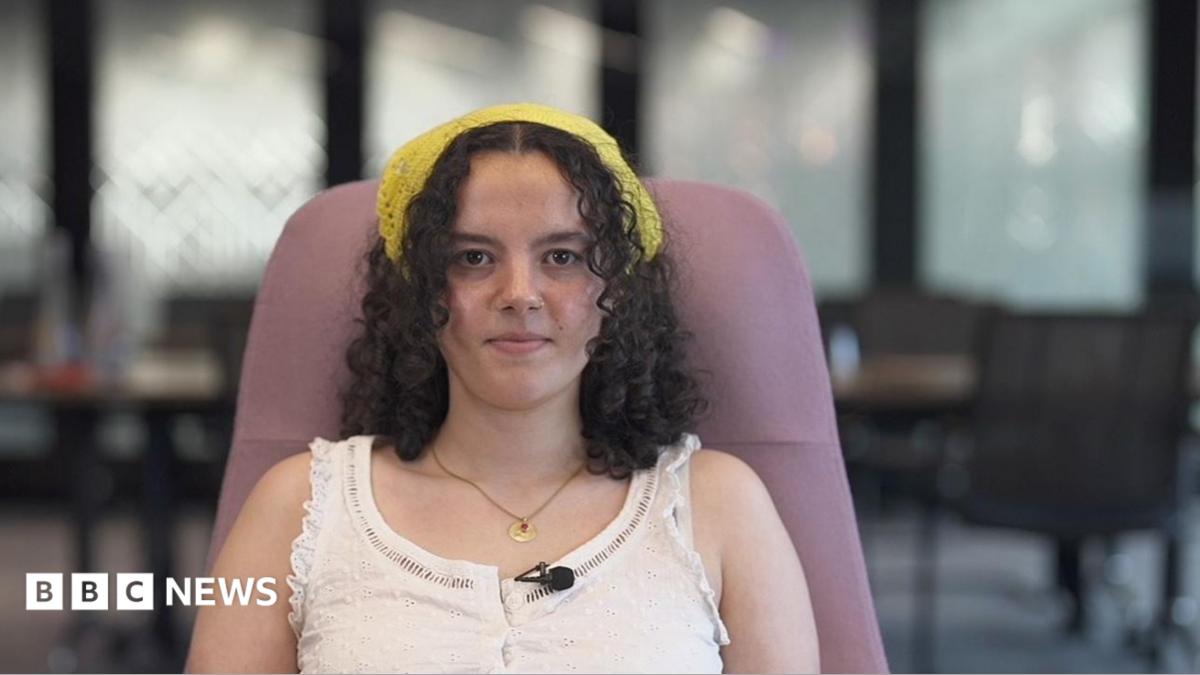
Growing up in Manchester, Mia Tanswell didn't give her accent much thought - until her first week at university in Loughborough. She's not alone. Fresh polling seen by the BBC suggests many workers still see so-called 'accent bias' as a problem.
Intelligence analysis by Llama
A BBC News survey found that one in 10 people in Britain feel anxious or self-conscious about their accent in high stakes professional settings. The research suggests that accent-related anxiety is highest among Geordies and those with an east London accent.
Imagine you're at school and you have a different accent than your friends. You might feel a bit self-conscious about it, especially if you're speaking in front of the class. This is what's happening to some people in the UK who have different accents than others. They might feel anxious or worried about how others will react to their accent.
Analysis
Accent Bias in the Workplace
Growing up in Manchester, Mia Tanswell didn't give her accent much thought - until her first week at university in Loughborough. She's not alone. Fresh polling seen by the BBC suggests many workers still see so-called 'accent bias' as a problem.
The survey found one in 10 people in Britain feel anxious or self-conscious about their accent in high stakes professional settings such as speaking up in a business meeting. The research, conducted by the organisation More in Common of more than 3,300 adults across England, Scotland and Wales, found accent-related anxiety in work settings like these was highest among Geordies - from the region around Newcastle - and those with an east London - or Cockney - accent (at 19%), followed by people with a Welsh accent (at 18%).
Around 5% of respondents believed their accent had cost them a promotion, pay rise or senior role. 'Brummies' - people from Birmingham - were the most likely to feel this, at 13%. Respondents with a West Country accent reported the highest rate of having their accent mocked or criticised by colleagues, at 15%, followed by 13% of those with a Geordie accent.
The poll was commissioned by Common Ground, an organisation which aims to promote social cohesion. Its founder, Lara Newman, has worked in construction, property and the built environment industry for more than 30 years, and says she changed her own accent to get ahead in the workplace.
'I am incredibly realistic about what would have happened had I gone to university or gone into the workplace with a strong west country accent,' she says. 'I felt like that was going to be an issue for me.'
Common Ground aims to support people from disadvantaged backgrounds into work but she says one of the layers creating a barrier to them is accent.
'I think there is a problem in the sense that [an accent] implies a level of education or otherwise. It implies class,' she says.
Softening an Accent
Martha Powell, 24, from Newport in south Wales is proud of her accent. 'I love my accent, if anything I wish it was more Welsh,' she says. But she still fears people 'make assumptions' based on her accent so at networking events she gravitates towards others with a Welsh accent.
'Softening an accent is common, the survey results suggest, with 13% of Britons polled admitting to changing the way they speak to sound more professional, with Cockneys and Scots more likely to do this.
Foreign Accents
A foreign, rather than a regional accent, can also be a barrier. When Benjaimin Aidomoan came to the UK four years ago from the Czech Republic aged 16, he didn't speak a word of English. He picked up the language, but four years on says his accent has made job-hunting more difficult.
'You can just see on many people's faces, that the expression and the way they are looking at you and the way they are talking to you kind of changes,' he says. Benjaimin, who now works in a restaurant, believes most employers do look beyond accents.
'It's about who you are, how you present yourself, what is your attitude and how hard you're willing to work,' he says.
Employers' Views
Most employers would say that is at least their ambition, to treat applicants and employees equally, regardless of their accent. Charlotte Davies, career expert at LinkedIn, says while there is still progress to be made 'the direction of travel is encouraging'.
'Hiring is increasingly about skills, not background or polish. Your accent is part of your story, and the workplaces getting this right, treat that as a strength, not something to smooth out,' she says.
Sian Jackson, a partner at law firm Mills & Reeve, says her company has recently changed its approach to encourage more local hiring and a diversity of accents.
'We don't judge, we scrutinise based on capability beyond somebody's accent, or appearance. Like any other prejudice or bias it's about being conscious of it so you can then set it aside,' she says.
'We feel we've come a long way as a firm, but we are behind nationally compared to things like gender, so there is more progress to be made on accents.'
Key points
- One in 10 people in Britain feel anxious or self-conscious about their accent in high stakes professional settings.
- Accent-related anxiety is highest among Geordies and those with an east London accent.
- 13% of Britons polled admitted to changing the way they speak to sound more professional.
- Foreign accents can also be a barrier in the workplace.
- Employers are increasingly looking beyond accents and focusing on skills and attitude.
Employers are increasingly looking beyond accents and focusing on skills and attitude. This shift in hiring practices could lead to a more inclusive and diverse workforce.
Despite progress, accent bias remains a significant issue in the UK workplace. Some people may still face discrimination or prejudice due to their accent, which could impact their career prospects.